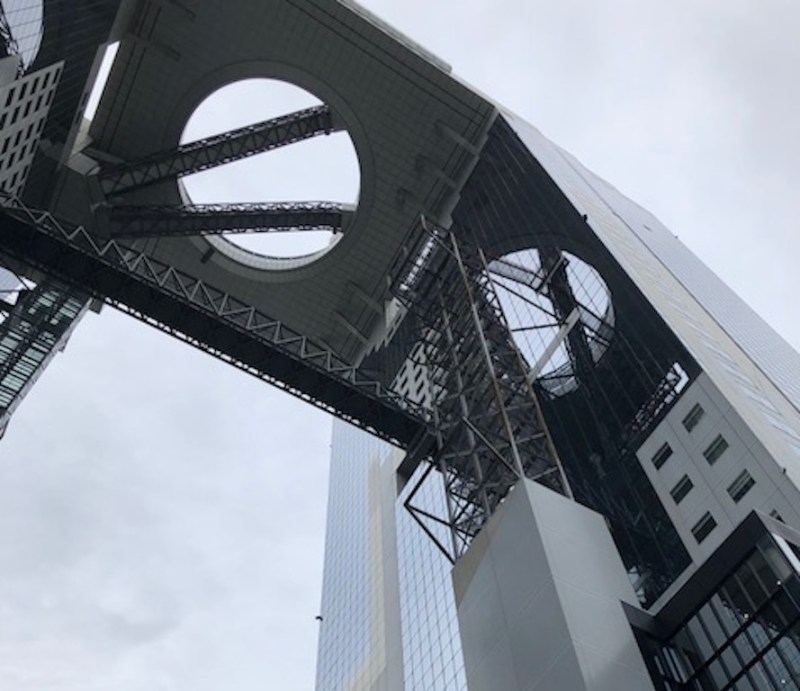
On the dot every workday morning at 8:50, each of the 50 or 60 people working on the 21st Floor of Sekisui House’s landmark Umeda Sky Center Tower East in Osaka, Japan, stands up at his or her work station, and starts moving in unison.
Over the public address system, a cheery melody every associate has heard hundreds of times before pipes into the office space, and the morning ritual begins. A choreographed series of exercise stretches, bends, breathing, jumping, and more stretches occurs, as all of the team members follow a room leader through a drill that takes about 5 minutes, start to finish.
At 3:00 each afternoon, when after-lunch circadian rhythms leave people feeling at a low ebb of energy, the same routine occurs again. Everyone, to a person, rises to the occasion, which includes–about two-thirds of the way through the exercises–a series of jumps to a count of about 20.
“We joke that when everybody’s doing their exercise at 9 a.m. and 3 p.m. every day, there’s so many of us doing it on the 10 floors of the East Tower, that you can feel the building rock,” says an executive in the strategy management division at Sekisui House, the world’s largest builder of homes. Indeed, Sekisui House–which builds in Japan, China, Singapore, Australia, and, more recently, with the acquisition of Salt Lake City, Utah-based Woodside Homes, in the U.S.
What’s more, this activity is not limited to rank and file workers. The 21st Floor is where Sekisui House’s International Business Development team works, including managing architects, product designers, as well as land and development experts, engineers and other disciplines.
Now, it has become all the rage for U.S. builders to hop on flights these days to Western European and Scandinavian countries to do reconnaissance in places where building technology and processes are more advanced, more digitally automated, and more factory-oriented than they are in the U.S. The Netherlands, Germany, the United Kingdom, Sweden and the like are where American companies practically look at as research and development they won’t or can’t invest in themselves.
What you won’t hear that often is top executives traveling abroad to witness and learn from strategic and cultural practices that would–at least in some cases–far outweigh the benefits of buying a CNC machine, or a robotic nailer.
Team members–or rather, how Sekisui House values them as a linchpin to their strategy for eventual world domination–matter critically to whether a business culture is apt to transform itself into a technologically evolved operator.
A Harvard Business Review article notes:
creating a culture where people feel secure in dealing with others is a long-term recipe for success — whether in geopolitics or your own company. The key is building a shared expectation that deadlines and agreements will be kept, and having a central authority (at the city level, it’s government or law enforcement; in companies, it’s the boss) that backs those guarantees.
What does your company do to foster — or hinder — a culture of trust? And how does that impact your bottom line?
Now, as a U.S.-based home builder, the first conclusion you’re going to reach is how will group exercises in the afternoon “foster — or hinder — a culture of trust.”
Having seen example after example of teams of the Sekisui House department managers come through early phases of a project over the course of three days of meetings–the level of collaborative energy and engagement across disciplines and lines of accountability was impressive.
Together, they may not rock the iconic Umeda Sky Tower in Osaka, but they’re rocking the world of housing as they create a roadmap to introduce their next-level-up brand of net zero and zero carbon emission, highly resilient homes into more U.S. markets.
More of us should do those group exercises twice a day with our teammates.