Resilient Housing in South Florida

South Florida’s slowdown of new-home construction in late 2013 was only temporary

1 MIN READ

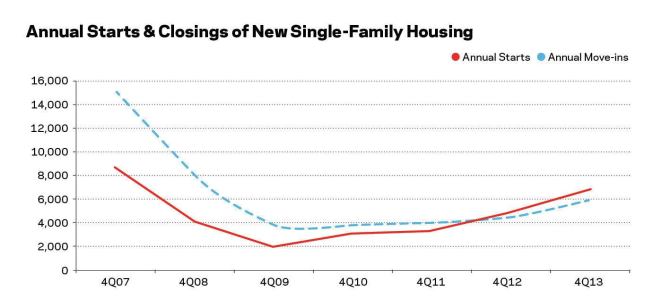
South Florida has been one of the most dynamic U.S. home building markets for the past 30 years. It was once labeled “ground zero” (along with Las Vegas and Phoenix) for the housing collapse, with home production dropping by 90 percent from the peak levels. But for the past three years it’s been rebounding, and builders are barely able to keep up with demand.

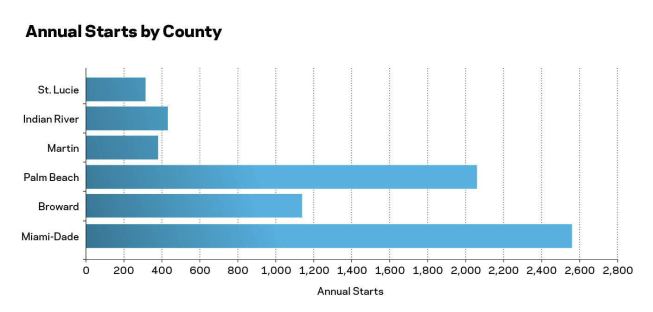
Home sales slowed in the second half of 2013, thanks to a rise in mortgage rates and a surge in new-home prices that left buyers with sticker shock. The pace of new-home construction in South Florida slowed by 20 percent in the fourth quarter of 2013, with 1,437 housing starts versus 1,799 in the prior quarter. This level of home building is 4.7 percent higher than in the fourth quarter of 2012, but 29 percent off the 2013 peak attained in the second quarter. With that pause behind us, new-home activity has been gaining in 2014.

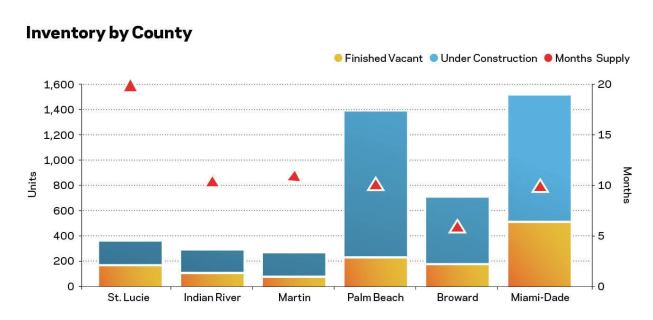
The resilience of home building in South Florida has been remarkable in the face of a once huge inventory of bank-owned properties, called REO (real estate owned) by the banks. Today, those REOs are no longer a competitive threat to new-home builders.

In this market, lot shortages are a serious issue. Builders are having to pay peak prices again for developed lots in high-demand areas. Land developers and investors are looking for ways to reuse golf course land for residential development to meet demand.

South Florida’s housing outlook is strong, both in terms of builder pricing power and future demand. Active adult buyers are coming down from the north in larger numbers, and working-age buyers are buying as their incomes improve.

Learn more about markets featured in this article: Miami, FL, Orlando, FL.

About the Author

Brad Hunter

Brad Hunter is Metrostudy’s chief economist and director of strategic consulting. Hunter directs Metrostudy’s consulting work nationwide and spearheads Metrostudy’s current work with the national development community as well as investment firms. Metrostudy is the nation’s premier advisor on local and regional housing market conditions. The firm’s unmatched database provides the quantitative foundation for its consulting and advisory work, and backs up Hunter’s forecasts of the housing market, which have been consistently more accurate than those of most other economists. Hunter also supervises the bulk of the company’s multi-market studies, and has orchestrated hundreds of site-specific or area-specific housing market studies over the past twenty-five years of his career. He oversees the company’s work for investment funds who are investing a combined $1 billion in residential property nationwide. With 25 years’ experience in real estate analysis and local market economics, Hunter is a full member of the Urban Land Institute, has authored numerous articles and chapters in ULI-published books, including Market Profiles, chairs various committees, and is an active member of the national Community Development Council. He is regularly cited in local and national journals including recent interviews by the Wall Street Journal, Business Week, and on CNBC and Bloomberg News. His analysis is also featured in the book Foreclosure Nation. Hunter graduated in 1985 from the Wharton School of the University of Pennsylvania with a degree in economics and has been a guest lecturer at Harvard University. Hunter is a speaker at conferences on real estate opportunities and investing, as well as at real estate think tanks, and is frequently called upon by key regulatory agencies of the U.S. government for his insights on the housing sector.

Upcoming Events

  • Sales is a Sport: These Tactics Are the Winning Play

    Webinar

    Register for Free
  • Dispelling Myths and Maximizing Value: Unlock the Potential of Open Web Floor Trusses

    Webinar

    Register for Free
  • Building Future-ready Communities for Less

    Webinar

    Register for Free
All Events