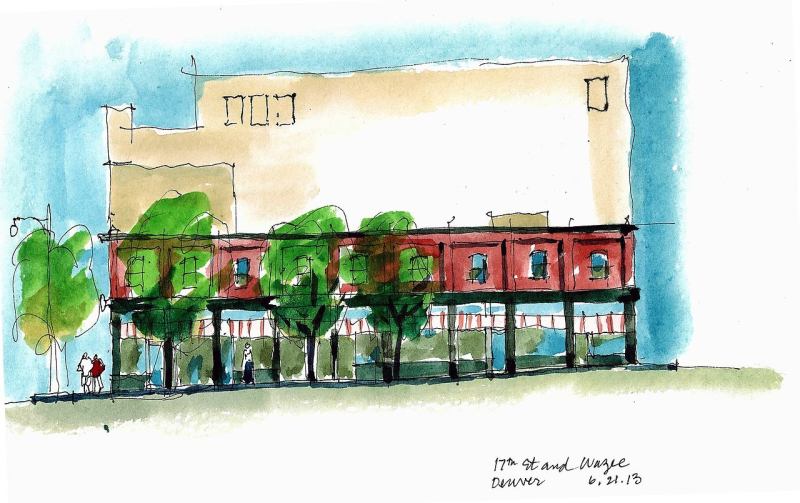
The apartment over the shop has been a building block of cities for thousands of years. The Romans sold olive oil, medieval blacksmiths made hinges, and Victorian green grocers sold potatoes beneath the places where they slept.
Today few cities are built this way.
But Wazee Street in Denver Colorado reminds us of the value of older, smaller, brick and wood structures that do not overwhelm us and provide a multitude of uses. The shop fronts make a regular and almost uniform rhythm, with small variations among the curtains, awnings, hanging signs, and levels as the buildings march down the hill. There are no big surprises in this sequence. And that is the particular grace of a place like Wazee Street: It is simply, quietly there.
It supports city life.
The architecture may be purposely understated, but tonight there will be splendid overstatement. Wazee Street will be filled with black dresses, cheetah prints, high heels, Latinos, Chinese, divorce lawyers, and baseball players — the melting pot of America brooded over by quiet, unassertive structures that are as old as the ancient city of Rome and as modern as Facebook.
American cities have a long way to go to get back where they started.