
Harry Whitver
Unwanted Sound: Privacy, peace, and quiet are basic values, fun…
In big commercial and institutional buildings, HVAC mechanical noise can be a big deal—and big dollars are spent on keeping it down to a dull roar. In the world of home building, the problems aren’t so extreme. But the principles are the same: to keep noise out of the living space, you try to decouple the source of the sound waves from the pathways that could carry them into the living environment. And you use materials that absorb sound rather than reflecting or transmitting it.
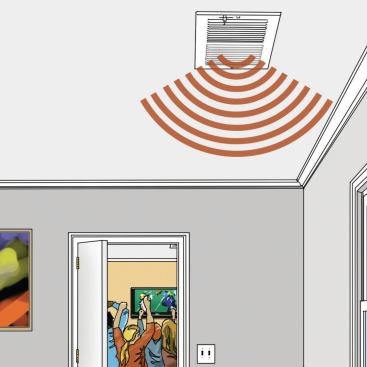
A common complaint in single-family and multifamily dwellings is that ducts carry the sound of music, laundry, dishwashers, or even just conversation across or around the walls that are supposed to create privacy, peace, and quiet. Metal ducts conduct vibration readily, and they reflect sound waves along the length of the duct. Even a short run of insulated flex duct at the end of a duct run can help muffle that kind of sound transmission.
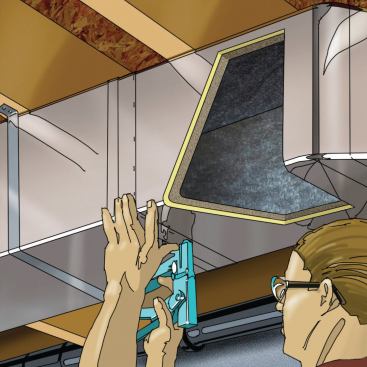
HVAC machinery sometimes sends an unwanted hum, drone, buzz, or roar into the living space—again, transmitted readily along metal ducts. Decoupling the metal duct from the appliance with a soft, flexible boot can help. Another solution: instead of metal ductwork, use fiberglass duct board that’s engineered to absorb sound instead of conducting it.