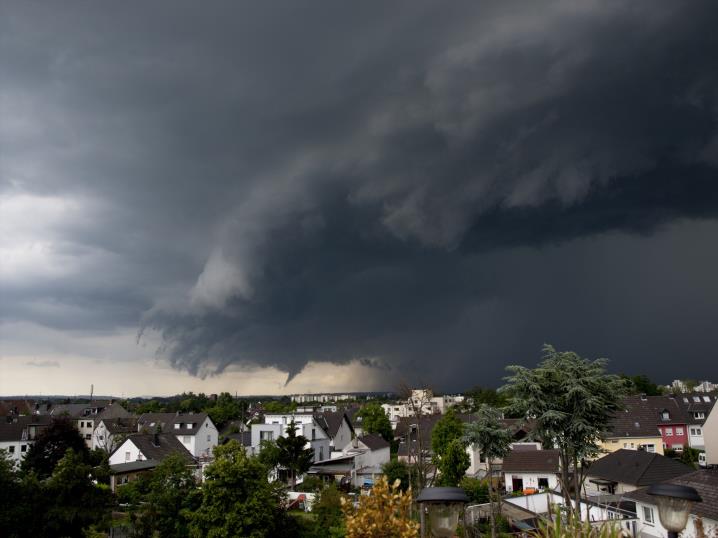
Storm-related outages are a fact of life. A March 2018 nor’easter left more than 2 million people on the East Coast without power. Hurricane Irma put out the lights for 7.6 million in September 2017. New Hampshire residents still talk about the 2008 ice storm that left two-thirds of the state’s residents in the dark, some of them for weeks.
Today, custom home builders can create resilient homes that stand up to wind, rain, and snow. And maintaining homeowner comfort for days without power should be discussed with custom-build clients.
“It’s called Passive Survivability,” says Alex Wilson, president of the Resilient Design Institute in Brattleboro, Vt. “It’s about building homes that remain habitable if they lose power.”
The basics aren’t difficult. They include a super-efficient envelope with good insulation and air sealing. High-performance windows that take advantage of passive solar gain and natural ventilation are key to resilient homes built for passive survivability. Solar panels and home batteries further improve a home’s resilience during an outage.
Sealing the Envelope
The building envelope needs code-mandated structural features, such as tie-downs to resist uplift and shear panels to keep the frame from racking in high-wind zones. It also needs meticulous waterproofing.
One company that knows this is Schneider Custom Builders, located near Virginia Beach, Va., where horizontal, wind-driven rain is common. “The envelope absolutely has to be tight,” owner Jim Schneider says. Fortunately, window manufacturers have perfected their flashing details in recent years. “Building science has come a long way, so you really need to stay current with it,” Schneider says.
In zones subject to windborne debris during hurricanes, impact-resistant windows and doors reduce the chance of a breach that lets wind and water into the home. Air-pressure cycling during a hurricane can pull windows from their openings, so make sure to use the clips or bolts required by the manufacturer.
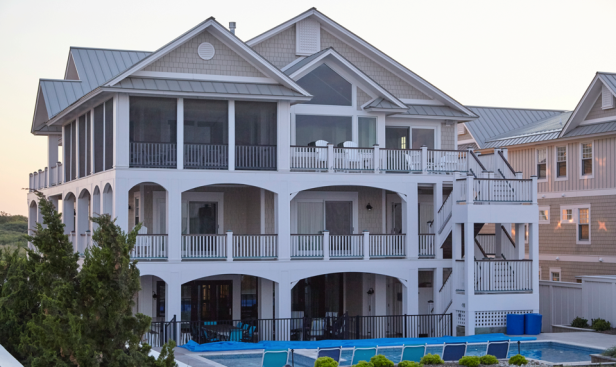
Courtesy of JELD-WEN
After the Storm
To stay habitable without power after the storm passes, the home needs a tight envelope with good insulation, careful air sealing, and highly efficient windows and doors.
A single home battery will keep basic lighting, a refrigerator/freezer, and the furnace or heat pumps going for 8 to 12 hours during an outage. Solar panels that charge the battery can extend that indefinitely.
The battery may even pay for itself: That’s the case in Bakersfield, Calif., where custom builder Dave Packer offers buyers solar panels and a Tesla Powerwall 2 battery. The local utility has the time-of-use rates, so the panels charge the battery when rates are low, then the home draws from the battery when rates triple.
Resilient Design
Resiliency even earns its keep if the power never goes out. A waterproof envelope will need less maintenance and will resist mold and mildew. Insulation, air sealing, and high-performance windows reduce monthly utility bills.
For design and planning resources for windows and doors that contribute to resilient buildings, visit Jeld-Wen’s professional portal.