Hilo, Hawaii is a seaside town of 43,263, nestled on the east coast of the Big Island. It lays claim to many natural wonders, though these two probably don’t rank high among them: an annual rainfall that’s #1 for the U.S. (156.79 inches; yes, just over 13 feet) and a haven to a legendary home-destroyer, the feared Formosa subterranean termite.
It’s tough to imagine a better place (worst place?) to test building materials for harsh condition performance.
The Challenge
Moisture, insect, and ocean-air form a unique high-stress nexus for private and public sector investigators to explore building material resilience. For example, how does a treated wood, such as pine, hold up to relentless rain and termites? Can any wood survive such nightmare conditions?
If so, Atlantic coastal storms, Minnesota winters, and Arizona summers should be a cinch. With that in mind, one company challenged Hilo to bring it on.
Trial by Ordeal
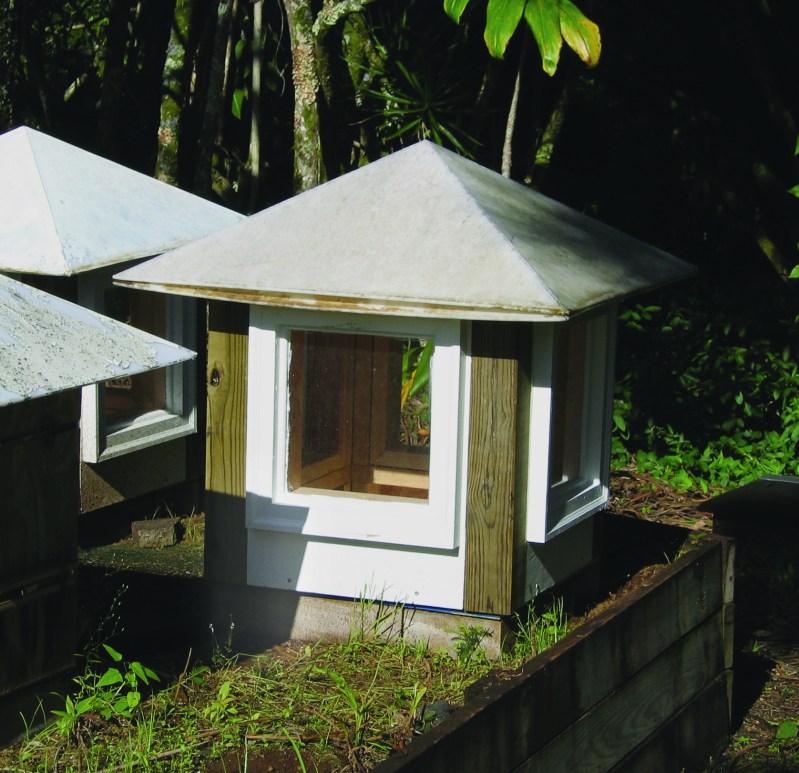
“One of the wood window tests we did was in Hilo, Hawaii,” explains Jennifer Matson, director of product management for JELD-WEN, a leading global building products manufacturer based in Charlotte, N.C. “We built a pair of little structures resembling a child’s playhouse. We outfitted one mini-house with a standard wood window purchased at the local lumberyard and the other one with a window made from our AuraLast Wood.” (The conditions were so soggy, the on-site electric generator wouldn’t operate.)
“Both structures were outdoors for 18 months. Both buildings were also placed on top of active termite colonies,” she said. A typical Hawaiian Formosan termite colony numbers more than 2 million insects, with large ones topping 10 million. It is “by far the most economically damaging pest in Hawaii,” according to University of Hawaii entomologists.
Surprising Result
AuraLast Wood is treated differently than other window wood, so that intrigued JELD-WEN researchers. Instead of dipped into a vat of harmful chemicals, as is typically done, wood in the AuraLast process undergoes a surface-to-core treatment through a proprietary vacuum/pressure process. This environmentally-safe, water-based application fortifies wood to the core. Any window penetration, say by sanding or nailing, does not expose untreated wood.
But would that be enough in Hilo?
“The wood structures were reduced to spongy shards in a few months. The termites went through shingles, concrete, everything to get to the wood. Nothing stopped them except AuraLast Wood. All the AuraLast windows needed was a wipe-down and paint. Otherwise, they were fine. No rotting, water swelling, or termite damage of any kind,” reports Matson.
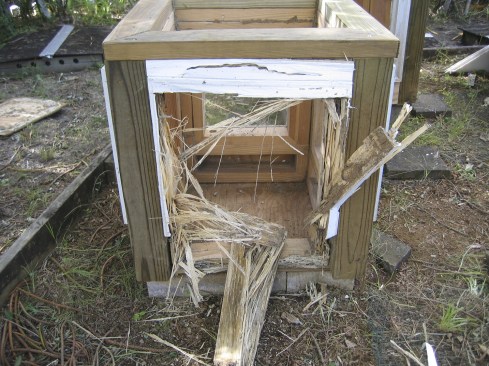
A generic wood window is no match for Hilo’s termites
Confident Choice
Matson says AuraLast Wood windows, patio doors, and door frames have been in the market for over 10 years, representing “millions of windows in the market.” For architects, home builders, remodelers, and owners looking to confidently specify a wood window in harsh conditions, it may make sense to look West … way West … and keep the lessons of Hilo deluges and termite swarms in mind. To learn more, visit here.