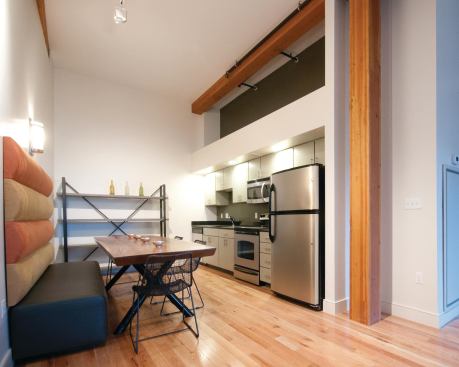
Courtesy ICON architecture
Appleton Mill, Lowell, Mass.
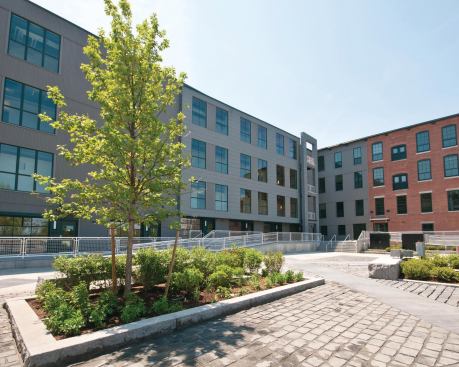
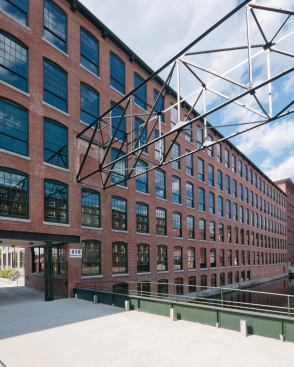
Near Massachusetts’ Merrimack River, industrialists in the 1880s created a canal system of mills powered by water. Now, the National Park Service is turning the 15-acre Hamilton Canal District into a mixed-use arts community whose first phase transformed Appleton Mill into 130 live/work lofts and a four-story atrium. ICON architecture’s remake weaves the remnant architectural features into something freshly relevant. But calling this an adaptive reuse project is a stretch, since the former shoe factory had long stood open to the weather and was falling apart. “The floors were gone, and building officials had declared it unsafe,” says architect Nancy Ludwig. “We saved the extant walls and totally rebuilt the inside.”
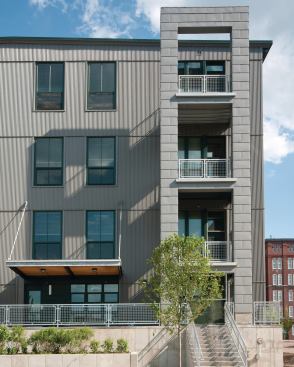
Now, sky bridges stripped of stucco call to mind the former mill’s connective tissue. Hoistways carry on as decks. And existing window patterns were replicated on new walls covered in textured metal siding. “We didn’t want to create historic-looking walls,” Ludwig says. “We weren’t going to get involved in recreating some historic scene.”
Merit Award
Category Live/Work project
Entrant/Architect ICON architecture, Boston
Builder CWC Builders, Newton, Mass.
Developer Trinity Financial, Boston
Landscape architect Copley Wolff Design Group, Boston
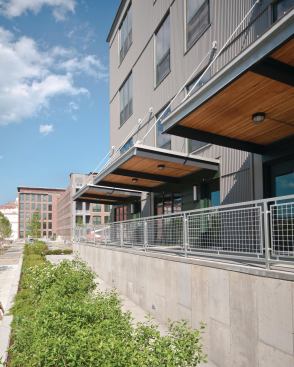
One of Appleton’s most innovative features is the live/sell-unit, a twist on live/work. These apartments access ground-level loading docks, so artists can roll up their garage doors, opening their studios to all.