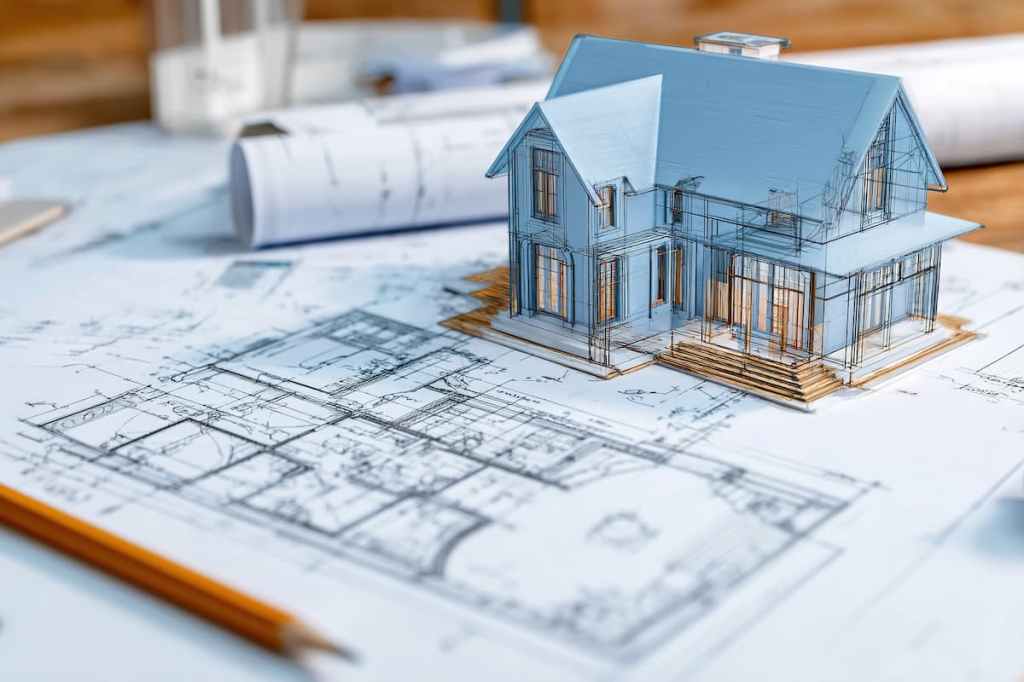
While artificial intelligence (AI) has made deep inroads into finance, healthcare, retail, and more, adoption in the construction industry is lagging far behind.
Take it from me—this reluctance isn’t because builders fear AI itself.
I spent nearly two decades building homes. I know how painful it is to wait six weeks for a stamped engineering plan and then spend even more time fixing planning errors in the field. More importantly, I know how builders think. What they do fear is losing control, because when a mistake happens, it’s our crew’s safety at stake, our name on the permit, and our dollars on the line.
To overcome this hurdle, AI must be rebuilt around trust, transparency, and an understanding of the uniquely high stakes of the construction industry.
The High Stakes for Error
Any veteran builder knows that the smallest of errors in blueprints, budgets, and schedules can force multimillion-dollar projects off course. And if AI gets the details wrong, it can even put lives in danger.
You don’t win trust on a jobsite by talking theory. You earn it through hands-on experience above all else—getting the job done, getting it right, and fixing it fast when it isn’t. In a setting like that, the perception that AI introduces “uncertainty” understandably stalls adoption.
Perception Problems
In my experience working with builders, architects, and engineers, I’ve seen that they—along with many people who work outside the tech industry—perceive AI as a gimmick full of fake news, easy “art,” and hallucinatory answers to everyday questions. For an industry where tangible materials are the medium, not just ones and zeros, this perception reinforces the notion that AI is unserious and unreliable.
Builders worry if AI can “hallucinate,” how can it be trusted to create structurally sound designs? If it doesn’t, who takes responsibility for the mistakes?
Job Anxiety
Especially in roles where professional judgment and creativity are highly valued—like designers, architects, and engineers—builders fear that outsourcing decisions to AI will undermine the integrity of their work or, worse yet, replace them. It’s unsurprising that roughly half of artists don’t believe AI-generated art is a legitimate form of creativity.
After all, architects and designers are the artists of construction. As a builder myself, I’m sympathetic to their qualms.
Integration Challenges
I’ve toiled away on many a building site, and can tell you first-hand that construction workflows are complex, tedious, and firmly cemented in pre-AI precedents. AI tools that appear unfamiliar to builders or don’t mesh seamlessly with longstanding workflows will only add friction instead of value.
Reconsidering Reluctance
This new chapter of my career is dedicated to helping builders and designers recognize the transformative power of AI. I firmly believe that, when they do, they will be empowered to utilize AI to be even more imaginative, pushing their creative limits while reducing costs. Most builders I know would swoon over AI powered systems’ ability to reduce planning time by as much as 30%.
The only things builders prioritize over cost and time efficiency are safety and quality. Here too, AI is uniquely able to flag risks early, such as structural weaknesses or common design conflicts—for example, plumbing running through structural beams or HVAC clashing with framing—that might require costly revisions or lead to unnecessary material waste.
AI is also improving energy and sustainability efforts in the industry. Recent sustainability research found that AI retrofits can deliver 20% to 30% energy savings in under a year. Optimizing HVAC, energy use, and long-term maintenance ultimately extend asset lifespans and increase project value.
But it’s not just about overcoming the hurdles felt by professionals in my industry. It’s also about doing right by the people they’re building for.
What I mean is that AI also stands to increase housing availability at a time when people are not buying property due to skyrocketing prices. Indeed, in 2024, the first-time home buyer market share decreased to a historic low of 24%. By streamlining planning and approvals, AI can help complete projects faster and more cost effectively, mitigating the housing crisis, especially for young buyers.
I’m not the only one who believes in the potential of AI-driven improvements in construction: The market for AI in smart building and infrastructure is expected to grow from $41.4 billion last year to $359 billion by 2034. With advances in computing and storage making AI more scalable and affordable than ever before, builders who embrace AI early will gain a competitive edge in efficiency and cost savings.
Building Trust
The benefits may be clear, but AI adoption will continue to falter if it can’t prove itself as a trustworthy industry asset. Thats why I’m working to build a future where AI construction tools are built with the following attributes in mind.
- Transparency
Builders will always avoid AI systems they see as “black boxes” that simply spit out results without explaining the how and the why. Explainability and accountability must be built into AI tools, and legal and ethical implications must be placed at the core of AI adoption.
- Workflow Integration
Builders and designers want tools that enhance, not fully replace, their ways of working. AI, therefore, must be able to slot into longstanding project management systems, BIM software, and regulatory frameworks.
- Shifting the Mindset
I don’t want to build a world where AI replaces talent. I simply want to give my team better tools. AI should cut the grunt work, freeing up the people doing the real work to do what they do best.
Builders and designers must readjust their mindset to see AI as a catalyst for human expertise, not as a threat that leads to their obsolescence. A coordinated approach across technical, operational, and regulatory fronts where AI is adopted according to SMI’s guidelines will allow builders to prioritize efficiency and enhance supervision without fearing for their livelihoods.
When all is said in done, industry professionals must maintain their sense of control, with AI amplifying, not replacing, their well-earned judgment and creativity.
Building Better Buildings
Designers’ and builders’ hesitation with AI isn’t about resisting innovation. It’s rooted in the weight of responsibility of their work, where safety, cost, and reputation are on the line.
My two decades of experience as a builder never deterred me from embracing AI. Rather, it taught me that, if adopted responsibly, AI can unleash creativity, cut waste, lower energy use, and even help solve the housing crisis, allowing many to fulfill the American Dream of homeownership. But without transparency, seamless integration, and built-in trust, widespread adoption will remain elusive.
I know what it takes to earn the trust of planners, builders, architects and engineers. AI won’t come to the aid of construction until it learns how to do the same. Building that trust will be the industry’s next great project.