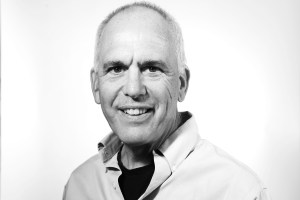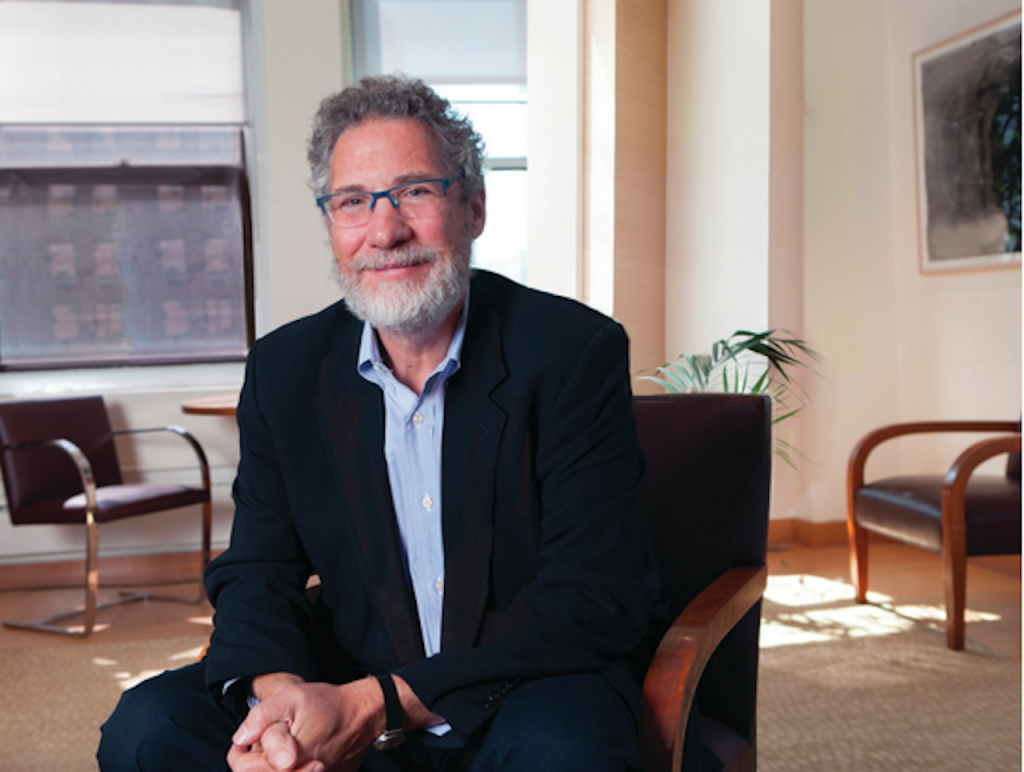
Yesterday, Jonathan Rose Companies announced it had closed on its fourth and largest fund–$233 million–aimed at acquiring and preserving affordable multifamily housing, implementing practical green strategies to reduce environmental impacts and operating costs and to fund social, educational and other services for residents.
The announcement is timely. Immediate relevance comes from recent and ongoing epic challenges Mother Nature has raised–super storms to the east and raging wild fires West of the Rockies–that will take a whole new wave of commitment in resources, talent, and time to begin to heal, clean up, rebuild, and thrive again. And, on a longer-term time continuum, our communities’ vulnerability to such natural shocks and risk is growing.
The Rose Companies fund takes a fresh look in how communities need to re-consider how they manage–economically, socially, physically, politically, and culturally–the present if they are to have a future.
The announcement notes:
A key component of the Fund’s strategy is to develop “Communities of Opportunity,” adding programs and facilities to properties that, where possible, include on-site community centers, computer filled classrooms, health and wellness rooms, social service rooms, exercise facilities and community gardens when possible to develop initiatives to connect residents with a range of health, educational and social services.
“Our fund’s goal is to provide our investors with favorable risk-adjusted returns, reducing energy use and climate impacts, while improving the lives of residents through building ‘Communities of Opportunity,’” said Jonathan F.P. Rose, president of Jonathan Rose Companies. “The goal is to provide safe, non- toxic, energy efficient, affordable housing as a stable base for families and seniors, targeting investments in high-demand locations with access to transit, jobs, schools and retail.”
In light of the timing of this initiative, here’s a recently completed piece–in its original draft form–I did as we welcomed Jonathan Rose into the Multifamily Executive magazine Hall of Fame.
A Rose by Any Other Name …
Visionary builder, community planner, developer, and change agent Jonathan F.P. Rose is American real estate royalty, born and bred. Still, by all rights, a Hall of Fame should salute a career in its entirety and as a summation of its wholeness, not one still vitally arching upward toward bold new crescendos at some future date.
In Rose’s own mind, he frames his post-childhood business pathway in three phases, one of which might be the most geographically ambitious, transformational, and best of all. Yet, this third phase has only just begun.
Still, we editors at Multifamily Executive and a trusted circle of business community advisors had to begin at a somewhat arbitrary beginning. Celebrating individuals whose professional commitment, impact, and influence add up to inspiration, a model, and a source of motivation to others in the multifamily business community to become the best of the best starts this way. Jonathan Rose is our way to say the bar is set high, considering that already, Rose and his team have scaled Jonathan Rose Companies now to 15,000 units, with $2 billion plus in invested projects, and created a signature impact investment and development business model whose quadruple bottom line puts profit on a par with purpose, people, and the planet.
Pedigree
At age 65, Jonathan Rose is actively a part of the third of three-going-on-four generations of real estate developers descended from immigrant brothers Samuel and David Rose, who started out building apartments attainable to middle-class Bronx, NY, workers in the 1920s.
You may safely surmise that one of Jonathan F.P. Rose’s life challenges might have been to step out of the larger-than-life shadow of his father, Frederick, who with brothers Daniel and Elihu, built one of New York real estate’s dynasties, Rose Associates, in the years following World War 2, and onward through to today. In business shrewdness and discipline, in generosity, in magnetism, and in breadth and sharpness of vision, his dad—who passed away in September 1999—was tough-act-to-follow incarnate.
Still, it would be mistaken to credit only Frederick and his brothers’ empire building, and their ever-widening gyre of can-do clout and iterative accomplishment in metropolitan New York’s residential and commercial construction and community management business ecosystem.
Such all-abiding attention to the unarguably powerful Y chromosomal composition of the Rose real estate pedigree would neglect an equally profound contributor to and essence of what makes Jonathan F.P. Rose tick. That would be his mother, Sandra Priest Rose.
As a young kid growing up in Westchester County, NY, Jonathan recalls hanging out in the den at night with his father as Rose senior toiled over project plans, marking them up with a red pencil. He took immediate precocious fancy to visiting those building projects, like Evergreen Gardens in the Bronx, seeing them come out of the ground to life, checking off the punch lists, smelling the concrete, like picking up the scent of success. Still, too, he was equally deeply drawn to and engaged in the voters’ rights rallies and registration initiatives his mother actively supported, along with a host of other social and environmental causes. Yin and yang.
“By the time I was 8,” says Rose, “I started to wonder how I would weave those two passions together. I’ve been working on that that ever since.”
In fact, if it were nature’s habit—as it is contemporary homo sapiens’—to make a visual metaphor–an infographic, if you will–of the essential nature of a man whose business instincts and social motives balance one another off, whose intellectual curiosity is equalized by a Zen-like acceptance of mystery, whose zeal for world domination is offset by a passion to serve the individual person sitting next to him, whomever that may be, the image nature designs might be something like this.
Two reflective, equidistant threads—each containing operating modularized and specified code for identity, capacity, physicality, belief, soul, intention, capability, purpose, imagination, strength, vulnerability, and compassion—entwining one another in a mirrored spiral. Oh, nature has created such a visual metaphor–double-helices of genetic matter forming one’s DNA! Could there be a more perfect data visualization for the balance of force and focus, a human and his natural surroundings, the worldly and the spiritual, business strategy and social impact, the ordinary and the astonishing, the father and the mother, the contour and connectedness Rose has made his life-long pursuit as a professional adult?
Building Projects
So, about Jonathan Rose’s three phases of professional development? They took initial shape and emerged out of an early childhood abundant with evidence of expansive and raw curiosity, an entrepreneurial fire-in-the-belly, a creative flair, an ear for music, love of family and its traditions, and a yearning to do something, to achieve something, to make a name for himself. He attended Yale University undergraduate in the early 1970s, studying psychology and philosophy before shifting to a focus on regional planning in a masters program at the University of Pennsylvania. His studies left time and considerable appetite for such side pursuits as the playing bass guitar, working as a bus mechanic, and world travel.
Phase one of Jonathan Rose’s coming of age as a professional begins around 1976, as he joins the family enterprise, Rose Associates, working on New York-style housing projects and deals.
Now, any big real estate project requires fluency in a richly complicated language. Timing, invested finance, a land deal, construction contracts, political favor, social acceptance, topography and other environmental conditions, a design that can win over opponents and compel advocates to become champions, a sales team, a construction and engineering plan that pencils, and a marketing message that carries across the virtue and value of the place need to align—at the very least—for a real estate project to work.
That they happen again and again and again is almost a minor miracle. Any little thing, any part of the minutia in any single detail in isolation, or any connective dimension of the project, can derail it. Yet, it’s precisely this that a real estate developer signs up for. This cocktail of goal-setting, limit-drawing, cajoling, ignoring, imploring, vision-imparting, compromising, not-relenting, etc. comes, literally, with the territory, exerts remarkable appeal, and delivers, repeatedly, a euphoric rush when the ribbon gets cut and the project opens. It’s all what a developer does in a day’s work.
It’s also, to some degree, who he or she is. This is, to some extent how to characterize Jonathan Rose in what he calls his first phase. It was about “doing well,” on measures of both the care and quality of the work, and its successful outcomes.
“This was the stage that was all about becoming the best project manager in the business,” says Rose of a time period that encompasses his 13 years as an employee of Rose Associates, and his ultimate departure to pursue work that stretched beyond the core interests and skillsets of his grandfather, great-uncle, and father’s company. “I learned an incredible amount from my father, and one of the earliest pieces of professional advice came from him in his role back in the 1970s as the president of the Federation of Jewish Philanthropies, where he told me, ‘join one of these community-based agencies, work as a volunteer, get on the board, get involved.’ And I did. I picked a group called the Educational Alliance, which served the Lower East Side of Manhattan, a poor, struggling, crime-ridden, and drug-infested neighborhood at that time. The Alliance centered around a 100-year-old Jewish settlement house, and it offered an enormous number of social services and programs, for the homeless, drug treatment, parenting programs, people with special needs, arts, and they’d also created one of the very first Head Start education programs in America. It was remarkable. It changed things for me. It changed how I looked at what I wanted to do. I then reached a point in my life where I felt I really wanted to put my for-profit life and my not-for-profit life together.”
Building a Company
So, Rose stepped clear of that remarkable, imposing, paternal shadow, into a future that redefined the very intention of the projects he wanted to do, scoping them beyond the structural walls of his projects’ buildings and into the very fabric of the community they stood as a part of. He’d continue channeling his father’s caring tutorship, and tap varied eclectic mentors ranging from the first Sumerian kings of Uruk, to Jane Jacobs, to James Rouse, to sociologist Robert Sampson, to systems thinker Donella Meadows, to architect Robert Venturi, to fellow community developer Richard Barron, and scores of others across time and in real time. He traveled far and deep and wide to discover what drives people to make cities for and of themselves, so that he could more helpfully imagine multiplying on some greater order of magnitude than a single project, a single building, or a single subdivision, to find leverage points to “repair the fabric” and bring transformation into the sore, core, stressed, and sometimes broken sinews of a locale’s economy, society, its reason for being, its capacity to continue to be.
The projects evolved from a higher plane they’d start on, thanks to Rose’s belief and insistence they could felicitously blend affordability, livability, sustainability, community compatibility, and profitability. From the seminal Denver Dry Goods Building to recent much-heralded unveilings like Via Verde, back in the Bronx, Rose projects have been singular in ambition, in how inclusive of generative, adaptive, and conscious of their ecosystem they are.
To fund, to resource, to champion, to execute and to operate the marriage of affordable and attainable housing development with sustaining and resilient community infrastructure required a skill-set and dimension Rose discovered he lacked after decades in the weeds trying to excel as a project visionary and developer.
“We had to attack organizational structure, we had to raise funds, we had to build human and capital resources that went far beyond the family and friends network of investment partners we were drawing on up until that time,” says Rose of the “building an organization” phase two of his professional work life. “We grew our systems, our ability to track our equity, measure our debt, and deploy our human resources, and in weaving all those together, we’ve created a really extraordinary company that’s working at a much larger scale, and is much more effective in carrying out its mission.
Building Opportunity
In 2005, Jonathan Rose Companies launched its first investment fund. Today, it’s on its sixth fund, and earlier this year, the organization purchased a $500 million portfolio of 48 affordable-housing properties from Forest City Realty Trust, a transaction that effectively doubled the team’s footprint, which Rose expects now will grow 3,000 to 5,000 units annually for the foreseeable future, in this, the third phase of his business pathway.
“Our acquisition efforts are now about 10 times what our development efforts are,” says Rose, whose focus has evolved from projects, to a professionally disciplined and purpose-driven enterprise, to now, a platform that can iterate, scale, and impact many. “We’ve realized that our impact can be a lot greater if we’re in more cities, and if we are reaching a larger number of people. The war to win now is a war for opportunity.”
Great achievement. Greater expectations.