

Tim Street-Porter
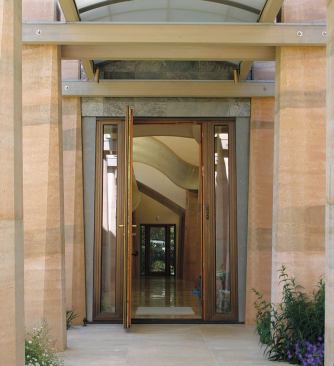
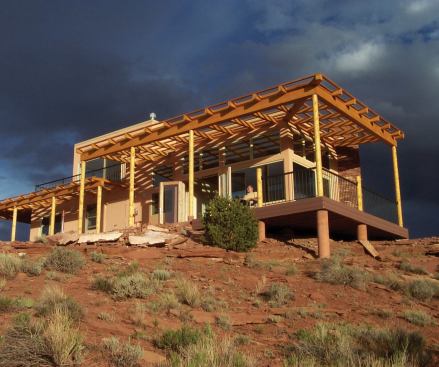
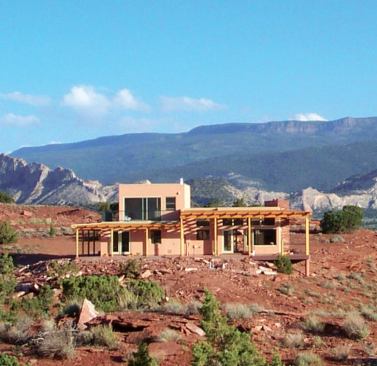
The reddish tone quarry waste for the Guitar House’s columns c…
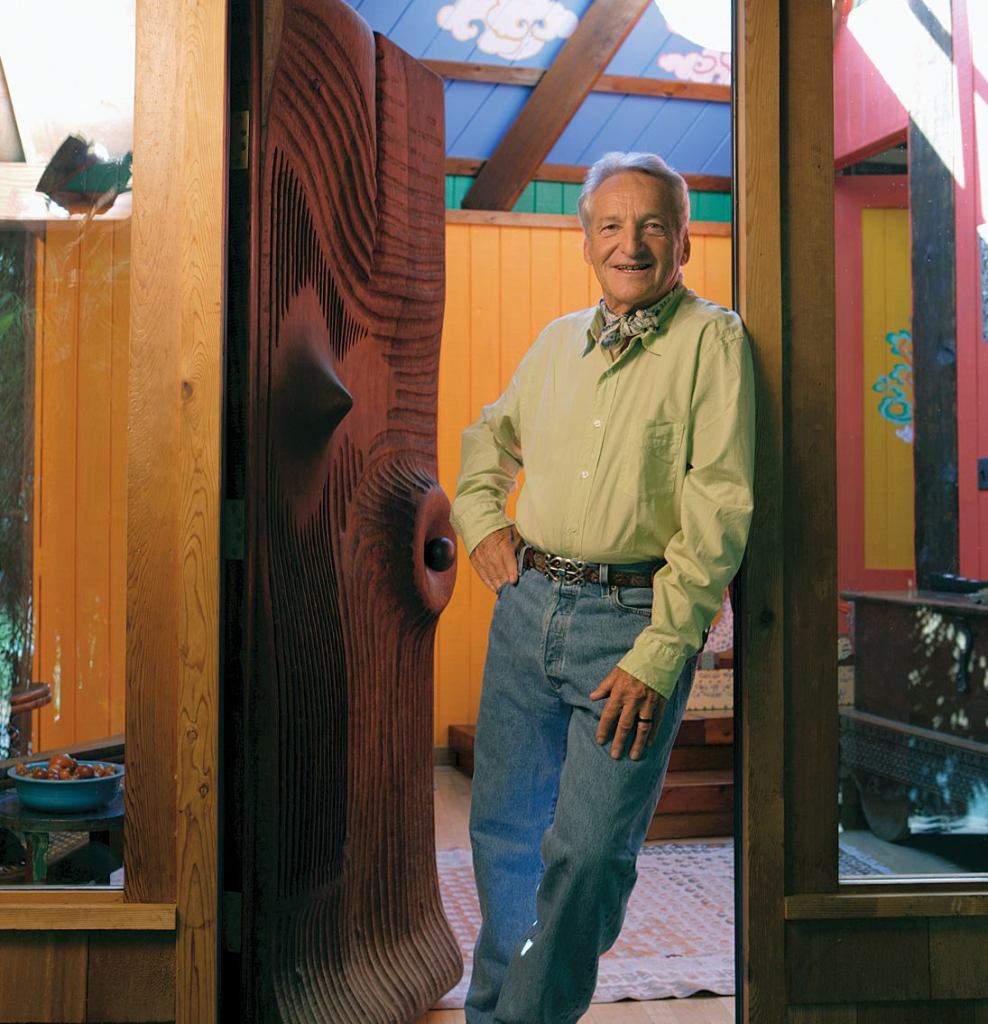
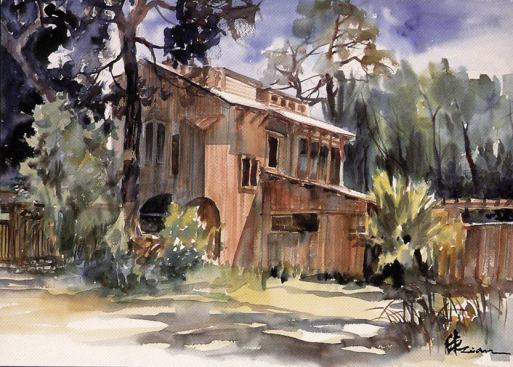
The start of a new design commission typically finds Van der Ryn spending two or three days on site, sketching with watercolors as the spirit moves. But he also demands a great deal from clients. “Architecture school tells you you’re Moses coming down with the tablets, and there are people who are overentitled who want a servant or a master, like they’re buying a Picasso,” he says. “But you really need to be a collaborator with clients.” He used to write contracts requiring the use of 100 percent renewable building materials, or nearly so, but by now, residential clients simply expect it.
Indeed, Van der Ryn says that when he explains green design to homeowners, they agree that it makes good sense. But politics is another matter. “I don’t think it’s hard to change ordinary people. That’s one thing that gets me mad about the Washington, D.C., Beltway and all the consultants they have,” he says. “I’ve worked in rural Tennessee and Kentucky with people who understand that photosynthesis is the basis for life on earth, and that you can literally design a tree whose leaves are solar panels.
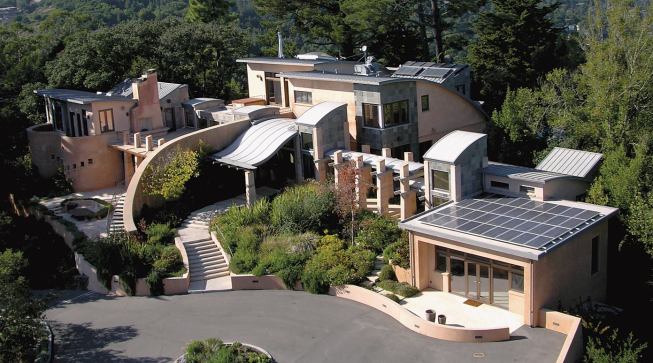
“Photovoltaics are incredibly exciting,” he continues. “You are recycling a dying star. It’s putting out all this disordered electricity and through PV technology, you are turning that into an orderly stream of electrons that can do work. Al Gore and John Kerry, who understand this stuff backwards and forwards, were timid about making the case that we could be energy independent and reduce climate change instead of going to war for oil. We’re just falling farther behind Europe and Asia. That’s a no-brainer place to start.”
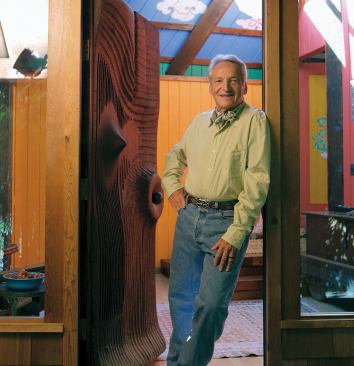
Today Van der Ryn is virtually a one-man firm, relying on a network of about two dozen designers, production people, and contractors to get his designs built. He’s a regular presence on the lecture circuit, and through his firm’s nonprofit arm, the Ecological Design Institute, he’s building on the work that the Farallones Institute began.
As his pioneering work continues, one gets the sense that his spell is still potent. “Sim has a quietness and vibrancy to him that people recognize,” says Not So Big House guru Sarah Susanka, Raleigh, N.C. “What he believes in his heart of hearts comes through in everything he does. His buildings speak of valuing life and light—what I refer to as the moreness that’s at our fingertips, if we just look.”