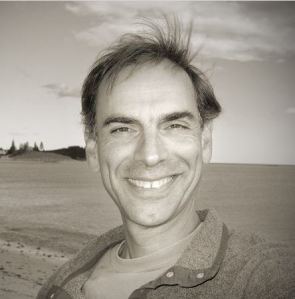
When Terry Wardell wants to see the Pacific Ocean, he seldom has to do more than raise his eyes. His company’s office, in Solana Beach, Calif., 20 miles north of San Diego, is less than a mile from the beach. His home, a few blocks away, offers distant views of the water. And many of the custom homes his company builds, in San Diego, Solana Beach, and the upscale shorefront towns of La Jolla and Del Mar, command broad vistas of beach and breakers. It is a fitting circumstance, because it was breaking waves that first drew Wardell to this stretch of Southern California coast. At 50, he combines the restless energy and casual attitude of the surfer he once was. And while his seagoing vessel of choice is now a catamaran rather than a surfboard, he still sometimes sounds like a surfer dude. His crew members “stay pretty stoked.” A finely crafted detail is “bitchin’.” A cell phone call ends with “Groove on, Big Daddy.” “My goal was to move down to Leucadia [a nearby beach town] so I could surf,” says Wardell, who grew up north of here, in Los Angeles. After settling in Solana Beach, he and his wife, Tracy Weiss, fell into a pattern common among their 20-something friends: “She went to school, and I pounded nails.” Carpentry made sense for a surfer, because it paid the bills and left time at the end of the day to hit the beach. Besides, Wardell says, as a paying gig, “This is all I’ve ever done.” Starting as a laborer at 14, he made a tour of the business, moving up through the ranks to framing carpenter, finish carpenter, job superintendent, estimator/salesman, project manager, and operations manager.
Somewhere along the line, though, building became more than a support system for his sport. He was good at it. He had the craftsman’s insistent urge to get things right. And the deeper he went into the task of bringing an architect’s vision to life, the more satisfaction he found. By the time he got the opportunity to run his own company (he took over an existing firm when the boss moved to Colorado), building custom homes had become a passion. Of the core group that became Wardell Builders, he says, “More than anything, we’re a bunch of finish carpenters who got together to keep building houses.” Today Wardell’s passion encompasses not only building the best houses he can—and his are among the finest we’ve seen anywhere—but also the constant development and improvement of his company. One need not spend much time with Wardell to see that this is what gets him out of bed in the morning. Running a business in an extraordinarily demanding market, with powerful clients to one side and a sheer wall of regulatory oversight to the other, this ex-surfer is riding a wave of challenge, excitement, and risk that rivals anything he’s seen on the water.
That’s certainly the way it looks on this sunny late-summer day, as Wardell hits the road to visit his projects under construction. First stop is San Diego’s Mission Hills district, where one of his crews is finishing off a striking limestone-clad modernist home on a compact infill lot. “I’m just dropping by to make sure we’re still on target for our move-in date,” Wardell says. From the outside, the project looks like a busy construction site. But inside, the house recalls that scene in a James Bond movie when the false bookcase opens to reveal a bustling secret laboratory. This place is crawling with workers. One bay of the garage holds a jobsite operations center with desktop computer, printer, fax machine, and phone. Inside the house, finish carpenters are installing hardwood paneling and flush baseboards; granite subs are setting countertops while more carpenters hang wall cabinets above; electricians are installing ceiling fixtures; plumbers are fiddling with the steam unit for the master bath shower; on a scaffold outside the second floor, a window crew is caulking aluminum mullion trim between large panels of fixed glass. Around every corner one must step over another subcontractor bent into an uncomfortable position. It begins to seem like a spoof of “This Old House.” But Wardell is in his element here, smiling, schmoozing, and feeding on the buzz of activity.
And far from “just dropping by,” he is instantly the center of attention, taking updates on glitches in the process, asking questions, offering solutions. The recessed cans arrived with the wrong trim rings, but the electrician promises his supplier will fix the mistake: “They have to send it overnight, air freight. They’re paying for it. They dropped the ball.” Wardell insists that there be more hands on the job when the parts come in. “Let’s get the electricians in here to knock this out, cause it’s going to screw up my painters.” Job superintendent Bob Goode is having trouble with another supplier, and Wardell coaches him to push for a solution. Wardell knows the guy, and says that if he’s peppered with enough options, he’ll eventually come across. “Don’t let a ‘No’ stop you.” Another subcontractor is playing hard to get, and Wardell suggests a different approach. “I’m willing to negotiate,” he says. “We’ve got to keep his mind on the job, not running off someplace else to make money.” Inside of 20 minutes, Wardell has taken in all he needs to see and offered everything his team needs to know. He has spoken with perhaps a dozen men, and before he leaves he has thanked each one.
On the way back up the coast to La Jolla, Wardell puts the San Diego project in perspective. “This is nothing outrageously unusual,” he says. “We’re used to having 30, 40 people working on a project at any given time. It’s pretty normal for our supers to juggle 10 or 12 trades on the job at one time. That’s why we have full-time supervision.” The urgency comes from the clients, whom Wardell describes as professionals or self-made entrepreneurs, people who have come by experience to appreciate artistry in the design of their homes and artisanship in construction. “If they didn’t, they wouldn’t hire us,” he says, “because we cost more.” Their sites are among the most expensive, acre for acre, in the country and often difficult to build on, due to hillside grades, unstable soils, and seismic conditions. Municipal and neighborhood restrictions add another layer of difficulty. Including reviews for view, massing, size, and architectural style, he notes, “You can be six months in discretionary permits before you even apply for a building permit. It’s a minimum of a year to groundbreaking in these beach towns.” Permitting fees run $20,000 for an average job. The next stop, a home under construction in La Jolla, is anything but average. Even at this end of the market, Wardell’s list of consultants rarely includes an archeologist, wildlife biologist, or acoustical engineer. This job required all three. “You take a lot of ribbing, coming from California,” Wardell begins. But the fact of the matter is, this site lies atop an ancient Indian burial ground and also borders a breeding area of the California gnatcatcher, a threatened native bird species. Superintendent Dave Cairncross explains, “A lot of the structure of the house is designed to leave remains undisturbed.” The foundation rests on concrete caissons, painstakingly located between grave sites and bridged by grade beams and a slab floor. As for the birds, he says, “I had to build an 8-foot sound wall to keep them in the mood to reproduce, and then I had to hire an acoustical engineer to prove it worked.”
With procedural hurdles that range this high, many custom home clients naturally conclude that the only way to make the effort worthwhile is to go absolutely first class in design and construction. Enough of them, at any rate, to have kept Wardell Builders busy for the past decade. Since the beginning, Wardell has structured the company to serve only jobs large enough to support a full-time superintendent, and his portfolio bulges with showpiece projects designed by the area’s most respected architects. Projects range in value from $600,000 to $10 million. Whole-house square-foot costs average $350, but on specialized jobs the number can be far higher. Nearly all projects are built on a cost-plus basis.
Wardell relishes the opportunity to work with this elite clientele. “Some of these cats are movers and shakers—or they’re done moving and shaking—in completely different fields,” he says, and their insights have helped him in his own business. “You can’t buy that.” But dealing with powerful people involves risk, especially when the motive force of client power collides with the immovable object of municipal authority. Wardell tells a hair-raising story about a high-dollar remodel—essentially a tear-down that met the criteria for a remodel by preserving a few strategic bits and pieces—that was shut down by an overzealous town planner. While the case was pending, the owner took Wardell for a walk on the beach, during which he calmly explained that if anyone had to eat this job, it would be Wardell and not he. The planner’s decision was quickly overturned, and the job concluded successfully and amicably, but not before Wardell had ample time to contemplate the potential pitfalls of working for powerful people—and the prospect of losing his company. “At this level it’s all about client prerogative,” he says. “If they get tweaked, you can pay a terrible price, you take the chance of getting crushed. Your guys have to understand that too.”
But if the risks are real, the results can be positively unreal. Drew Spaeth, who works in Wardell’s service department, approaches a dramatic contemporary hillside home in La Jolla and presents a card to an optical scanner. The courtyard gate glides silently open on a curved track recessed into the stone patio. Another wave of the card unlocks the front door, a 5-foot-wide, 8-foot-tall stainless steel frame with a custom leaded-glass panel, which pivots on pin hinges and latches via an invisible electromagnetic mechanism. Wardell is inclined to breeze through the house. But there is simply too much to see, and the tour keeps slowing to stare, first at the bird’s-eye view of the Pacific through a sweeping wall of glass. Stainless steel mullions frame the curved floor-to-ceiling panels of exterior glass. Stainless-framed glass doors, also curved—and heavy—slide like precision machinery in flush tracks, each of which Wardell’s crew plumbed with its own miniature drainage system to handle wind-driven rain. Interior doors, too, are curved, as are cabinet doors, a glass shower door, and the limestone slabs that line the shower. “And all the doors have different curves,” Wardell notes, drawing out a massive sliding panel that nests flush with a curved plaster wall and closes perfectly against a mullion of the exterior wall.
Here and there hang framed photo collages of the construction process, which hint at the scale of effort involved. “We took 210 end dumps of material off the site, 14 yards each,” Wardell says. “We turned a flat site into a hillside site.” A shot of open roof framing shows rafters radiating from a gracefully curved steel ridge beam, like ribs from the spine of a fish. Everywhere in the house are details that had to be a lot easier to draw than they were to build. A plaster ceiling over the dining table spirals upward like the interior of a giant, pink conch shell. Above the central spiral stair, a 6-foot-diameter disk glows like a low-orbiting moon. “That’s an alabaster skylight,” Wardell explains in passing, as if any respectable house might have one. The sweeping, copper-clad eaves, on the other hand, presented a challenge worth talking about. “We had to stretch bend all of that,” Wardell says. “We weren’t sure it was physically possible when they gave us the spec.” There is pride in his voice, but also a matter-of-fact confidence in the capabilities of his people. “We invent wheels all the time,” he says. “You’d be hard pressed to ask us to build something we couldn’t build.” If custom building were an Olympic sport, this routine would easily earn 9.7s and 9.8s for difficulty and some 10s for execution. It comes as something of a surprise, then, that Wardell refuses to dwell on execution. Nailing details that have never been built before, creating something of immense complexity and getting every last thing right, handling a multimillion-dollar project so smoothly that the owners hang photographic tributes to your company on their walls—“That’s all technique,” he says. “Technique is not the issue. It’s all the other stuff.
“I’m a carpenter who learned how to build, who ended up running a company that builds houses,” Wardell explains. Producing a superb house is hard work, but it is what he grew up to do. “The bigger challenge has been to build a business.” Success at this side of the game rests on attracting, training, and motivating the right people; fostering an environment in which they share what they know rather than compete for favor; marshalling the resources to support them; creating career paths for their future. It involves bringing in the right kind of work, the “architecturally interesting and architecturally demanding projects” that Wardell has made it his company’s mission to build, and choosing the best uses for his own limited time in a company whose rapid growth could easily pull him to pieces. These tasks are not what drew him into custom building; they are “the other stuff” that his job now is all about. If Wardell became a businessman more by default than by design, though, he has succeeded in making the role his own, applying energy, intelligence, curiosity, and an optimism that leads him to say things like, “There are no problems—only solutions.”
And it has been quite a ride. In 1995, with California’s construction industry emerging from recession, Wardell’s company did a volume of $3 million. Three years later the figure was $8 million. In another three years it had grown to $14 million. At each stage of growth Wardell Builders has had to become a rather different company. Adding crews in the field increased paperwork and the demands on support staff. Jobs handled in combination by a single person—receptionist, human resources director, controller, computer network specialist—by necessity broke off into stand-alone positions. A similar process occurred in the field, where lead carpenters took over day-to-day concerns like quality control, allowing project superintendents to focus on the bigger picture. Such logical, incremental changes look neat and tidy only in hindsight, however. There are no roadmaps that tell a small builder, for example, when it is time to hire a controller. To help draw his own roadmap, Wardell has brought in business consultants, attended industry seminars, and developed a near-religious devotion to his Builder 20 club, part of a networking program established by the National Association of Home Builders. More importantly, Wardell has committed his entire staff to a process that continuously reexamines and periodically reinvents the business. “It’s a complete experiment all the time,” he says. “I’m not saying that’s the right way to run a business, but that’s the way we run ours.”
Superintendent Bill Robershaw knows the method and likes the results. “In addition to building houses, we’ve been building a firm,” he says. With a wry smile, he adds, “That’s all new territory to us carpenter types, but it’s been kind of fun on that level for me.” Compact, graying, and trailed everywhere by his compact, graying Australian cattle dog, Robershaw has been on board since the founding of Wardell Builders, and he speaks with authority of the project-management systems the company has developed. In addition to a monthly budget report, he notes, the office generates a twice-monthly “committed costs report,” which details where known future expenditures will go. “It gives you a real good early warning if something’s out of whack. So we don’t have these big, ugly meetings at the end where you try to do a huge change order to cover everything cause you’ve just been going with the flow and building.” In seniority with the company, Robershaw is Wardell’s peer, and out on the jobsite the two laugh like the old friends they are. In private, though, Robershaw voices a respectful appreciation for his boss. “He’s very conscious of taking the stress out of what we do. He initiated profit sharing way back in the old days. Before I worked for this company I never had a paid day off in my life, never had health insurance. He’s doing it right.”
For Wardell, doing it right at this stage of his company’s life cycle involves narrowing and focusing his own job description. Initially responsible for all sales, estimating, and project management, Wardell has already shed the estimating job and is now shifting project management to construction manager Mike Murphy and controller Vickie Geyer. “We’ve reached that growth spurt where we’ve got to restructure our whole business to succeed,” says Geyer. “Terry used to do scheduling; I’m doing that now. He used to do quality control; Mike is doing that now. We’re basically trying to get project management more into the office. We’re trying to bring the buy-out into the office, so [the superintendents] can be more into what’s going on out on the job, instead of the paperwork, and so Terry can focus more of his energy on sales and the client relationship throughout the job.”
“What we have works,” Wardell says. “But we think we might be more efficient.” With his current 65 employees, including 9 superintendents, “I think we can be more centralized without losing the finesse.” As always, the reorganization has been a group effort. “We do beta runs and discuss it: How much can be systematized, and when does the systemization reach the point of diminishing returns?” The changes will spread management responsibility downward in the existing hierarchy. And in the role he envisions for himself—“more of a CEO than a president”— Wardell will explore ways to further expand career opportunities for his long-term employees. “People need more to step up to,” says Wardell, who has quietly begun a “special projects” division to do smaller jobs, such as kitchen remodels. In the meantime, current volume and profit margins should see the company comfortably through to its next incarnation. “It’s more important to me that the systems get in place right than to rush out and get more work.”
As always, however, opportunities present themselves. Wardell and general superintendent Greg Muise recently returned from a trip to Mexico City, where they toured the works of architect Alberto Kalach, in preparation for building a 12,000-square-foot house Kalach designed for clients in Del Mar. Muise will step down from his current position, in which he acts as traveling mentor to the project superintendents, and strap on his tool belt to captain this high-profile, high-stakes project. “It’s basically a cast-in-place concrete house,” Muise says: No paint, no plaster, no room for error. “Everything has to be in place, then it’s poured. In superintending there’s always the before-the-pour jitters. Here there’s going to be 35 or 40 pours.”
That wave will be Muise’s to ride. Meanwhile, Wardell will continue to match himself against challenges on the business end of building. “I’m still in the middle of the MBA,” he says, grinning. “It’s a real-l-l-l-l-y long program.” But the surf is up on this side of the beach, too. “I think building a business is as exciting as building a house,” he says, and the glint in his eye says that it really is. “It’s very soul-satisfying on a lot of levels, and it’s very consuming and painful at other levels. You get a lot out of it, and you give a lot to have it. When I get burned out, I think of exit strategies. Other times, I think I could do this till I’m 80.”
Groove on, Big Daddy.
The Power of 20 Asked what he gets out of his Builder 20 club, Terry Wardell answers with a question: “What haven’t I got out of it? That would be easier to say.” Pressed for specifics, he narrows it down to this: “Understanding the business side of construction.” This loose affiliation of builders from around the country “has been probably as important as any other thing for my business, its success, our development as a company, and our future development as a company.”
Builder 20 is a National Association of Home Builders’ program that matches builders with the owners of similar, non-competing companies for the purpose of sharing information. Wardell’s group of 18 builders meets twice annually, once in the home city of a member and once at a vacation spot. Every meeting includes a guest speaker and plenty of social time—spouses are invited—but the heart of the matter is simply discussing business. “These guys are like my board of directors,” says Wardell. Each member prepares a board report that outlines the current state of his company, his plans for it, and the major challenges he faces. “That analysis and being forced to do it is huge,”Wardell says.And the feedback from longtime fellow members—he is going on eight years with the group—is invaluable. “They know your business pretty intimately, and they also know you and how you approach issues.”
Partly as a result of sharing such closely held information,Wardell says, “We’ve become a group of old friends.” The meetings have become as much family reunions as business trips. “My wife relates it to Thanksgiving or Christmas.” But while the fellowship is a big plus, “Equally large is what goes on between the meetings, and the relationships you build. When you’re facing a problem, be it personal or business, normally there’s someone in the group who can relate to that problem.” Breaking into a new market, working with a new product, mulling cost-plus versus fixed-price contracts—”I don’t care what you want to branch into, there’s someone in the group who’s had experience with that.”