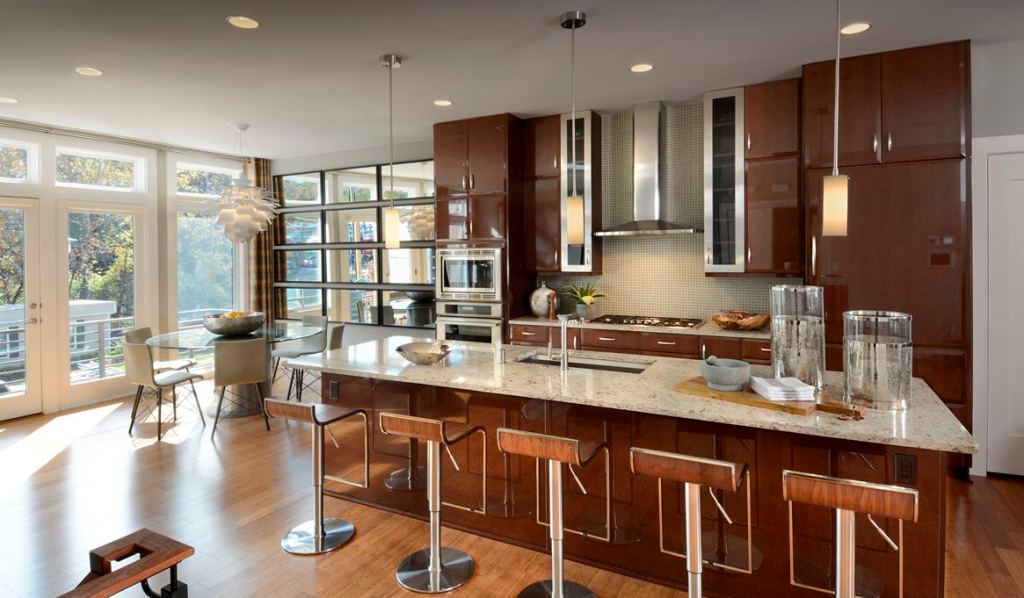

EYA offers unique cabinetry, countertops, flooring, and other finishes in each community to give each location a distinct aesthetic.
“It used to be you would do a model and there’d be a little patio and you’d put a table and four chairs and call it done. It’s so far beyond that now,” Diepeveen says.
Keep It Simple
Builders need to offer a contemporary space, but it also must have broad appeal. After all, when touring a model home, it’s crucial that buyers can imagine living there, Diepeveen says. “You’re really trying to sell a lifestyle.”
Designers at Marc-Michaels use clean lines and classic color palettes, adding pops of color and texture through accent details, says Christina Villalonga, senior model home designer. “We shy away from trends that tend to fade quickly, and we tend to splurge on special ‘key moments'” like built-ins or light fixtures, she says. The goal, she adds, is to create a feeling of “comfortable elegance.”
Along the same lines, Dunavant recommends using a neutral color palette and adding visual interest through decorative features. “Simple design features such as paint colors, light fixtures, or even tile patterns may come with a small price but make a huge difference,” she says. “I prefer to utilize decorative features near the front of the home to catch [the buyer’s] attention immediately.”
Martelon-Braunthal cautions against getting too “scheme-y” with design, noting that overly themed or overcrowded rooms can detract from the home’s appeal. “It’s a fine line because you want to wow and engage people, but you have to be careful not to make it distasteful,” she adds.
Allow Physical Interaction
While the overall plan should feel streamlined, model homes are an ideal place for builders to showcase their latest products and technologies so that potential buyers can see different features up close. This opportunity is “instrumental” for increasing both customer satisfaction and options revenue, says Martelon-Braunthal.
Although buyers have a greater wealth of information at their fingertips than ever before, physical interaction is still crucial, agrees Innerst. “People like to do their research at home in the evening … but at the end of the day it’s like looking at a car online: until you go in and drive it and sit in it, you’ll never truly experience it,” he says. “Being there in person and experiencing it and touching it is so critical to the experience.” That holds especially true for products and technologies that buyers may not have used in the past, like home automation systems or premium appliances.
However, Martelon-Braunthal advises builders to strike a balance between making homes engaging and keeping them realistic for all price points. To accomplish that, TRI Pointe uses a “good, better, best,” approach in its entry-level and mid-range communities.
“When you have [the model] too loaded with every premium feature, it just becomes a disappointment,” she notes. “We want to keep it attainable. We will do a standard model that has the basics to show that you really can buy a lovely home without spending too much.”
Upserve the Customer
When presenting options, Meagher suggests that builders focus on “upserving” rather than “upselling” buyers. “When you educate a consumer on why they might choose to invest in higher-end products, that’s empowering the customer,” she says. “We really set the design consultants up as educated professionals who will expertly guide the customer through the experience. When they receive good education and we can demonstrate the value of why they should invest in higher-end products, often they do so, which is a win for everybody.”
EYA’s Innerst agrees that sales staff must first and foremost be educators, noting that no matter how great some features are, most buyers have a budget they aren’t willing—or able—to surpass. “It’s really more about educating them on all the differences in the products so they can make the best decision on what’s most important to them,” he says.
The intangible benefit from that approach is a more satisfied buyer, which ultimately is one of the most important things a builder can gain. To boost their brand, Dunavant recommends that builders make the experience as customized and fun for the buyer as possible. “A builder will instantly build customers by being unique and personal,” she says.
Meagher also promotes the creation of a customer-focused environment to make the buyer feel comfortable and in control. “We look at home builders as retailers of a very high emotion, high dollar item: a home,” she says.
With those tenets in mind, model homes and design centers quickly can become a builder’s strongest first impression—which ultimately could result in a loyal customer.