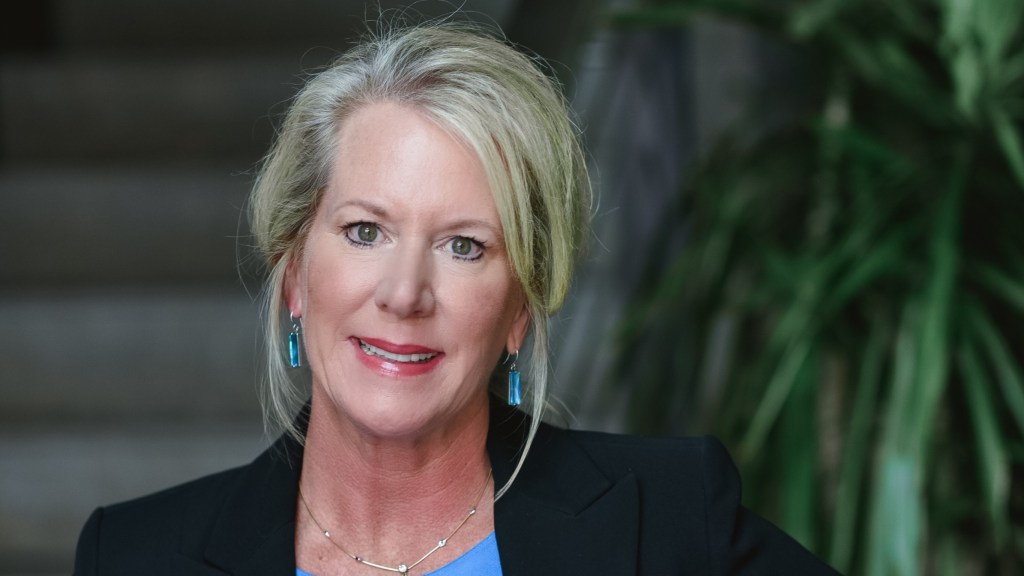
For over two decades, Erica Lockwood has connected skillful individuals with leadership positions at home building entities across the country. And it’s the people—especially those with entrepreneurial spirits—that has kept Lockwood passionate about her day-to-day work.
Despite the changes in technology that have created noise and a thicker barrier to contact candidates, Lockwood has revisited the basics of a good ole fashioned phone call with hope that the perfect person will answer.
While the industry is a construction and land business, Lockwood believes it’s more so a people business. “People build homes and people buy homes,” she says. “I love the industry. It is such a well-connected group. It’s big, but it’s small at the same time. People are far more genuine in this industry than anything I’ve ever experienced.”
As executive partner and managing director at Joseph Chris Partners, Lockwood gives more insight below into today’s talent landscape, what it takes to be a leader in 2026, and signs of a great already established leader.
What does the talent landscape currently look like for the home building industry?
I would say, right now, the home building industry does not have a talent shortage necessarily, but it has a readiness gap. What I see is that builders are really competing for maybe the same 10 percent of leaders across the markets and the higher level you go, it could be dramatically less than that. Downturns and pauses also play into this.
For land development, when the downturn happened in the early 2000s, there was a pause and land roles were the first to go. Nobody was buying land in 2008 so there was this huge halt on that particular skill set. Then it started to ramp back up, and you’ve got this gap of leadership and experience. During COVID, it was insanity, unsustainable insanity as people needed a land person.
Truly, the talent landscape is as bumpy as the market is, but you have to have leadership with a clear direction on where you are going and why you’re hiring. And culture is super critical right now more than it has ever been. It is a big factor in someone making a decision on whether they’re going to stay or go.
What leadership styles and cultural factors do you think will work best going into 2026?
Emotional intelligence is something that is often not measured, but it rears its ugly head. You know, it’s very operational. You’ve got to have emotional intelligence (EQ), because people don’t leave hard jobs, they leave unclear leadership. The good news is EQ is something you can improve on personally all the time.
Great leaders create clarity. They don’t create noise. For the current market, which is not the best, you need a leader who can strategize around the elephant in the room. They have to be on the offense versus defense because the market will improve. It always does. It gets rough and it gets smooth sailing and then it gets a little bumpy. After you do this for a while, it’s just the way it is.
You mentioned EQ and clarity as leadership qualities. What other traits are important?
The ability to build people. They don’t just lead them, they build them. And there are a lot of people who it’s not a natural tendency to want to pour into people.
Yet, there are people that just have this innate ability to do their job exceptionally well, but also bring others along and develop them, and to be honest with you, people in those lower roles that want to move up, they want that. They’re begging for it. And there are so many people that have asked me through the years, ‘Erica, do you have any recommendations on how I can get professional development?’ And I ask, ‘Have you talked with your leadership?’ And when there’s nothing there, it really stinks.
Another trait is adaptability. For strong leaders to thrive, you’ve got to be able to adapt. They have to have the people intelligence and strategic agility. You really must think like a builder and an operator and as an investor simultaneously. There’s a lot of pivoting that happens in the industry and as soon as you’re going into war, if you will, and your soldiers see the leader panicking…. that’s not a good day on the battlefield at all.
Why is proactive leadership development so important in home building?
It is an industry that is very reactive by nature, right? I mean, it’s like, we have a contract, let’s get a start going, and I get it, you can’t be too far out because the interest rates may do something else, but the companies that really proactively [instead of reactively] build their bench and they have a strategy and they’re thinking about the leaders and tomorrow’s leaders, they’re so much more capable of handling the ebbs and flows. For example, I think about David Weekley Homes. They’re kind of a rarity. They have so many people that have such long tenure, but they are a company that is very intentional about when they bring on their people. If you put every division president at David Weekley in a room, I would say a good 80 to 85 percent of them are all lifelong, careerlong David Weekley people that started out as builders right out of college. That’s the David Weekley way of building their own leaders internally and it works well for them.
What happens when a leader doesn’t fit the company culture?
The problem with hiring someone who doesn’t fit your culture is you can have the corporate office and that could be the most amazing culture, great leadership. And the majority of the divisions in their particular geographical locations could really mirror that closely. You make one bad hire in Charlotte, North Carolina, or something, and it is not even a close match. You’re going to wonder pretty quickly, why is Charlotte not doing very well? You know, operationally, budgets are not hitting. You may have the wrong leader in place or that person hires the wrong leaders in their respective departments, and it’s just bad. Culture really shows up when things go sideways.
What still works in recruiting despite all the technological change?
Being in this for so long, LinkedIn didn’t exist when I started, right? A lot of builders were still faxing everything. The insanely quick adaptation and growth of technology have been great, but I think that people are so overwhelmed by technology that it has made me have to strategically keep doing what I was doing before, which is pick up the phone.
What kind of characteristics do you look for across the board in candidates?
What I look for is a real person. The worst thing I can do, or the worst thing anyone can do, is to strongly consider someone who’s always looking.
How do you view job hopping and career longevity?
There’s so much job hopping. It is kind of recommended with the newer generations coming in to stay two years and then go someplace else because they’ll make more money. I mean, that’s not all untrue in certain situations. However, I have to explain any of those kinds of moves. Even if it is someone who’s a regional or division president, it’s well, ‘Why did Sally or Joe only stay 18 months at this position?’
And so, longevity, tenure, and seeing someone who has progressively grown in their career, hopefully within the same organization is what I look for. I really look at someone who has that stick-to-itiveness of going through the various changes of growth in their own career whether that’s working with different leaders or maybe there’s been a merger or acquisition, and how did they maneuver through that?
The best situation is someone who is not running from something and is thoughtfully open to making a career change for the right reasons.
What are the “right reasons” for making a career change?
They want growth, a growth opportunity, and it’s just not available. I mean, their boss might be kind of their same age. They’re not going anywhere. You know, there are those things. It’s not anyone’s fault. And a great leader would celebrate someone being able to move up.
Can you share an example of strong leadership supporting employee growth?
I’ve had, for instance, a division president that I’ve known a long time, it was his VP of land acquisition. The VP was very ready and wanted to move into a division president role and his boss, he said, ‘Erica, I’d hate to lose him, but you should call. He’s ready for a division president role and I absolutely give my 100 percent approval and recommendation. Again, I’d hate to lose him, but he deserves the opportunity.’ And you know what? He did take that opportunity and he’s doing wonderfully. That’s a sign of being a great leader. It hurt to lose his top land acquisition person, but he did it anyway. It’s very rare. Most of the time people are actually looked over and not considered for opportunities to move up out of self-preservation for their boss and that’s very sad.
Looking back on your career, what are you most proud of?
I would say it’s not the placement of people in the last 25 years; it’s really the impact those people have made. I have a client in the Detroit metro area that I’ve worked with for 24 years. I placed almost every person that’s on their leadership team today and just the direction that the company has gone and grown, that’s cool. I’ve had people call me, you know, 14 years later and say the job I helped them with changed their life. For me, that’s a win. When I call someone, they don’t know that I’m calling about an opportunity that ultimately positively affects their professional and personal lives. That’s pretty cool.