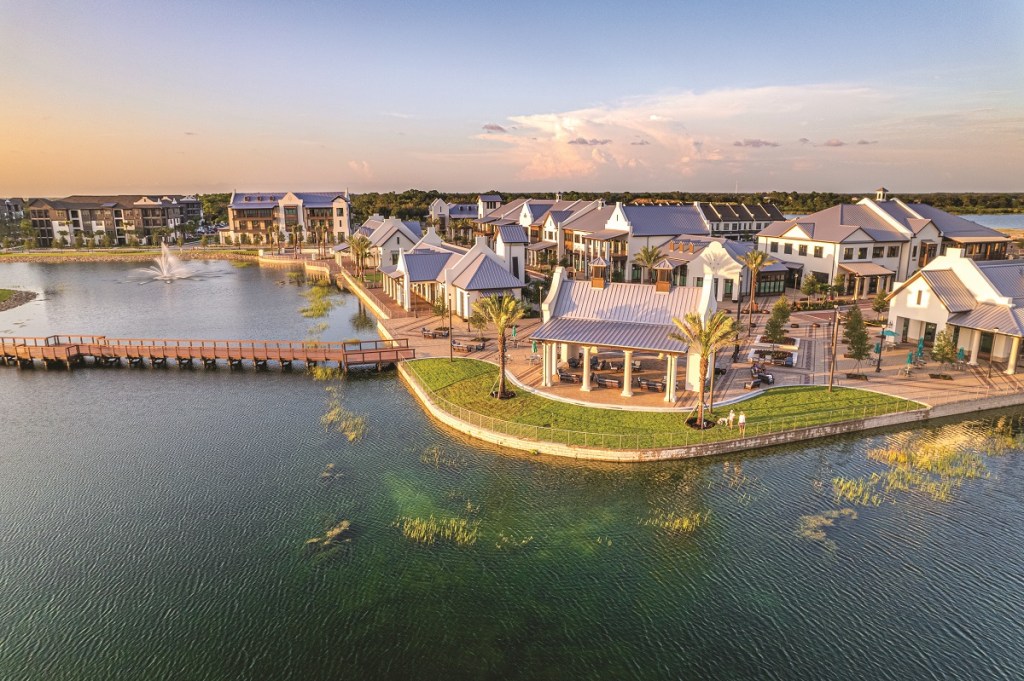
Lakewood Ranch has held the top spot among multigenerational master-planned communities in the United States since 2018. That kind of sustained success across multiple market cycles does not happen by accident.
Patient capital and a long-term vision have allowed Lakewood Ranch to command premiums of 35 percent to 40 percent above comparable homes in the region. Now 31 years into its development cycle, the Florida community continues to draw buyers across all life stages while staying true to its original principles.
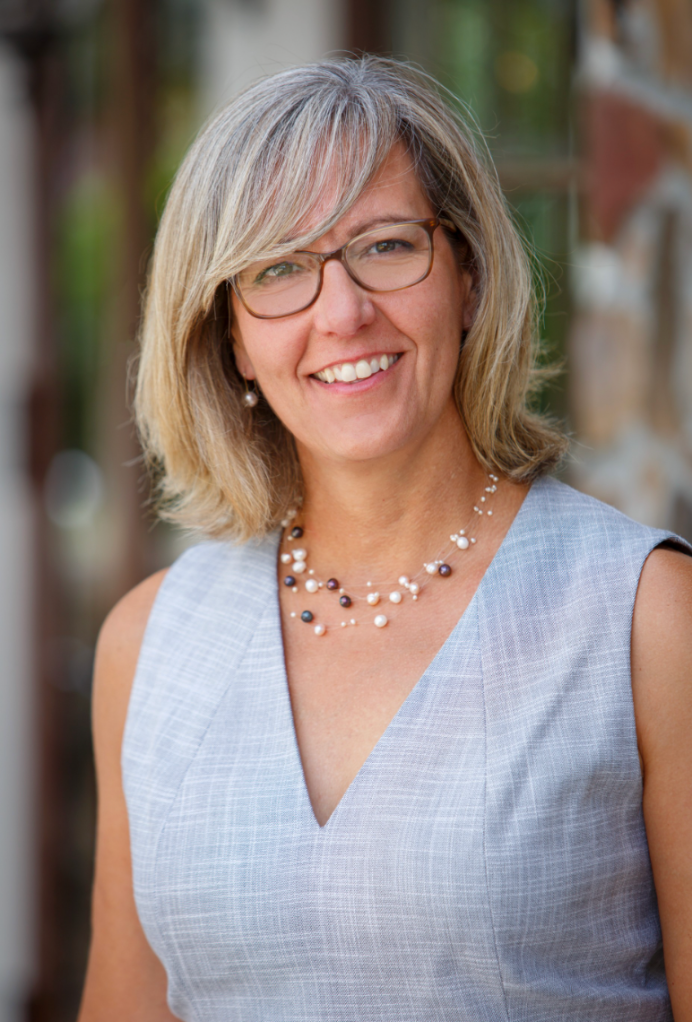
Ahead of her panel session at Zonda’s Future Place Conference this October, Laura Cole, Senior Vice President at Lakewood Ranch, spoke with BUILDER about what separates communities that endure from those that fade, and why she believes stewardship and consistency matter more than any single amenity.
Lakewood Ranch has been the top-selling multigenerational community since 2018. What has allowed it to sustain that momentum while others slow down over time?
Scale matters, and where you are in the momentum cycle tells you a lot about how well you will perform through build-out. We are 31 years into our development cycle with close to 50,000 homes, and we still have about a seven to ten-year horizon ahead.
But we have always followed the same vision and the original planning framework that we committed to in the beginning. First, we committed to what we were not going to develop. Open space has been one of the key themes, and the multigenerational commitment has been just as important. We do not open village by village. We open an entire section, usually about 5,000 housing units. We ask where the demographics will be in the next seven to ten years. Who are the buyer profiles, what are their lifestyle choices, and price points. Then we decide on the builder portfolio and add what we call the connective tissue, the services and amenities needed to support that section.
How did you decide on those original principles?
The founding group toured master-planned communities across the country, including Irvine, The Woodlands, and Reston, and they took away best practices and lessons learned. They committed very early to conservation and connectivity. No residential project should be more than two miles from neighborhood shopping, schools, or job centers. Every time we open a new area, we go back to those principles. From there, we adapt to demographic shifts and changing consumer preferences. It’s not a very complex framework to work under, but it has worked out really well for us.
How do you finance that long-term approach?
We have had the same ownership for decades, and they have allowed us to take the long view. Too often in this business, if you hit a bad market cycle and cannot recover, or you are forced to carry debt too long, the community fails.
Rex Jensen, our chief executive officer, knew from the beginning that we would need a financial instrument to make long-term planning possible. That is where the Stewardship District came in. In my view, it is the most responsible way to develop a community. It shifts the burden of growth and cost to the people coming to the area. The Stewardship District allows us to think about the community as a whole system instead of incremental pieces. When we look at stormwater management, trail systems, parks, and greenways, it lets us think at a very large scale. It also covers operations and maintenance so that when we leave as the developer, the standards are still funded and enhanced over time.
In uncertain markets, what qualities resonate most with cautious consumers?
When consumers get cautious, they stop gambling with their home purchases. They look for places with a track record, consistency, and proven stewardship.
I usually take people to the first neighborhood we built 31 years ago and drive them through it. I tell them, “This is how your neighborhood will look in 30 years.” Buyers pay more for homes here because they see that infrastructure and standards preserve and enhance values over time. Connectivity is another piece. Schools, theaters, and town centers are already part of the fabric of the community. It is not a promise of what is coming later.
How do you balance what has made Lakewood Ranch successful with evolving tastes and demographics?
That is one of the most enjoyable parts of the job. We recently completed a major trends analysis that looked at the youngest generation entering the market, and we are planning around their expectations. The framework stays the same, but how we deliver it evolves.
There are a lot of lifestyle layers in a community on this scale. You buy into a village with an amenity base that fits you, and then there are the community amenities that we focus on, like the trail system and the twelve community parks, plus the town centers that act as gathering hubs.
The best flexibility we have is with the activation of the town centers. For instance, at Waterside Place, we had an adult social league for young professionals who were playing kickball and volleyball. They didn’t have lighted sand volleyball courts anywhere, so we built them. It wasn’t an expensive amenity, but it became a big draw.
What are some of the biggest misconceptions about creating long-term community success?
One is that it is a real estate endeavor. It is not. It is community building, which means thinking about how people live at different life stages and what they will need.
There is also a large economic development component at this scale. The commercial base creates all kinds of additional opportunities. Another misconception is that success ends at sellout. Many of us talk about building out and designing everything to remove the developer, but once you create a community like this, there are opportunities for redevelopment. Master-planned communities should be thought of more like cities, with town centers that evolve just as a small town would.
One of the smartest things that SMR did was incubate organizations from the very beginning: the Lakewood Ranch Business Alliance, which is now completely self-sustaining with 800 members, the Lakewood Ranch Community Fund, and Lakewood Ranch Community Activities. Our CEO always said he hated it when developers throw money at lifestyle and marketing, then leave, and the community loses its capacity. Community Activities is funded through every home we build, with a perpetual funding mechanism to continue programming. Long after we are gone, the community should not miss a beat.
Your session at the Future Place Conference is titled “The MPC Long Game: Built to Last, Built for What’s Next.” What trends do you think will most shape how master-planned communities evolve?
I am excited about the potential for smart city technology. It is surprising how much human oversight is still required for stormwater management, infrastructure monitoring, and response times. Master-planned communities are well-suited to implement those systems because we are not dealing with layers of government.
The challenge with legacy communities is upgrading at scale over time, but that is where the opportunity lies. Trails are another example. They remain our number one amenity, and they are evolving. Thanks to electric bikes and the pandemic, people use them for commuting and recreation. Ten-foot-wide trails are not always enough anymore. Some communities are moving toward separating higher and lower velocity traffic, like in Europe or Boston’s Back Bay. Trails will continue to be one of the most powerful amenities we offer.
Is there anything you would like to add?
For large-scale master-planned communities to succeed under one vision over time, you need long-term financing. In Florida, we are fortunate to have the Stewardship District. Other states use different instruments, but with rising costs and the push for sustainable growth, these mechanisms are essential. They allow long-term decisions that preserve value and generate the premiums that come from decades of stewardship. Too often, private equity and short-term returns shorten the horizon and lead to weaker communities. Long-term investments and mechanisms ensure that when the developer steps away, the community continues to get better instead of eroding standards.