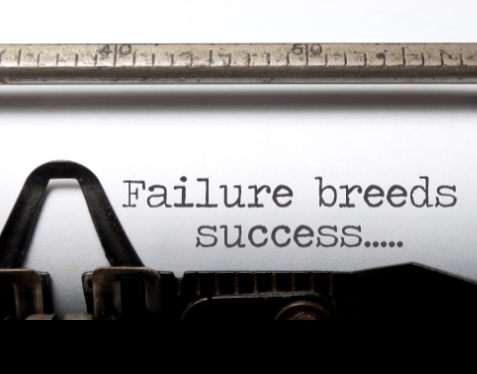
The toughest single business day for my company turned into the best sales year in our history. There are few more tangible ways to exhibit drive than our fourth observed behavior: recovering from setbacks with renewed energy.
After struggling with the decision, we decided to let go one of our trainers, and even though he was our least-producing trainer we lost 15% of our annual revenue in business that day. That left us in a huge hole to start both the quarter and the year, and we needed to find the resolve to dig ourselves out of it. Instead of convincing ourselves of why the mountain was too tall to climb, we all collectively grabbed our pick-axes and boots and started scaling.
We rallied quickly. By the end of the quarter we’d not only made up the sales we lost, but we also reached our original quarterly sales goals we’d set before we lost the business. By the end of the year, we exceeded all of our targets and marked down the biggest growth year in company history. Thinking back to that one tough day in January once we reached the end of December, I knew our team had exhibited drive in the most tangible way possible.
In many ways, the loss of all that business in one day engaged our drive in a way we might not have otherwise experienced. The seeming difficulty of the task at hand super-focused our entire team and infused us with so much energy and drive that we were convinced we’d not only make our goal, but we’d surpass it.
In hindsight, we became so enamored with turning around his behavior and saving him that we at times overlooked the fact that he wasn’t a culture fit. Once we parted ways, our more unified culture took over and drove us to even higher achievements than we could’ve reached otherwise. This is why we coach workplace culture as the center of progress with our clients. Profit comes out of productive and cohesive corporate cultures, not the other way around.
One of my favorite examples of setback recovery comes from one of the greatest American athletes of all time, Jim Thorpe.
By the time the 1912 Olympics in Sweden rolled around, Thorpe had already established himself as one of the great athletes of his day. He was unstoppable over the first two days of the Olympic decathlon, and on the dawn of the final day he had just one more event: the highly anticipated 1,500 meters. But when he awoke, he quickly realized someone had stolen his running shoes.
Thorpe found one replacement by burrowing in a nearby trashcan, but it was so small it barely fit his foot. He borrowed another one but it was floppy and oversized. All Thorpe did was win the 1,500 and set a world record in mismatched shoes he’d never run in before. The time he set wasn’t beat in the Olympic decathlon for another 60 years. After the event, a famous picture of Thorpe in his Olympic outfit shows him standing defiantly not only in different shoes, but even different socks.
Circumstances don’t hold us back. Only our identity can do that. If you embrace your identity with the belief that you’re enough, you’ll always maximize whatever opportunity your circumstances provide because your identity will propel you forward through whatever presents itself.
Setback recovery isn’t just a necessary part of life. It’s also scientifically beneficial for our progress.
Recent studies showed our brains tend to have one of two responses to mistakes. The first looked like internal puzzle solving; the brain wants to figure out what went wrong, why, and how to navigate around the mistake to avoid doing it again. The second viewed the mistake as a threat and tried to avoid facing it altogether.
Interestingly, the more experienced people in the study were more likely to be in the second category. They trusted their own judgment even in the face of a mistake. This put their brains into shutdown mode and didn’t allow them to puzzle out a solution to avoid the same mistake the next time. The people in the first category, the one that figured out a constructive solution, tended to view setbacks as learning opportunities.
What the researchers discovered was that setbacks are actually a better conduit for greatness than successes are as long as we’re open to learning from them. Our brains are far more active in puzzling out positive solutions when we fail than when we succeed. And it’s often these mistakes that engage our drive and push us to heights we didn’t think possible.