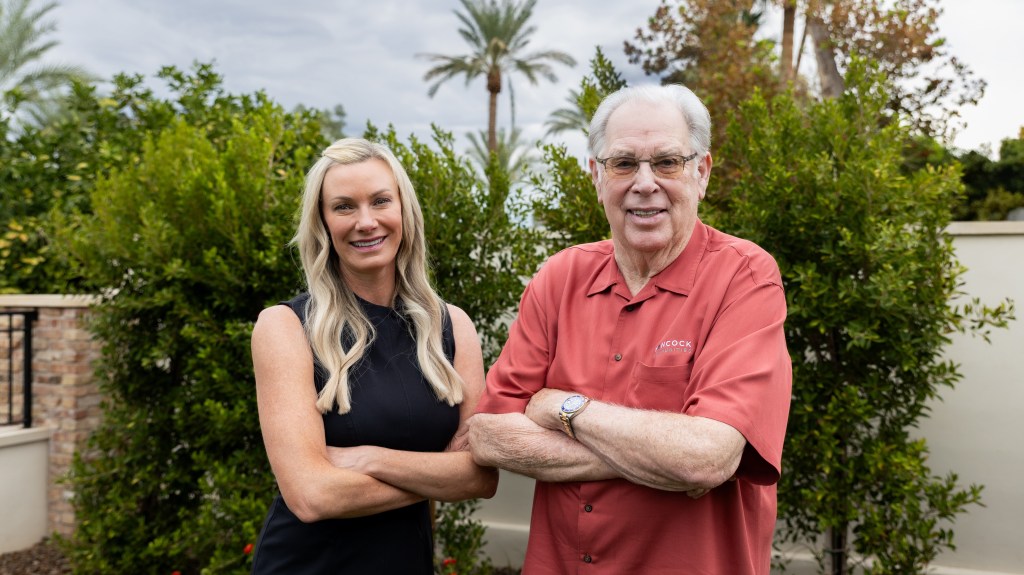
Kelly Whiteley’s entrance into the build-for-rent (BFR) industry was unexpected. While working for an internet service provider that specialized in bulk internet solutions for multifamily projects, her stepfather Greg Hancock was relaunching Hancock Builders and asked her to help on small infill for-sale communities.
Soon after Whiteley began helping him, two ownership groups approached Hancock and Whiteley with site plans for a then “new” BFR concept. “The product combined elements of apartments and townhomes, offering single level living with private backyards. Greg and I immediately recognized its potential as a compelling alternative to traditional apartment living, and we believed the market would respond very favorably,” she says.
Since 2017 when the opportunity arose, Arizona-based Hancock Builders has delivered 25 BFR communities with 10 additional projects currently under construction. And by year’s end, they will have delivered more than 5,000 BFR homes within the eight-year span.
Celebrating 50 years in business, Whiteley stepped into the role of CEO with three priorities:
- Expanding business development to strengthen their pipeline of projects.
- Leveraging AI and technology to automate processes, allowing them to scale efficiently without adding unnecessary overhead.
- Launching a comprehensive marketing and social media campaign to build greater brand recognition.
Fully integrated, the BFR firm says, “We manage every stage of the process — land acquisition, entitlements, pre-development, architectural design, horizontal improvements, and vertical construction — all within the same team. This end-to-end control eliminates gaps in scope, streamlines communication and ensures we deliver projects on time and on budget.”
Courtesy of Hancock Builders
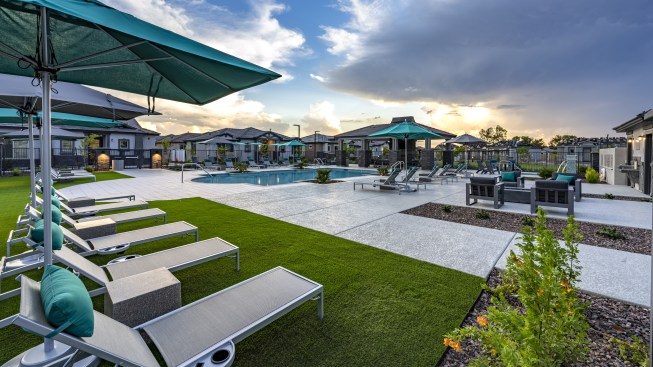
An amenity view from Vlux at Peoria Heights.
So far, the growth has been exclusively through referrals, but Whiteley plans to change that as she sets her sights on national growth with developers outside of Arizona. Yet, she’s not quick to recognize the state’s strengths in population and economic growth driven by demand in technology, healthcare, among other sectors.
Whiteley says, “While we are currently experiencing a period of multifamily oversupply, forecasts indicate that this imbalance will be absorbed by mid-2026. Developers who break ground between 2025 and 2026 will likely be well-positioned as limited supply is delivered in 2027 and 2028.”
As for next year’s design trends, Whiteley says they see a growing demand for townhouse-style designs that offer larger square footage and high density, which are driven in part by elevated land costs, she points out. Attached garages or expanded driveways and smart home technology—a standard for Hancock Builders—are also increasingly popular within sector.
Keeping an eye on capital markets, Whiteley anticipates 2026 to be both challenging and exciting as they close out several large projects while advancing pre-development efforts for new ones. A new project is slated to break ground later this year, Whiteley says.