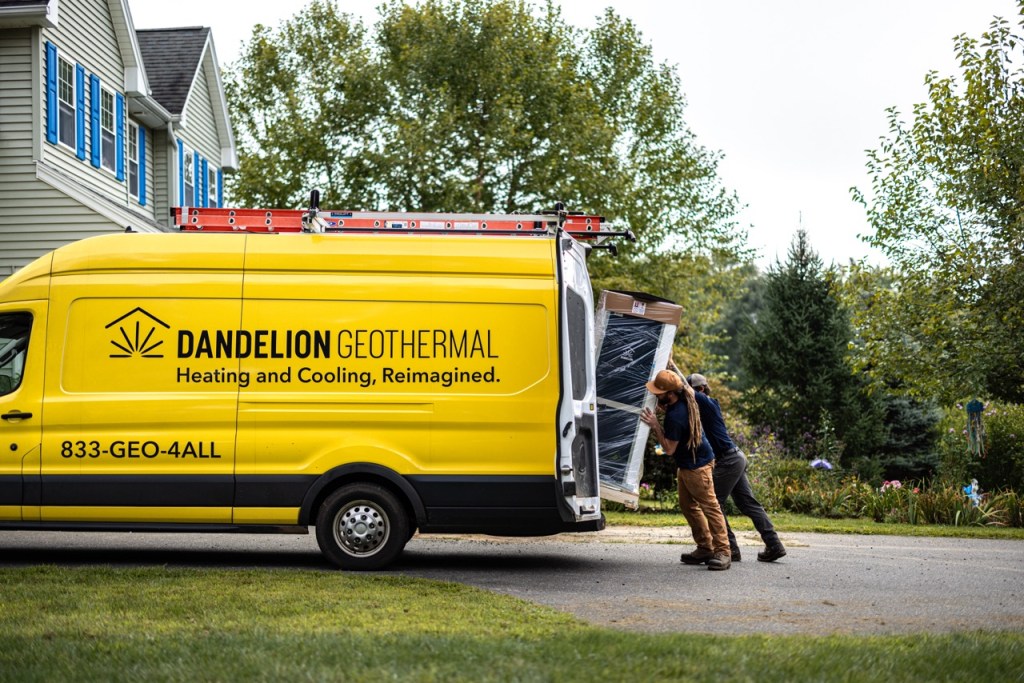
Dandelion Energy is betting big on geothermal having a mainstream moment. Backed by a new federal tax framework, the company is launching the nation’s first-ever residential geothermal leasing program, which could dramatically lower costs for both builders and buyers.
Builder spoke with Dan Yates, CEO of Dandelion Energy, about how this model works, why it matters, and where he sees the homebuilding industry headed next.
Can you walk us through the new leasing program Dandelion is launching, and how does this work for homebuilders?
The One Big Beautiful Bill Act passed on July 4 and unlocked a 40% tax credit for builders if they offer geothermal through a lease. Prior to this bill, there was a residential tax credit where homeowners could get 30% off of geothermal, and there was a commercial tax credit where companies that owned buildings could get 30%. The One Big Beautiful Bill Act eliminated the residential tax credit, but opened the door to geothermal leasing and maintained the commercial tax credit.
Before this change, builders weren’t interested in the residential tax credit because they couldn’t benefit from it. They’d invest in geothermal and sell the house, but the credit would go to the homeowner, not them. Plus, it didn’t help with mortgage qualification, which is what most big builders are constrained by. So even though the residential credit seemed like a great thing for a builder, it actually wasn’t.
What’s happened now with the lease is that the systems cost 40% less. If the geothermal system is built with domestic content, then they get a 40% tax credit. What we do for our builders is we build the system with them, and then when they finish the house, they sell the system to our leasing partner. For the builder, it’s very little money down. They’re putting in at most as much money as they would for a conventional heating and cooling system. Then the lease company owns the rest and gets the tax credit.
How much do homeowners end up paying in these leases?
The lease that the homeowner pays is very small. Unlike solar leases, which can run $200 to $300 a month, these geothermal leases are around $200 a year, or about $15 to $20 a month.
For example, we’ve got a project starting in Maryland where the lease is $120 a year and the homeowners will save between $500 and $900 a year on their electric bill. The savings far exceed the cost. Builders are simply adding this to HOA fees alongside other ongoing costs like property tax or sewer fees. For the builder, because it changes the upfront economics so much, it becomes much easier to go with geothermal.
What are the roadblocks or misconceptions that you’re coming up against that prevent this from being more widespread?
It’s going very quickly already because the economics are just so compelling.
That said, some builders have scar tissue from solar leases. However, this isn’t the same because our leases are an order of magnitude less expensive.
What we’ve seen with these first sales is that when people really wrap their head that it’s only $150 a year, they realize this is not going to be that big of a deal. When you’re selling a house with solar that people are ambivalent about, and it’s going to cost $1,500 a year, that’s a much different conversation.
You need a heating and cooling system, and this is the best heating and cooling system available. It’s going to save you two to five times as much money as it’s going to cost, so it’s paying for itself. And by the way, it costs very little. When you put all those things together, it all makes sense.
How does the installation integrate into the building process?
It’s very similar to conventional systems. We work with some of the largest builders in the country, and they have no interest in changing their build cycles or build timelines. So we work very smoothly in their current processes.
Installing the heat pump itself is straightforward. It goes in the mechanical room, connected to the ductwork exactly the same way you would install a normal furnace or heat pump. It’s actually easier than installing a conventional air conditioner because there’s no outside condenser unit. That eliminates the need for refrigerant line set runs and field charging. Our packaged unit comes pre-charged from the manufacturing facility, so you just plug it in.
The only extra thing is the drilling. We drill these deep bores, and then we put in what’s called the ground loop, which is two pipes that are connected at the bottom so they circulate water down one and up the other. We do that when you’ve brought the lot to rough grade and before you pour foundation walls. Our drill rig comes up, we put in that bore, put in the ground loop, and then we’re out of there. You build the house, and then our guys come back and connect to the mechanical room and put in the heat pump like normal. It works very seamlessly.
What does maintenance look like over the long term?
The system is the lowest maintenance system they’re ever going to have. One of the big selling points of geothermal is that there are no outside components, so the thing just doesn’t die. A typical air conditioner fails after 10 to 12 years because winter and summer are hard on outdoor equipment. The geothermal heat pump sits protected in the mechanical room, so the average lifetime is about 25 years.
Maintenance is simple. You change the filters every three to six months, just like you would with a conventional system. That’s it.
We partner with existing HVAC installers for installation and service, so there’s a straightforward answer to who takes care of the system if there’s ever a problem. It’s the same installer that’s been working with builders like Lennar for years. There are already a million geothermal heat pumps installed across the country, so service techs are available in every major metro area.
What’s your five to 10-year outlook on geothermal?
Broadly speaking, heating is electrifying in this country. 2023 was the first year that more air source heat pumps were sold than natural gas furnaces. It happened again in 2024 with a larger margin, and we expect it to happen again in 2025. The tide has shifted. Electric heat is becoming the number one path for new homes. That’s going to be a transition we witness over the next generation.
Within that shift, we think geothermal should be at least a third of the solution. There’s a million homes with geothermal now. In the long run, we think it should be at least 30 million homes. Dandelion’s immediate goal is to get to 10,000 homes a year in the next handful of years. From there, there’s no reason we can’t scale to 100,000 homes a year. We think 30% of new homes should be geothermal, and that’s where we’re focused.
Are there any other builder benefits we haven’t touched on that are important to mention?
It’s a major differentiator for builders, and it works on two fronts.
First, in a lot of parts of the country, builders are being pushed to put in electric heating systems, but they’re not allowed to use natural gas anymore. If they’re putting in an air source heat pump, that’s actually a worse system than natural gas. In New York, when you’re building a new home with an air source heat pump, the buyer’s alternative is a five-year-old home down the road with natural gas. That’s not a great story for the builder, because the natural gas system is cheaper, more reliable, and heats better on the coldest days.
The geothermal system actually beats the natural gas competitor. You have the best heating and cooling solution with no asterisks.
Second, a lot of our builders are doing higher-density projects now, townhomes or stacked townhomes, and they’re struggling with where to put all these condensers. We see projects where the architectural drawings show a beautiful rooftop balcony, and then in reality, it’s a rooftop balcony with a noisy, clanking, hot compressor. With geothermal, that’s gone because the whole unit’s a compact system in the mechanical room. They’re freeing up all that space.
Geothermal is just a better solution. Now that these incentives, and this lease with the 40% tax credit, have brought the upfront cost down, it’s making sense in more and more places.