
Harry Whitver
Windows and doors with integral nailing fins are quick and simple to install. And integrating the nailing flanges into the housewrap drainage plane of your wall isn’t rocket science (it’s possible to do it wrong, but it’s not hard to do it right).
But some doors—and even some windows—don’t come equipped with nailing fins. Most houses probably include at least one door that comes pre-trimmed with brickmold casings, but it has no built-in means for providing a water-tight and air-tight connection between the trimmed door frame and the building’s drainable wall.
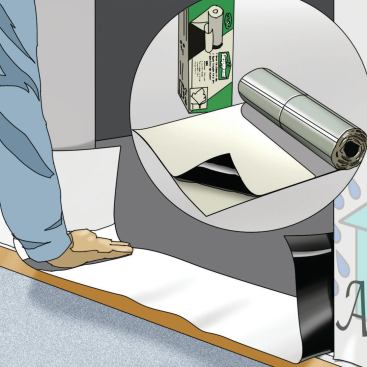
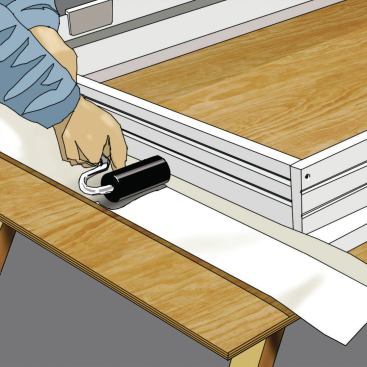
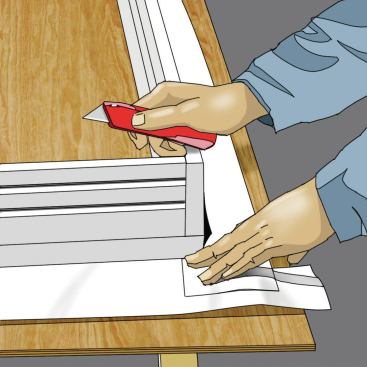
No worries: Carl Hagstrom supplied a simple solution in the January 2006 issue of JLC, a sister publication to BUILDER, that still applies today. His method is to apply a site-built flashing, made with self-healing peel-and-stick waterproofing membrane, to the back of the pre-trimmed door. After preparing the bottom of the door opening with a site-formed sill pan made with flexible peel-and-stick, he sets the newly flanged door into the opening and uses more membrane to seal the site-fabricated door flanges to the face of the wall. The result is a weather-tight seal that rivals the performance of any factory-installed nailing fin.