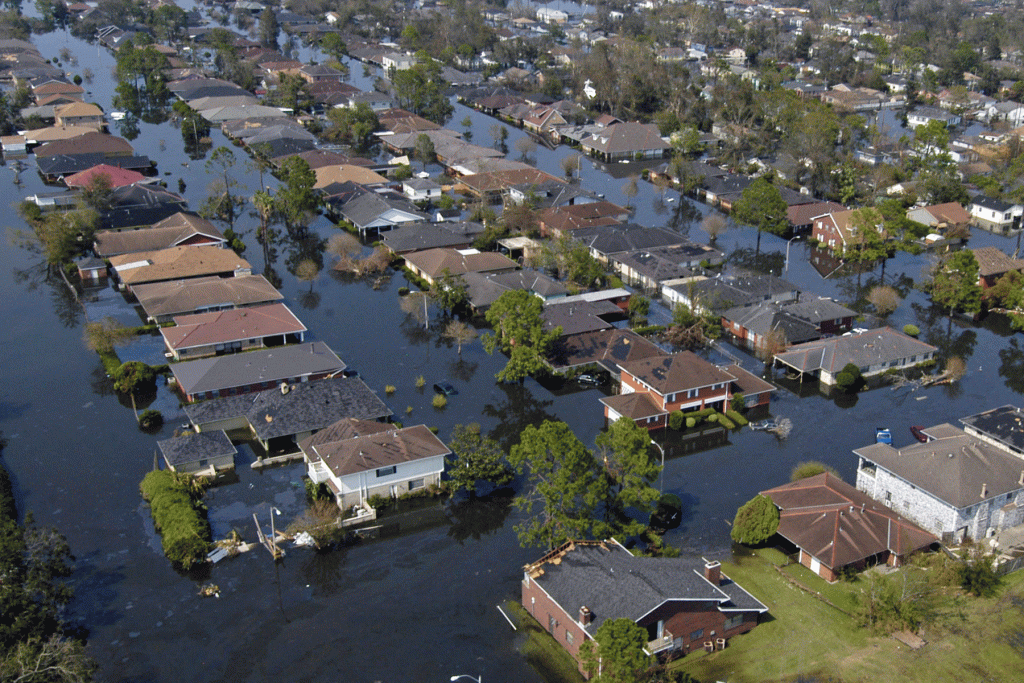
Hurricane Katrina reinforced the idea that communities have a universal need to build with natural disasters in mind. As the 10th anniversary of the disaster approaches, a nonprofit group is working to remind the industry that a strong building code system is the foundation for resilience, but only when it is in place before disaster strikes.
The nonprofit Federal Alliance for Safe Homes (FLASH) released its latest commentary paper, Disaster Resilience Rising Means the Time is Right, offering bold recommendations to strengthen the U.S. building code system by putting innovative disaster resilience policies into place ahead of the next disaster. The commentary cites the pattern of disaster-impacted communities pledging to “build back better,” but missing out on pre-disaster opportunities to embrace the most fundamental element of disaster resilience—updating, adopting, and enforcing strong building codes.
According to NOAA, the U.S. has sustained 178 weather and climate disasters since 1980 where overall damage/costs reached or exceeded $1 billion, and the total costs of the 178 events exceeds $1 trillion.
“An uncompromising system of strong, continuously updated building codes with consistent enforcement is essential to our country’s pursuit of disaster resilience,” said FLASH President and CEO Leslie Chapman-Henderson. “However, some states are not keeping pace, or worse, they are losing ground. We must use codes to innovate the way we build, and win against the mounting human and financial cost of disasters.”
FLASH proposes the following six innovations to the current U.S. building code system:
- Establish a standing code and standard development process to accelerate post-catastrophe, forensic engineering insights into model codes and standards.
- Optimize property protection opportunities in model code and standard development by balancing all of the existing values, including public health, safety, and welfare.
- Evaluate, integrate, and leverage public and private sector beyond-code standards and programs into the International Code Council system to ensure continuity, increase awareness, and support disaster resilience innovation.
- Enhance code development by broadening the representation of interest groups on the International Residential Code technical committees.
- Support code adoption and enforcement mechanisms through an enhanced, well-resourced system of information provision to state and local officials as well as the public regarding benefits and mechanics of building codes and disaster-resilient construction.
- Increase engagement by all stakeholders in the building code system through robust participation in each phase, including model code development, state and local adoption, and enforcement.