1. Add a Barrier You may not be able to stop water and moisture …
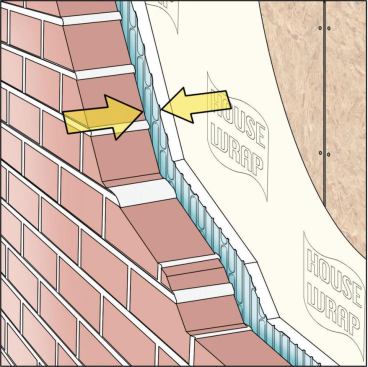
1. Add a Barrier You may not be able to stop water and moisture from getting past the exterior cladding, but you can (and should) do everything to keep it from the framing assembly. Cover the sidewall sheathing with housewrap (with joints and fasteners taped), and apply a foam insulation panel with molded drainage channels facing out. The panel will not only warm the airspace, but will also shed water away from the framed wall.
2. Create an Airspace A 1-inch minimum airspace between the clad…
2. Create an Airspace A 1-inch minimum airspace between the cladding and the structural wall keeps water that seeps behind the exterior finish from jumping the gap and passively dries any moisture before or as it migrates to the wall. If the wall is being finished with brick, work to keep excess mortar from dropping into the airspace or getting caught on the wall ties and bridging the gap.
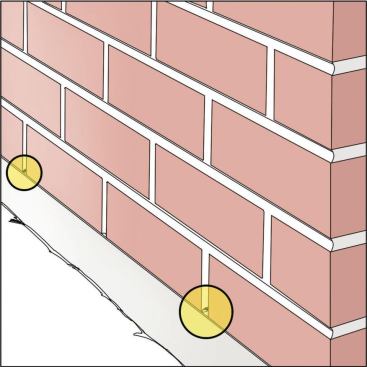
3. Leave Weep Holes The water that sheds down the inside face of…
3. Leave Weep Holes The water that sheds down the inside face of the cladding or the drainage plane of the foam insulation panel (see illustration top) can’t be allowed to collect at the bottom. Like the airspace, weep holes along the bottom of the cladding are an effective solution that drains incidental water harmlessly away from the assembly.
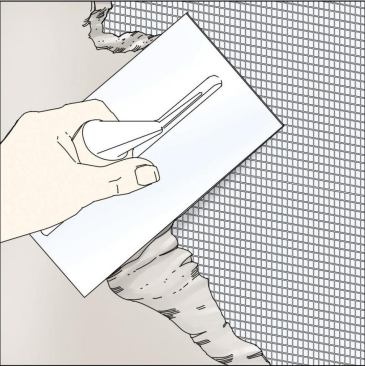
4. Apply the Finish Just because the finish cladding is no longe…
4. Apply the Finish Just because the finish cladding is no longer expected to stop water, it does not give you license to slack on application. Take care to completely tool masonry joints, apply even thicknesses of stucco coatings without gaps, and stagger, caulk, or cover the joints of properly fastened lap siding to block most (if not all) of the water that contacts it.
Building scientists and exterior cladding suppliers have been preaching for years that water from wind-driven rain and snowmelt will inevitably get past and behind exterior claddings. So sidewall assemblies need to be built to manage and mitigate (rather than try to stop) that moisture to avoid expensive latent defects.
“Assembly” is the key term, reflecting a combination of components that work together to shed and remove incidental water and also vent and dry any moisture before it settles in the framing cavities and shows up as drywall stains—or worse.
Such an assembly, usually for brick or stucco claddings (which are more porous than lap siding options), typically calls for an airspace that passively desiccates moisture vapor while also providing a channel for water, with weep holes at or near the bottom. It’s a complex approach requiring attention to detail, but money better spent than on defending lawsuits.