For all those builders out there who have yet to embrace green building, Cherokee Investment Partners has one thing to say: Get ready. The private equity firm has launched a program to convert traditional builders into green builders. And the firm, which controls approximately 520 properties and 20,000 residential entitlements across 29 states, Canada, and Western Europe, may have enough muscle to force the shift.
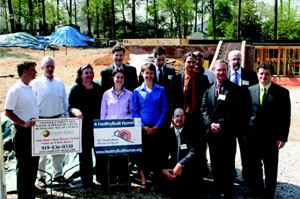
The program, called the Green Initiative, officially kicked off on April 3, when the first shovel of dirt was turned at a home site in Raleigh, N.C. Working with local builder Corban Homes, Cherokee will erect a demonstration home in a traditional subdivision to show that green building can be beautiful, affordable, and efficient enough to be folded into mainstream construction. The home will be built to NAHB model green home building guidelines.
The exercise attempts to show that green building can work despite site obstacles. Cherokee senior director Jonathan Philips says, “We’re trying to tackle a situation where we take an infill lot that is poorly oriented for solar access and is not topographically idea for storm-water retention … and say, ‘What things can we do in the design to really make a difference?’—knowing that we don’t have a lot of those perfect conditions.”
Philips says that the initiative is an obvious extension of the firm’s primary business—the acquisition, remediation, and sustainable redevelopment of brownfields. “As we are developing out environmental sites, we have felt we are in a position to take our environmental stewardship one step further,” he says. “We had to get smarter about green building and be more active in greening the vertical development on our land.”
The firm’s green roots date back to when the company—known then as Cherokee Sanford Group—was in the brick manufacturing business. In 1986, the company discovered petroleum contamination at one of its plant sites. Authorities suggested that the contaminated soil be dug up and deposited at a local landfill. Concerned with the negative residual effects that the dumping could cause, the company suggested using the soil in brick manufacturing, which would burn the petroleum out of it during the kiln-firing process. Since then, the firm has grown into one of the largest investors in sustainable redevelopment of brownfield properties.
Philips says that the company’s position as a green building evangelist will continue to push the envelope, encouraging builders and developers to go green. He says that the firm has already put together green requests for proposals for one of its properties outside Charlotte, S.C., in York County.