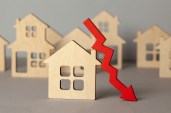
Demand for housing remains closely tied to interest rates, as recent increases in 30-year rates have resulted in a pullback in buyer demand.
“Today, we see buyer demand dampened under pressure from rising rates and their impact on affordability, with purchase rate-lock volumes cooling in late February,” says Black Knight vice president of enterprise research Andy Walden. “However, when rates ticked down close to 6% early in the month, we saw a rebound of buy-side demand. On the other side of the equation, we’ve seen a consistent theme of potential sellers—many with first-lien rates a full 3 percentage points below today’s offerings—pulling back from putting their homes on the market.”
Half of all mortgaged homes have first-lien interest rates at or below 3.5%, while two-thirds of mortgage homes have rates at 4% or lower, according to the latest Mortgage Monitor Report from Data & Analytics division of Black Knight. As a result, many would-be home sellers are remaining on the sidelines, contracting the availability of homes for sale and putting upward pressure on prices for homes on the market. According to Black Knight, 90% of analyzed markets across the country face “growing inventory shortages.”
“January marketed the fourth consecutive monthly decline in overall for-sale inventory, according to our Collateral Analytics data, with the primary driver being a 25-month stretch of new listing volumes running below pre-pandemic averages,” Walden says. “While demand remains weak, faltering supply has resulted in months of available inventory stagnating near 3.1 in recent months.”
Black Knight reports there were 25% fewer homes listed for sale in January, and, with many would-be home sellers on the sidelines due to the lock-in effect, inventory shortages could continue to worsen. Additionally, the firm says the shortage of adjustable-rate mortgages in the current market also limits rate-pressured sale activity.
Home Prices and Affordability
Nearly all major U.S. markets are unaffordable compared with their own long-run averages, according to Black Knight. Forty-nine of the 50 largest markets in the country remain less affordable than average, with 22 markets requiring at least a 10 percentage point larger share of median household income to make mortgage payments on the average priced home. Los Angeles requires 64% of the median household income to make mortgage payments, the highest share of any market and nearly 28 percentage points above its long-run average. San Diego, San Jose, San Francisco, and Miami round out the top five most unaffordable metro markets, reports Black Knight. On the other end of the spectrum, Cleveland is both the most affordable large market in the U.S. and the only such market with stronger home affordability than its 30-year average.
After dropping below $2,100 in early February, the monthly payment required to purchase an average-priced homes has risen by more than $90 nationally, according to Black Knight. The increase to 6.5% from 6.09% for mortgage rates has resulted in a 4% reduction in buying power.
“With 30-rates at 6.5% in late February, it took 33.2% of the median household income to make the monthly principal and interest payments on the average home price. That’s up from January’s 32.4% and significantly above the 30-year average of approximately 34%, but still 3.5 percentage points below the 37% level reached in October 2022,” Walden says.
According to Black Knight, the annual home price growth rate fell to 3.43% in January and is on pace to fall below 0% by March or April. The organization says price impacts could deepen if 30-year rates continue to climb as they did in the final weeks of February. Fourteen of the largest 50 markets experienced home prices decline by 6% or more from 2022 peaks on a seasonally adjusted basis, while every major market west of Denver has seen prices fall by at least 6.5%. Conversely, adjusted prices increased in many Midwestern and Northeastern markets such as Louisville, Kentucky; Indianapolis; Virginia Beach,Virginia; Kansas City, Missouri; Hartford, Connecticut; and Philadelphia.