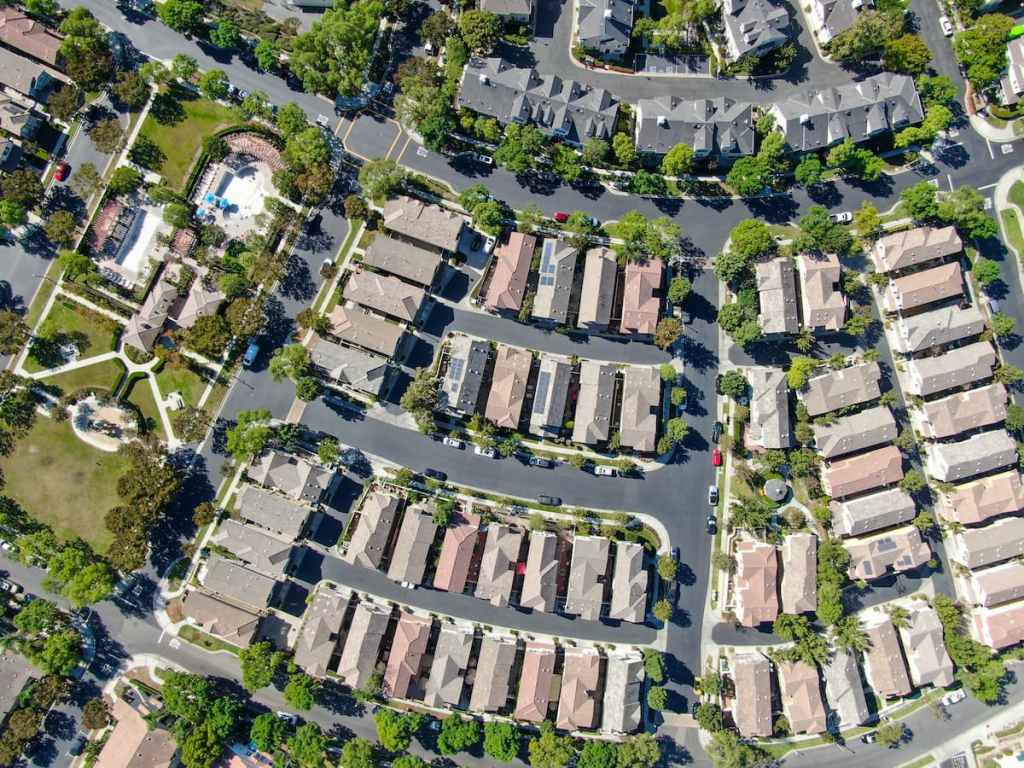
Among all U.S. housing markets, three metros stand out for their extraordinary capacity to deliver new homes at scale over the next decade: Phoenix, Houston, and Dallas. Each market has around 200,000 or more future planned units across its active and upcoming MPCs. Phoenix alone approaches nearly 350,000—making it the largest long-range MPC pipeline in the country.
For builders planning future land strategy, a deeper look into these three metros offers rare clarity in a supply-constrained national environment.
Phoenix: The Nation’s Largest MPC Pipeline
Phoenix is one of the master-plan capitals of the United States. With nearly 350,000 planned homes, the region is redefining large-scale community design. Much of this growth is anchored by Teravalis, which accounts for 100,000 units.
Phoenix MPCs tend to be mega-communities—multi-village, multi-decade developments with their own internal road networks, commercial cores, and open-space preservation. For builders, this scale translates to predictable lot flow, deep segmentation opportunities, and consistent absorption.
Houston: The MPC Engine of Texas
Houston remains the most MPC-centric market in the country. It consistently places among the top three for both current sales and remaining-unit counts. One of its leading communities, Sunterra, ranked as the #3 best-selling MPC nationally in the third quarter—following only The Villages and Lakewood Ranch.
Houston’s land availability and regulatory structure give developers the flexibility to build at scale. Multiple active MPCs have remaining pipelines of 3,000–5,000 units, and several stretch far beyond that.
This environment allows for rich segmentation: entry-level detached, townhomes, mid-tier single-family, luxury-lite, and active adult—all within the same master plan. It also creates stable long-term absorption, with Houston MPCs consistently outperforming standalone subdivisions on pace.
Dallas–Fort Worth: A Deep, Balanced Pipeline
Dallas rounds out the top three with approximately 200,000 units remaining. Expansion continues north into Collin and Denton counties, where large, contiguous tracts enable multi-decade community visions like Houston’s—though often with a stronger emphasis on schools, trail systems, and mixed-use centers.
DFW’s MPC performance is driven by sustained population growth and high relocation activity. While DFW’s price tiers skew slightly higher than Houston’s, absorption remains strong in the $350,000–$550,000 range—now the most competitive band in the region. Like Phoenix and Houston, Dallas MPCs also benefit from small-footprint demand, with sub-2,000-square-foot plans delivering some of the strongest monthly sales rates in 2025.
Why These Three Markets Matter
While many coastal and Northeastern metros face severe land and regulatory constraints, these three markets offer builders both runway and flexibility. Their combination of scale, demand, and long-term planning capacity is rare in the U.S. housing market today and will anchor the next generation of master-planned development.
The insights in this article were taken from more in-depth research reports published in Zonda’s Master Plan Outlook subscription.