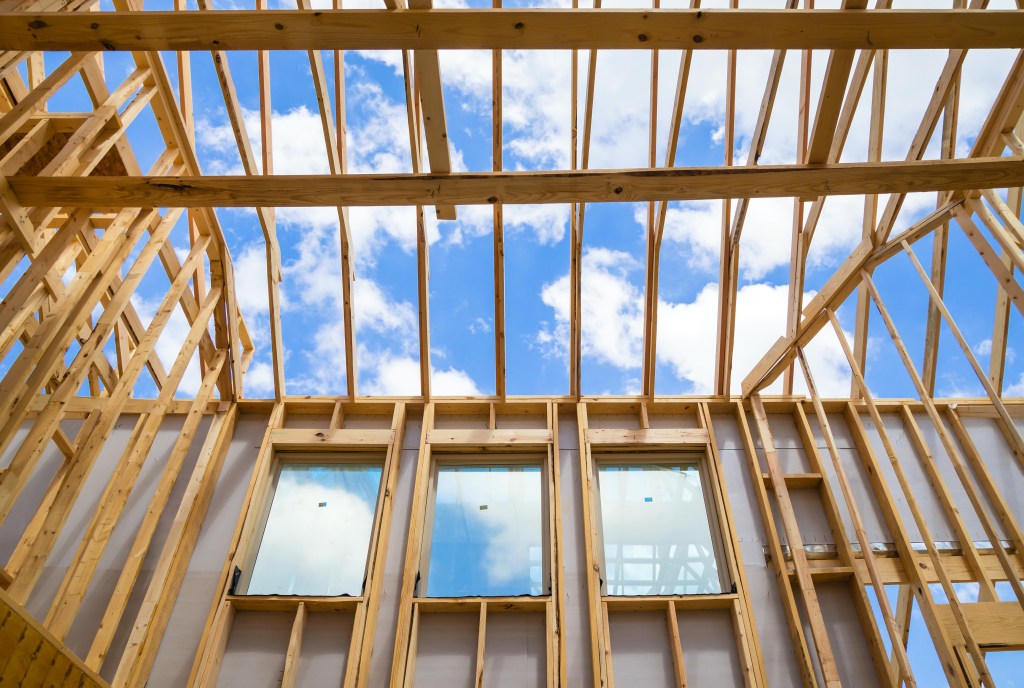
Privately owned housing starts in September were at a seasonally adjusted annual rate of 1,555,000, which is 1.6% below the revised August estimate of 1,580,000 but 7.4% above the September 2020 rate of 1,448,000, according to the U.S. Census Bureau and the Department of Housing and Urban Development.
Single‐family housing starts last month were at a rate of 1,080,000, which is unchanged from the revised August figure of 1,080,000. The September rate for units in buildings with five units or more was 467,000.
“Single-family starts, after trending downward over most of this past year, appear to be leveling out at a pace that is roughly 10% higher than prior to the COVID-19 pandemic,” says Doug Duncan, chief economist at Fannie Mae. “Strong demand for new homes continues as the inventory of existing homes for sale remains extremely tight.”
Housing units authorized by building permits in September were at a seasonally adjusted annual rate of 1,589,000, which is 7.7% below the revised August rate of 1,721,000 but unchanged from the September 2020 rate of 1,589,000. Single‐family authorizations last month were at a rate of 1,041,000, or 0.9% below the revised August figure of 1,050,000. Authorizations of units in buildings with five units or more were at a rate of 498,000.
September’s housing completions were at a seasonally adjusted annual rate of 1,240,000, which is 4.6% below the revised August estimate of 1,300,000 and 13% below the September 2020 rate of 1,426,000. Single‐family housing completions last month were at a rate of 953,000, which is unchanged from the revised August rate. The September rate for units in buildings with five units or more was 280,000.
“Today’s construction report shows us that while the desire to build more homes is there, the limitations on building are severe,” says Ali Wolf, chief economist at Zonda. “Governmental delays, a limited qualified labor pool, land disruptions, and supply chain headaches are holding the market back from reaching full potential. The competition for these limited resources is pushing out the development timeline and contributing to a higher home price for the end user—the consumer.”