By buying the apartment downstairs from the second-floor unit sh…
By buying the apartment downstairs from the second-floor unit she had occupied with her family for years, architect Deborah Berke created a two-story home and gained direct access to the street.
Jason Schmidt
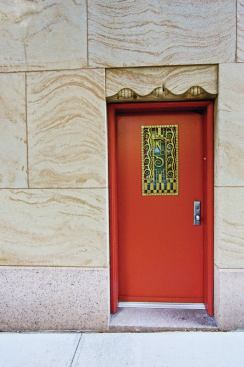
Off the street is an entryway, one of several transitional space…
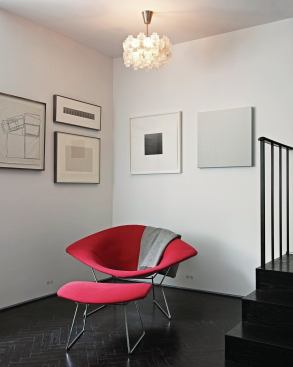
Off the street is an entryway, one of several transitional spaces that make the apartment feel spacious. Berke notes that tfoyers, hallways, and landings make a home feel roomier, even if it means pinching the square footage from another portion of the plan.
Jason Schmidt
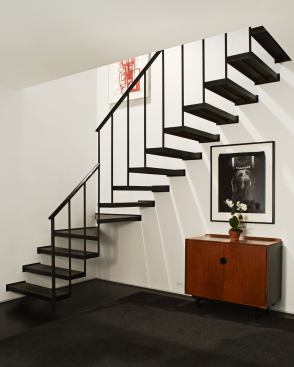
Cantilvered stairs that unite the two stories are made of cast i…
Cantilvered stairs that unite the two stories are made of cast iron treads from the Brooklyn Navy Yard. Steel supports for the staircase are concealed within the wall.
Jason Schmidt
"Cutting the hole in the floor was the easy part," recalls Berke…
"Cutting the hole in the floor was the easy part," recalls Berke, who says that the cantilivered stairway was one of the more challenging aspects of the turning a two-bedroom apartment into a duplex.
Jason Schmidt
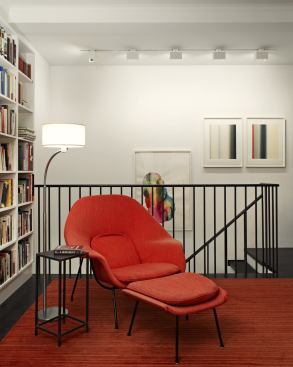
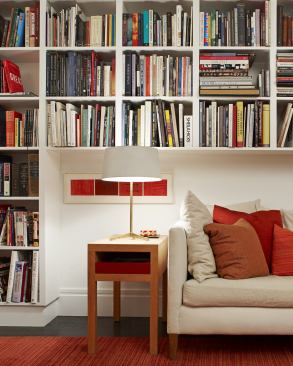
At the top of the stairs is the library, a favorite family hango…
At the top of the stairs is the library, a favorite family hangout.
Jason Schmidt
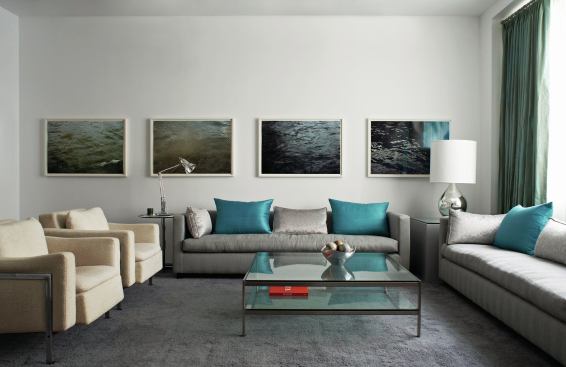
More space for entertaining, more storage, and a place for their…
More space for entertaining, more storage, and a place for their teenage daughter to have friends over were the goals of this extensive remodel, which was done by working completely within the pre-war building's existing structure.
Jason Schmidt
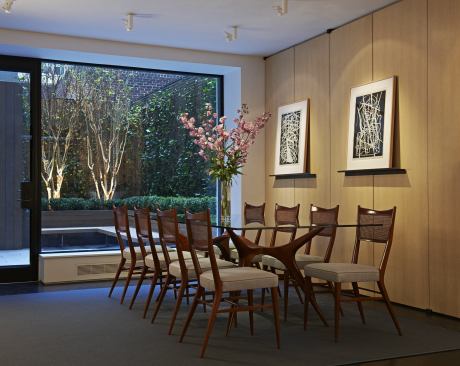
Moveable walls in the dining room conceal storage closets. On th…
Moveable walls in the dining room conceal storage closets. On the doors are ledges for displaying art.
Jason Schmidt
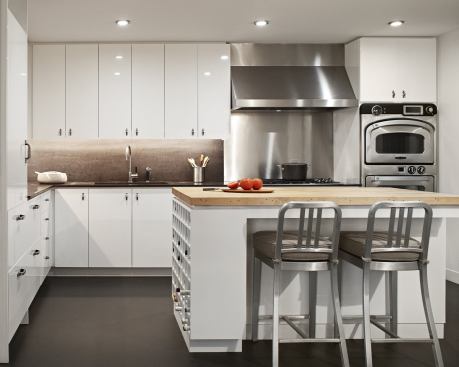
Adjacent to the dining room is an efficient and hard-working kit…
Adjacent to the dining room is an efficient and hard-working kitchen that's great for entertaining.
Jason Schmidt
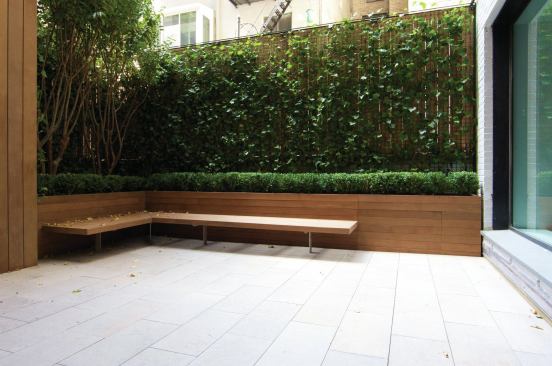
Bringing a derelict backyard back to life created peaceful and p…
Bringing a derelict backyard back to life created peaceful and private outdoor space, a New York City rarity.
Courtesy Deborah Berke Partners
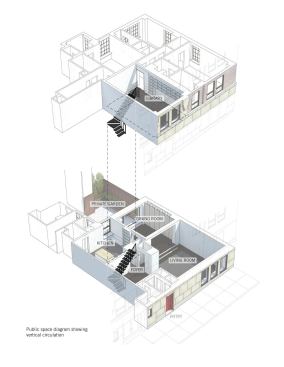
"Look for opportunities to connect vertically," advises the arch…
"Look for opportunities to connect vertically," advises the architect, who says that working this way can result in a much more interesting space.
Courtesy Deborah Berke Partners
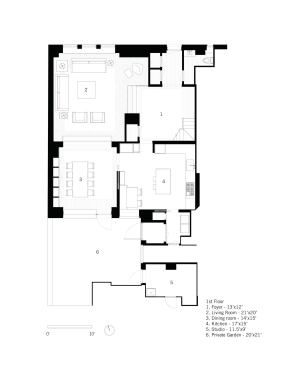
Gracie Square Duplex, New York; Architect Deborah Berke & Partne…
Gracie Square Duplex, New York; Architect Deborah Berke & Partners, New York; Builder Sweeney + Conroy, New York
Courtesy Deborah Berke Partners
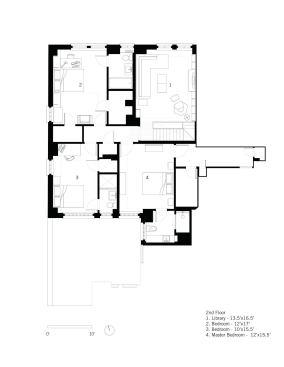
Gracie Square Duplex, New York; Architect Deborah Berke & Partne…
Gracie Square Duplex, New York; Architect Deborah Berke & Partners, New York; Builder Sweeney + Conroy, New York
Adding on usually involves building back, to the sides, or even up. When it comes to building down? Not so much. Architect Deborah Berke, however, had no choice. She and her family lived for almost 15 years in a two-bedroom apartment on the second floor of an old pre-war building on Manhattan’s Upper East Side. When the unit below theirs came up for sale, Berke and her husband went for it.
First- and second-floor spaces were gutted and reconfigured, increasing the family’s living space to 2,700 square feet. The result was a two-story house with the rarest of New York amenities: a backyard, plus a door with direct access to the street.
The remodel was limited by the existing structure, a grand old historic apartment building that was built during the 1920s boom and finished shortly before the crash of 1929. Berke gutted the ground floor down to the building’s perimeter walls. The first-story apartment had floors that were built on a couple of different levels; she maintained the existing floor levels. To merge the second-story unit with the one below it, a hole for the connecting stairway was made in the second-story apartment.
Cutting a hole in the floor of her home was the easy part, recalls Berke, who mentions that getting the stairs right was one of the bigger challenges of this duplex remodel. Vertical pieces of steel support the cantilevered cast-iron treads; every tread has its own support piece. Those supports are concealed within the wall, so the open staircase appears to float.
The stairs end up making way for a feature that’s rare not just in apartments, but in modestly sized homes of all sorts, be they cottages or apartments: graceful circulation spaces. Off the apartment’s street entrance is an entry foyer at the foot of the cantilevered stairs. At the top of the stairs, turn right and you’re standing at the entrance to the library (originally the living room of the second-story apartment), where the family spends much of its time hanging out together—dogs included. Berke notes that those transitional or ‘welcoming’ spaces often get skimped on. “As such, the apartment feels smaller,” she says. But when you give a little square footage to the in-between spaces, she adds, the home actually feels bigger.
Adding to the feeling of spaciousness is a dining room that opens up to private patio space out back, which is a rare and cherished city amenity.
“We do a lot of apartment-connecting, and people assume that there’s an efficiency in getting apartments on the same floor,” Berke says. “But there’s the potential for a much more interesting space if you connect vertically.”
Learn more about markets featured in this article: New York, NY.
Amy Albert is editor of Custom Home and a senior editor at Builder. She covers all aspects of design. Previously, she
was kitchen design editor at Bon Appetit;
before that, she was senior editor at Fine
Cooking, where she shot, edited, and wrote stories on kitchen design. Amy
studied art history with an emphasis on architecture and urban design at the
University of Pennsylvania. She lives in Los Angeles. Write her at aalbert@hanleywood.com, follow her on Twitter @CustomHomeMag and @amyatbuilder, or join her on Custom Home's Facebook page.