Fletcher Manley
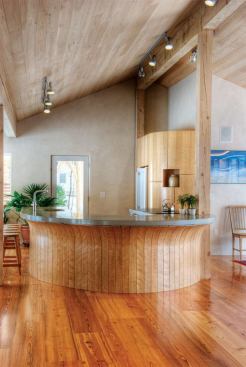
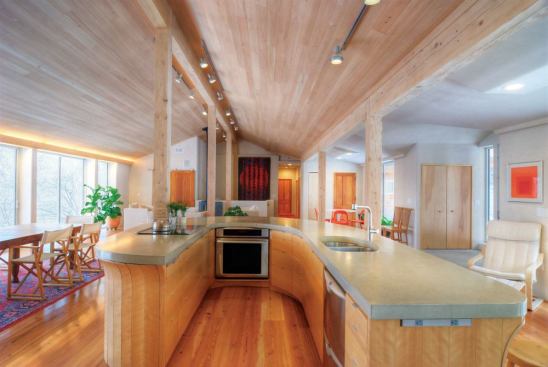
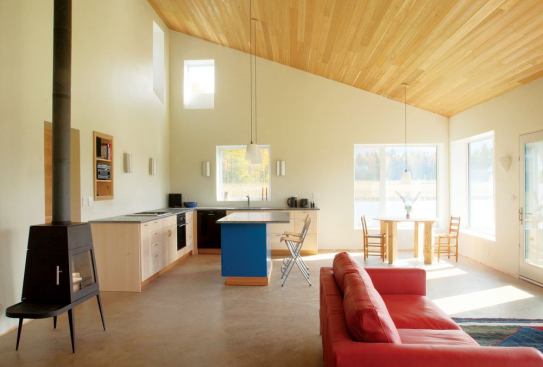
Upgrades to this existing house include a super-tight building e…
Green Philosophy: “When I was growing up, we didn’t have a lot of money, so we did a lot of camping vacations. The rule was, you have to leave the campsite cleaner than you found it, and that sort of resonated with me. That provides a context for what I do.”
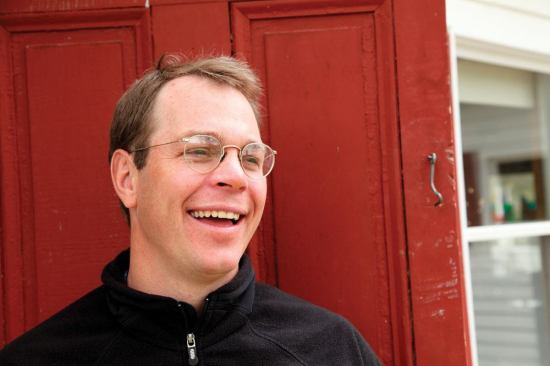
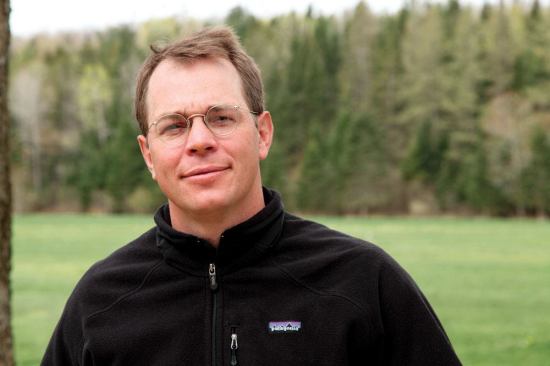
Ben Southworth must have been born under a green star. When he was a child, his parents moved the family from Philadelphia to rural New Hampshire to run an old water-powered sawmill. Southworth grew up amid the fragrant sawdust of an operation that used a renewable local resource, ran on weather and gravity, wasted nothing, and actually produced more energy than it consumed. In 1986, the family expanded into the timber-frame business and later into building custom timber-frame houses. When Southworth, 37, took over, Garland Mill Timberframes was already producing a pretty sustainable house. In keeping with his upbringing, though, he was determined build even more efficiently.
The way to do that, ironically enough, was to use less timber. “We’re doing more hybrid stuff now,” says Southworth, who describes his ideal as “a small, super-efficient house that uses the warmth of timber, but not in a way that is wasteful and redundant; a house that is resilient, that can go for long periods of time without extra inputs of energy.” If a client asks for it, Garland Mill will still build a full timber-frame sheathed with SIPs panels, but Southworth prefers using engineered lumber for a wall cavity that accommodates 12 inches of dense-pack cellulose insulation. His basic spec is R-40 at the walls (with no thermal bridging), R-60 at the roof, R-5 at the windows, R-20 at the basement walls, and R-30 under the slab.
That’s very close to Passivhaus territory, a fact that has not escaped Southworth’s attention. Having earned LEED Platinum certification for a renovation project, he says, “Passivhaus is the next goal that we’re trying to hit.” He is drawn to the simplicity and rigor of the Passivhaus program, which sets strict limits on heating load, total energy load, and ventilation. “When we get pushed by a standard,” he notes, “that’s when innovation happens.”
But Southworth’s green thinking leads beyond Passivhaus, and even beyond conventional single-family land development. A better way for many, he believes, may lie in cohousing, a cooperative development model that promises a healthier environment both physically—via efficient use of land, built infrastructure, and energy—and socially. “We can build a Passivhaus, net-zero, LEED Platinum house,” he says, “but if it’s in the wrong place and there’s no community, we’re not moving the ball forward.”
Garland Mill Timberframes, Lancaster, N.H.
www.garlandmill.com
Type of business: Custom builder/ remodeler/timber framer
Years in business: 24
Employees: 6-10 (varies seasonally)
2009 volume: $800,000
2009 starts: 4