1
of 13

Nat Rea
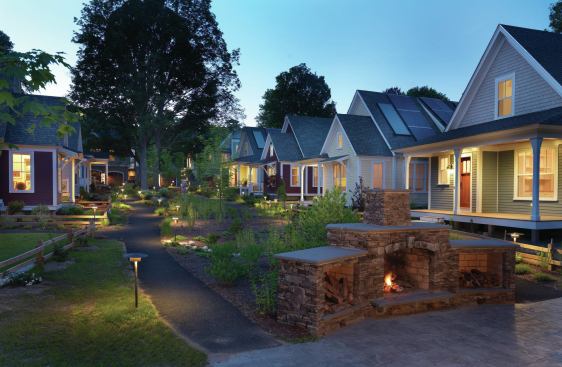
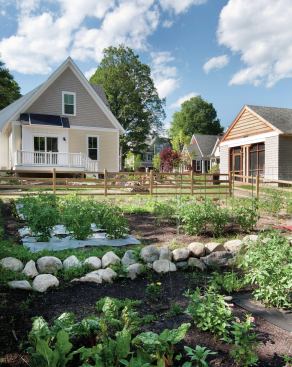
At the end of a row of cottages, a fireplace and screened pavili…

Nat Rea
At the end of a row of cottages, a fireplace and screened pavili…
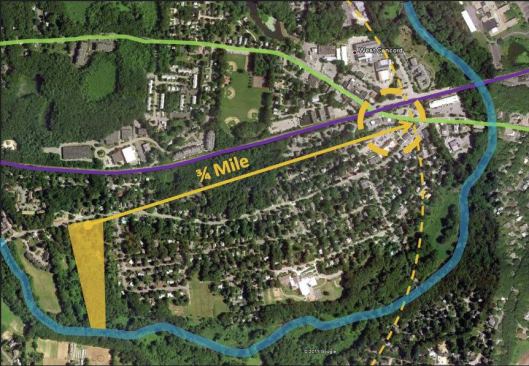
Few pocket neighborhoods hit their targets as swiftly—or succinctly—as Concord Riverwalk. Our judges elevated it to Project of the Year because it redevelops an empty suburban tract less than a mile from town and public transit, repurposes two existing historic houses, and creates an appealing, pedestrian-friendly community. “To the credit of the town planning board, it was as quickly permitted as anything I could imagine that was so far off the underlying zoning,” says architect Donald Powers.
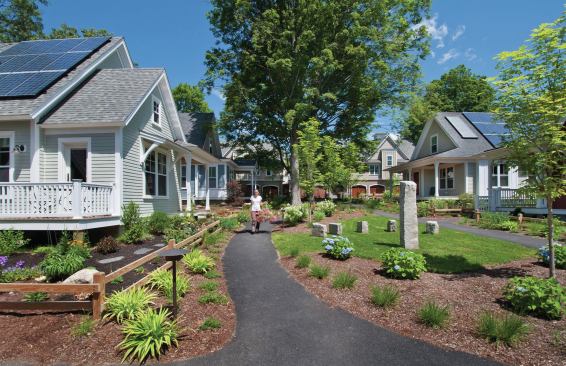
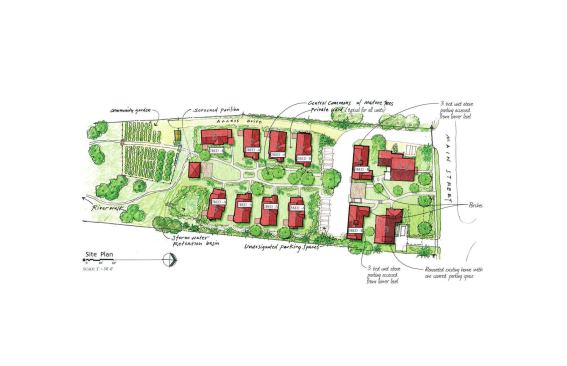
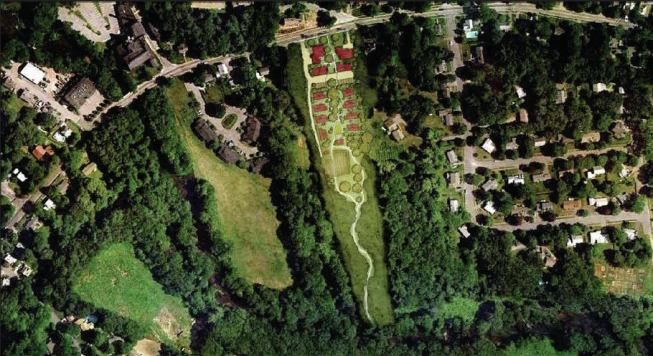
The finger-shaped lot and southern orientation made it a compelling site for this cluster of 13 homes. It slopes down to the Nauset River with the two renovated houses fronting on the main road. “You drive around back to a lower level where the new cottages are built,” Powers says. “It was great for creating an internal sense of protection, and in a way that didn’t impinge on the community.”
Spaced about 15 feet apart, the buildings face a common green and nest into each other, with one house’s opaque north side providing privacy for the next house’s glassy south side. That layout also creates ideal roof conditions for the optional solar panels. Thanks to high-performance mechanicals, triple-glazed windows, and a sealed wall system—2×6 studs with blown-in cellulose insulation, wrapped in 4 inches of rigid foam—the homes should achieve net-zero energy with 400 kWh solar panel capacity.
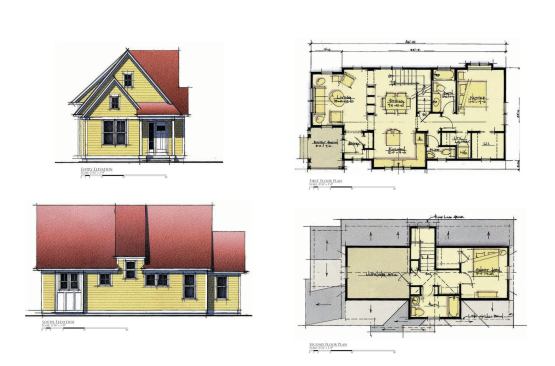
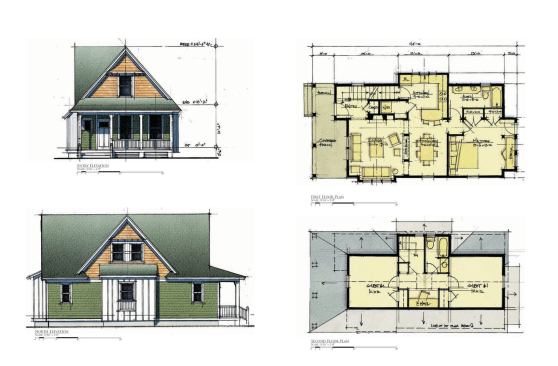
Our jury praised the iconic cottage forms, whose low eave lines, second floors tucked under steep pitched roofs, and small front porches “feel like a Monopoly set.” Riverwalk’s civic-minded density resonated with the municipality as a model that works without changing the proverbial tree-lined street and character of the town. The intimate scale also appealed to buyers who could have afforded bigger houses but were attracted to the project’s low-impact mission, Powers says, resulting in sales prices that were higher per square foot than anything else selling at the time.
“Of necessity, developers tend to build only to a broad middle of the market,” he says. “Pocket neighborhoods released a latent demand for something not as expansive as a full-fledged house and not as urban as an apartment building. It’s maybe 15 percent of the market, but it was enough to support Riverwalk.”
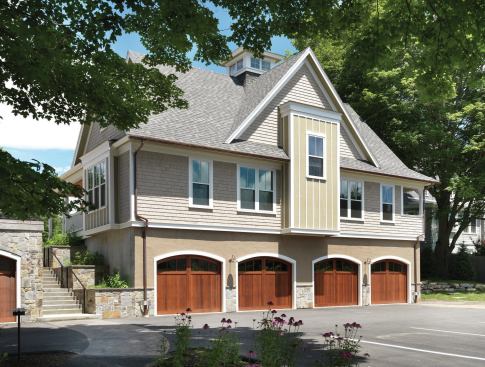
On Site Residents leave their cars in the parking court (each unit gets one garage bay and one surface parking spot) and walk down landscaped lanes to their cottage. “We questioned whether people would accept houses without attached garages, but it never became an issue,” Powers says. The developer provided carts that residents can load with groceries and other goods.
Learn more about markets featured in this article: Boston, MA.