

Photographer: chandler prude
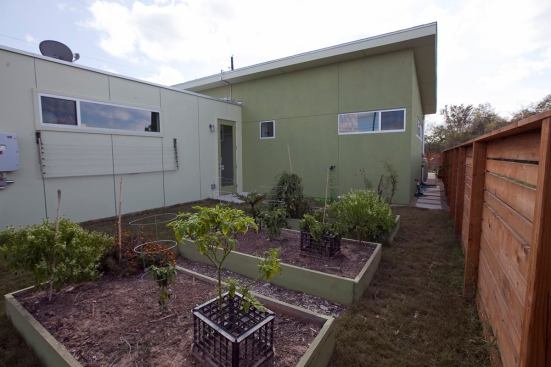
The 1,505-square-foot home by KRDB and Beck-Reit and Sons is sit…
Austin Power
This Texas home packs a lot of innovation and efficiency in its 1,505 square feet.
Challenge Austin, Texas–based design/build firm KRDB and Austin-based builder Beck-Reit & Sons challenged themselves to develop a neighborhood of small, affordable homes that are more energy efficient than the national average. Working in east Austin, KRDB had been doing such projects on a small scale for years, but it decided to partner with Beck-Reit to go bigger. “We felt like it was a great opportunity to do a prototype project of good, affordable, green homes,” says architect Chris Krager, a principal at the company. “We wanted to do it on a larger scale than we had been doing.”
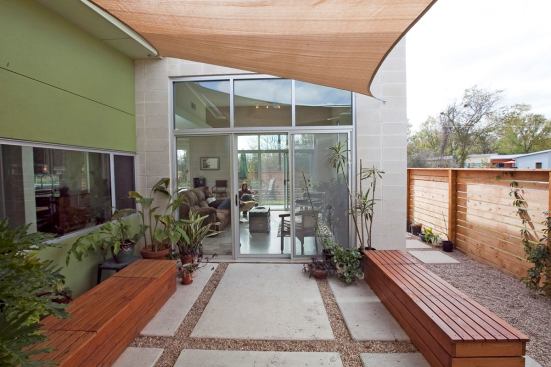
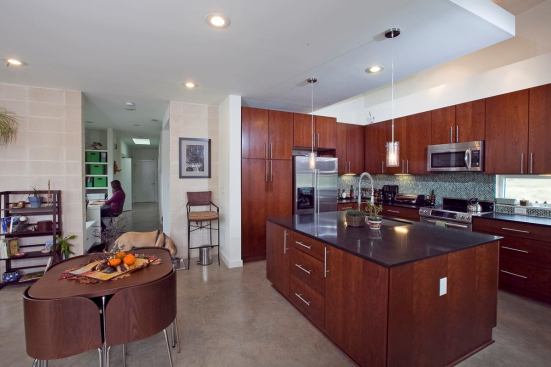
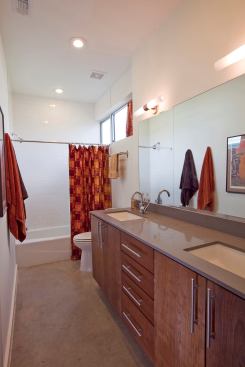
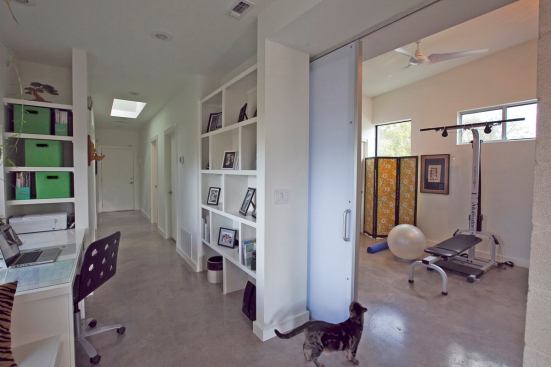
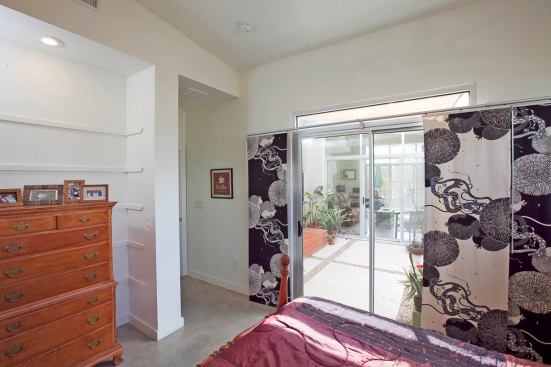
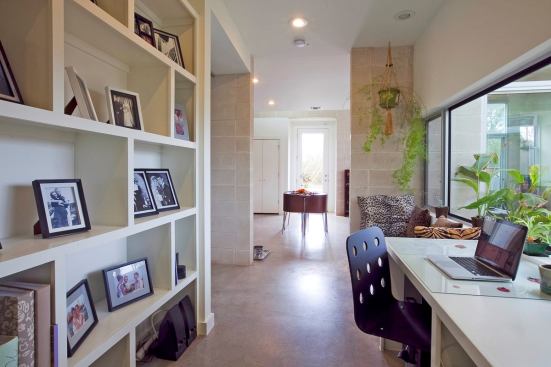
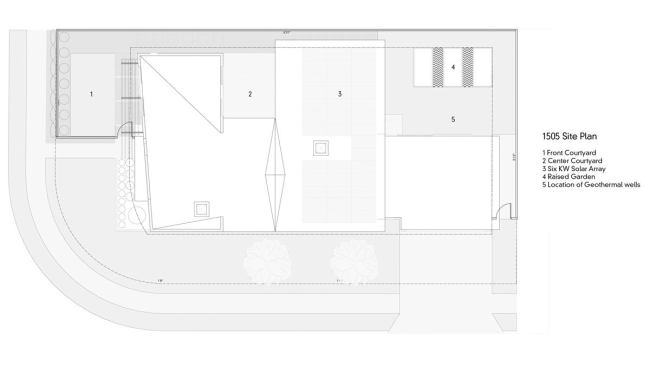
Solution Instead of working with infill lots, KRDB and Beck-Reit & Sons secured a 5½-acre parcel in the city and rezoned it for smaller lots. The project, SOL Austin, is a community of 40, 1,200- to 1,800-square-foot homes ranging from two bedrooms and a bath to four bedrooms and two baths. This unit measures 1,505 square feet and has three bedrooms and two baths. The courtyard-style plan creates two outdoor areas and the interior hallway/circulation area doubles as office space. Net-zero–energy capable, the house has a 6-kilowatt solar array, a geothermal system, compact fluorescent lighting, a hybrid electric water heater, and an energy monitoring system. Houses in the development are priced from $190,000 with 40 percent designated affordable. This unit sold for about 17 percent more than the average price.
Austin Power Details:
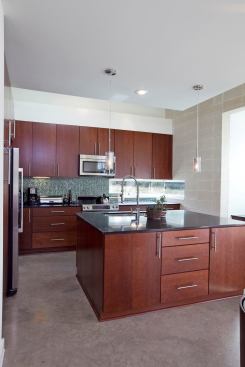
Major Moves KRDB designed the development with a common pocket park, joint-access driveways, and subgrade biofiltration to manage stormwater. It varied the setbacks to create more interesting streetscapes and located 60 percent of parking in the rear. Homes go beyond the code and can be constructed with either 2×6 exterior walls and blow-in foam insulation, structural insulated panels, or concrete blocks filled with foam. Standard features include metal roofs, low-VOC paints, low-flow fixtures, concrete floors, and high-efficiency windows. Says Krager, “When you look at the breakdown and do a quantitative analysis, the incremental cost for doing the houses this way is relatively low.”
Learn more about markets featured in this article: Austin, TX.