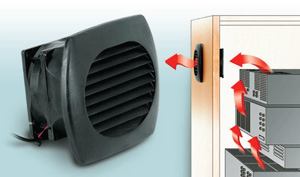
ATM manufactures enclosure coolers that bring in fresh air at one point and exhaust hot air at another. The company is known for a range of cooling systems from a desk cooler for a PC to systems for walk-in closets with racks of equipment. Home theater cooling systems enable installers to mount a projector in a soffit to keep noise down. The ATM coolers force fresh air into the projector area and pull the exhaust out.
Middle Atlantic publishes a thermal calculator on its Web site that integrators can use when working with contractors. “We educate our integrators on removing heat from the equipment rack and giving them the necessary tools so that they can tell the builder or HVAC contractor what kind of heat is going to come out of their systems,” Tracy says. “Until you’ve done the calculations, you can’t really balance the HVAC system.” Integrators calculate the BTUs per hour of waste heat and then supply the data to the HVAC contractor so they know how to balance the conditioning of the room, he says.
Ideally, Tracy says, equipment rooms should be conditioned to the ambient temperature of the house. Efficient thermal management isn’t about introducing cool air but about removing hot air, he says. A common misconception is that bringing cooled air into a utility closet solves the thermal problem but the better way, Tracy says, is to remove the hot air with a return, which will then naturally pull in cool air from the house. “Convection is your friend when you’re trying to condition a room,” he says.
Middle Atlantic’s thermal management products include a duct cool system, a closet cooler and an in-line heat exhaust system, which works like a bathroom fan with a blower that can be located remotely. “A blower is loud, and you want the intake to be quiet, so you can put the blower in the attic or between floor joists,” Tracy says. For instances where equipment has to be mounted inside millwork, Middle Atlantic offers a cabinet cooler for heat exhaust.
Tracy advises builders to think of thermal management as another cog in the electronics wheel. “When you think about cooling critical systems—whole-house control, security, digital video cameras—if that equipment goes down you have a much bigger issue,” he says. “You want those systems to work every time, as expected.”—Rebecca Day specializes in writing about home electronics. She can be reached at customhomerd@aol.com.