How
do you convert new homeowners? What does it take to attract existing ones?In
this occasional series, daring and enterprising thinkers offer straight talk about seizing upon a smart idea and identifying the challenges. You’ll hear from production builders and developers about
where the next opportunity might be, how to know it when you see it, and what to do with it
when you have it.
What’s your Big Idea? Energy efficient homes with a
small footprint, organized around a shared green. Homes located within walking
distance to a town center and public transportation.
How did you know you were on to something? Market and municipal response.
What are some of the biggest obstacles in making it
happen? Available and affordable land
and appropriate zoning.
How did you overcome them? Wore out lots of shoe leather,
reached out to abutters early and often, built coalition among stakeholders,
and educated municipal officials
How do you turn renters into buyers? By pursuing quality over
quantity.
How do you convince existing homeowners to sell so they
can buy one of your homes? By providing homes that are
beautiful, high-value, energy-efficient, and easy to maintain. Homes that are
durable, with floor plans that make way for aging in place. Homes that offer
community and that are within walking distance of life’s necessities.
What do you think is the biggest change happening or
coming to residential development? Emphasis
on energy efficiency and healthy indoor air quality.
1
of 5
Union Studio Architecture & Community Planning
Street view of an on-the-boards master-planned community, lookin…
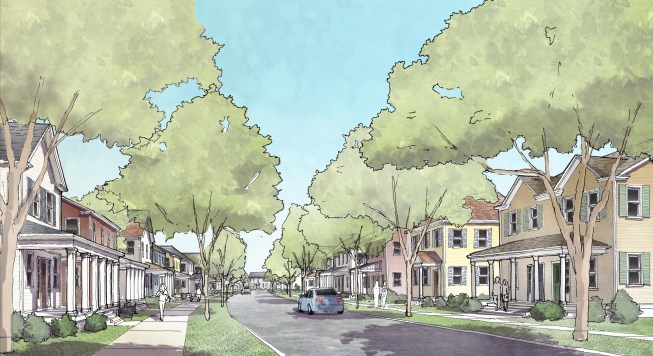
Street view of an on-the-boards master-planned community, looking toward its central park. Roads are narrower to calm traffic, minimize pavement, and ensure a human feel. Trees create a landscape zone between street and sidewalk. The project consists of layers going from the public to the private realm, with street-facing front porches raised above street level.
Union Studio Architecture & Community Planning
Bird’s eye view of an on-the-boards master-planned community. …
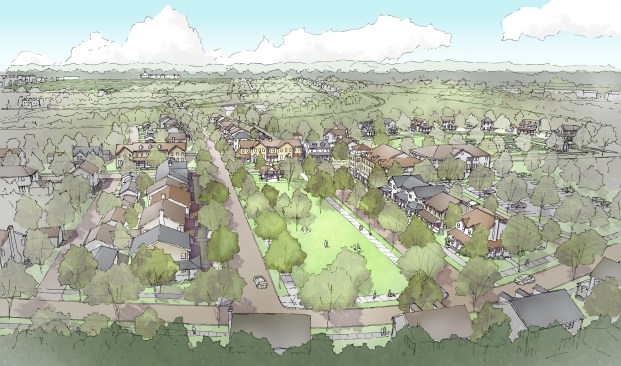
Bird’s eye view of an on-the-boards master-planned community. Its central park, a gathering place, is flanked by attached rowhomes. The park offers a counterpoint to that density. One of the MPC's two large open spaces, it will be a community destination and gathering place.
Union Studio Architecture & Community Planning
Aerial view. The MPC is sited on a former military base. "W…
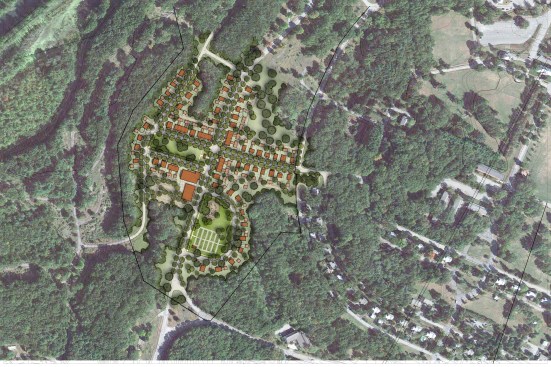
Aerial view. The MPC is sited on a former military base. "We’ve pulled the houses together to create as much open space as possible," says Dan Gainsboro. "We’re trying to piece back together a former street grid that had a radial scheme that got ignored and was broken town over time."
Union Studio Architecture & Community Planning
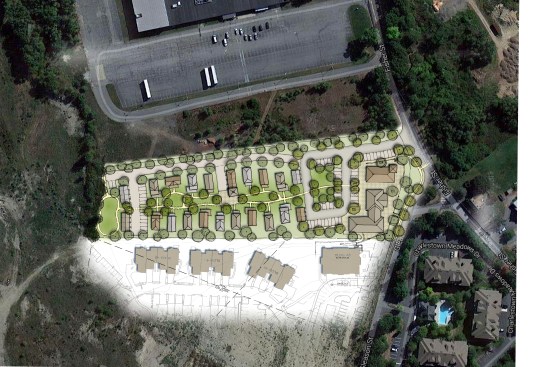
Birds eye view of a mixed-use cottage community that's also in t…
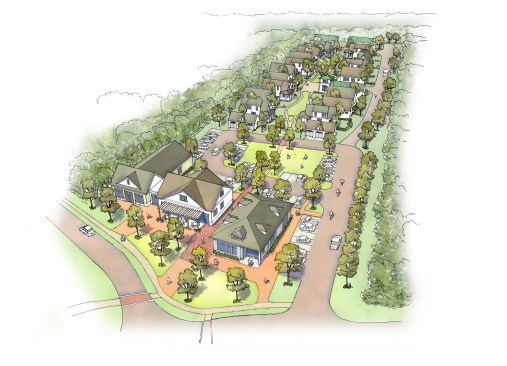
Birds eye view of a mixed-use cottage community that's also in the permitting stage. The 16-cottage project will also have 9000 square feet in the form of small scale retail and commercial space. For added walkability, trails go through the center of the project. A park and parking provide a buffer between commercial and residential.
Union Studio Architecture & Community Planning
Conceptual site plan for the cottage community. A quarter mile t…
Conceptual site plan for the cottage community. A quarter mile to the northeast (across Fisher Street), is a commuter train station. From there, it's a half an hour ride to Boston. To the east are condos.
Amy Albert is editor of Custom Home and a senior editor at Builder. She covers all aspects of design. Previously, she
was kitchen design editor at Bon Appetit;
before that, she was senior editor at Fine
Cooking, where she shot, edited, and wrote stories on kitchen design. Amy
studied art history with an emphasis on architecture and urban design at the
University of Pennsylvania. She lives in Los Angeles. Write her at aalbert@hanleywood.com, follow her on Twitter @CustomHomeMag and @amyatbuilder, or join her on Custom Home's Facebook page.