Expanding a transition space between living areas provides a cle…
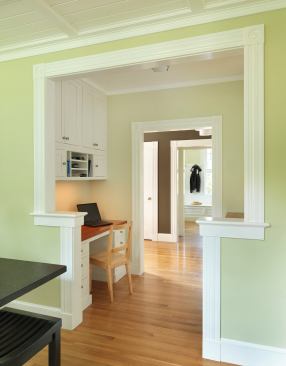
Expanding a transition space between living areas provides a clearly designated office space that stays wide open to the rest of the home. Project: Private Residence, Jamestown, R.I.; Architect: Union Studio Architecture and Community Design, Providence, R.I.
James F. Wilson
As part of a floor plan catering to young families, this home of…
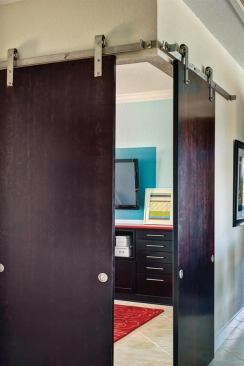
As part of a floor plan catering to young families, this home office is situated adjacent to the kitchen and dining area, allowing its occupants to stay connected to kids arriving home from school, while a set of sliding doors offer peace and quiet when it’s time to get to work. Project: Gen Y House, Orlando, Fla.; Architect: Woodley Architectural Group, Denver; Builder: Centerline Homes, Coral Springs, Fla.
Rob Paulus
High ceilings and industrial features, such as the exposed beams…
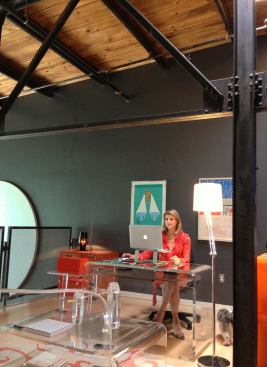
High ceilings and industrial features, such as the exposed beams shown here in architect Rob Paulus’ home, offer a cool workspace feel even in a home office. Project: Private Residence, Tucson, Ariz.; Architect: Rob Paulus Architects
Trent Bell
In a previous life, the first floor of this carriage house serve…
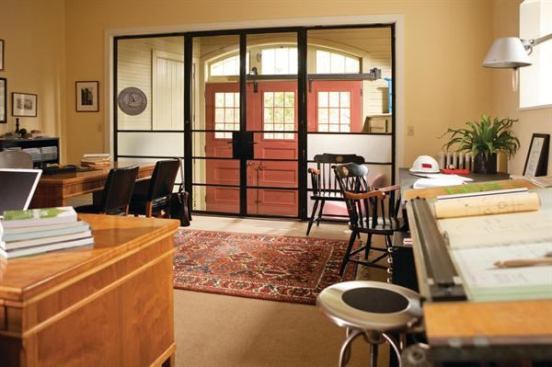
In a previous life, the first floor of this carriage house served as a stable and workshop for lobster-trap makers. Now the space is an
artful home office for architect Carol De Tine that makes the most of its historic charm with salvaged wood and stone, and adds modern elements with a steel and glass doorway. Project: Carriage House Studio, Portland, Maine; Architect: Carol De Tine, Portland
Christopher Mayer
This entry-level home with 1,695 square feet still manages to sq…
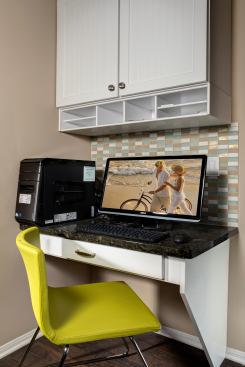
This entry-level home with 1,695 square feet still manages to squeeze in some home office space with a built-in workstation in the kitchen that serves both as a mini-office and a station to quickly check email and recipes while baking cookies. Project: ABC Green Home, Irvine, Calif.; Architect: KTGY Architecture, Irvine
Christopher Mayer
KTGY’s Nick Lehnert recommends keeping home offices away from …
KTGY’s Nick Lehnert recommends keeping home offices away from the front of the plan to shield cluttered desks from visitors. This one does that while also providing direct access via the patio for business guests. Project: Arroyo Crossing, Livermore, Calif.; Architect: KTGY Architecture, Irvine, Calif.; Builder: O’Brien Homes, Foster City, Calif.
William J. Hebert
Grown-ups aren’t the only ones in need of home office space. T…
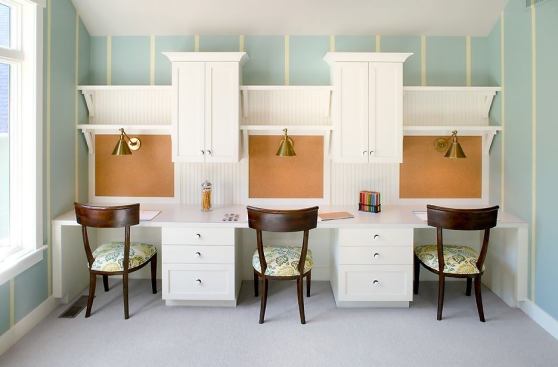
Grown-ups aren’t the only ones in need of home office space. This charming homework spot for a family with three kids provides storage, lighting, and built-in pegboards.
Project: Sunset View, Rockford, Mich.; Architect: Visbeen Architects, Chicago; Builder: Insignia Homes, Kentwood, Mich.
Johnny Quirin
When space is tight, a built-in desk like this one packs a lot o…
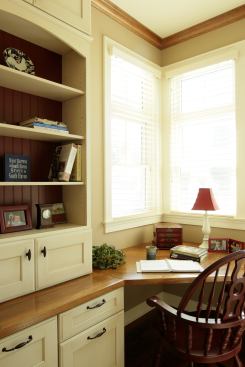
When space is tight, a built-in desk like this one packs a lot of utility into a little square footage, all while giving new meaning to having a corner office. Project: Taverse, South Haven, Mich.; Architect: Visbeen Architects, Chicago; Builder: David C. Bos Homes, Spring Lake, Mich.
Mike Buck
Dark wood built-ins lend a luxurious and stately feel to this ho…
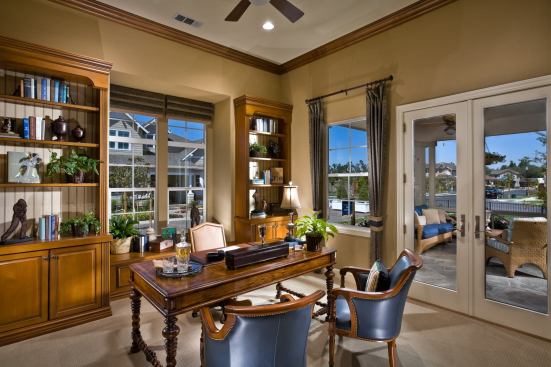
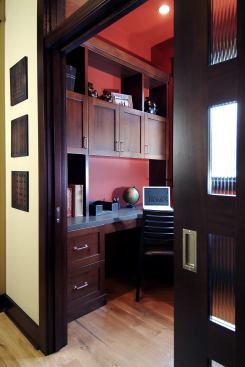
Dark wood built-ins lend a luxurious and stately feel to this home office, while a glass-paneled door and transom window keep it from feeling dim or isolated. Project: Pemberley, Ada, Mich.; Architect: Visbeen Architects, Chicago; Builder: Jeff Segard, Grandville, Mich.
Applied Photography
In these attached townhomes just outside Washington, D.C., the e…
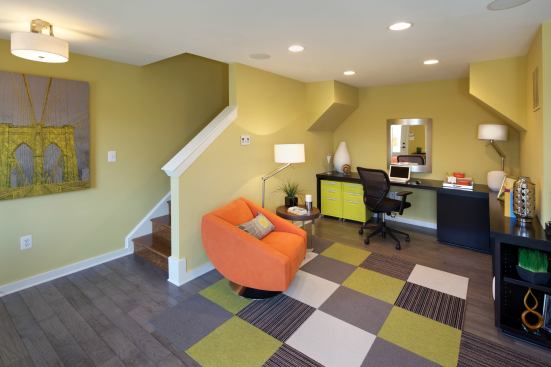
In these attached townhomes just outside Washington, D.C., the entry level is shared by a garage and home office space to give commuters the option to work from home. Project: Boulevard at Brambleton, Brambleton, Va.; Architect: KTGY Architecture, Irvine, Calif.; Builder: Winchester Homes, Bethesda, Md.
No matter who your buyers are, the habit of working from home is likely growing within their ranks: According to a 2010 survey by the U.S. Census Bureau, nearly 1 in 10 American workers operates out of their home at least part of the time—a number that’s been growing over the past decade. As a result, home offices—once relegated to the move-up and luxury markets—are now in demand by buyers in all tax brackets. “We’re finding that even in affordable housing, people are saying, ‘Hey, I know it’s a one-bedroom, but is there any way you could squeeze in some home office space?’” says Oakland, Calif.–based architect Mike Pyatok. Such “offices” can take the shape of anything from a strategically placed built-in desk to a transition space that pulls double duty.
In the suburbs, single-family housing is seeing a shift as well, according to Nick Lehnert, executive director of research and development at Irvine, Calif.–based KTGY, who reports that today’s buyers are eschewing the tradition of placing offices at the front of the home, preferring instead to keep desk clutter out of view by putting work space toward the rear but connected to main living areas.
Fortunately, as these projects show, the work space equation can be as flexible as needed. So whether you’re working with 10 square feet or 200, there’s a home office that will fit just right.