Salt Lake Singles
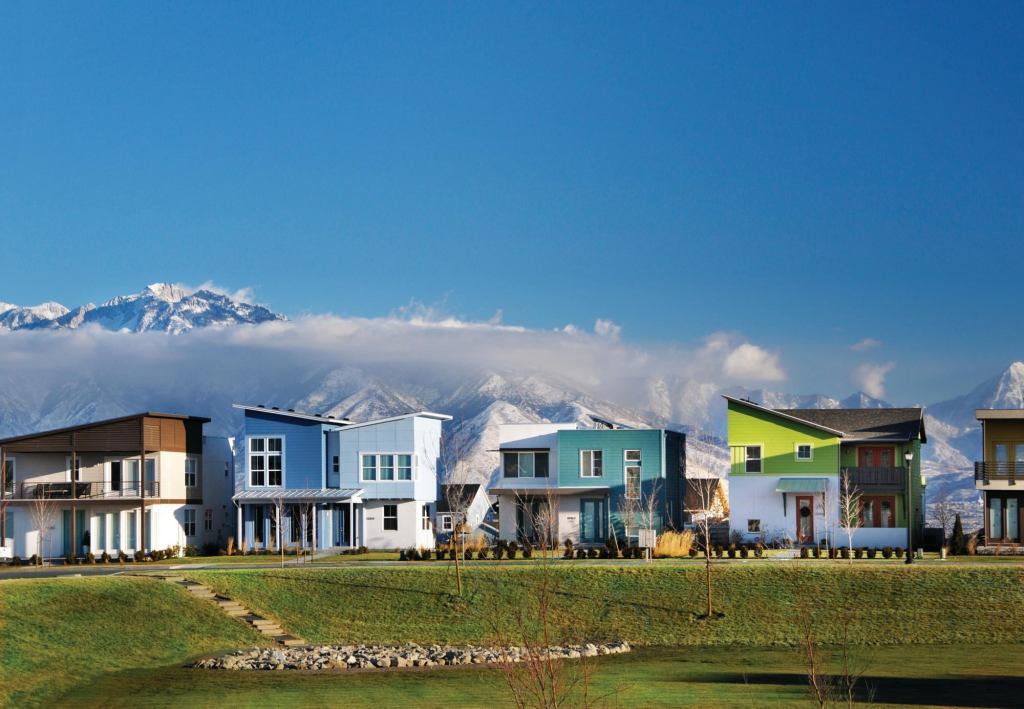
Solaris Collection at Daybreak, South Jordan, Utah




John Bare Photography
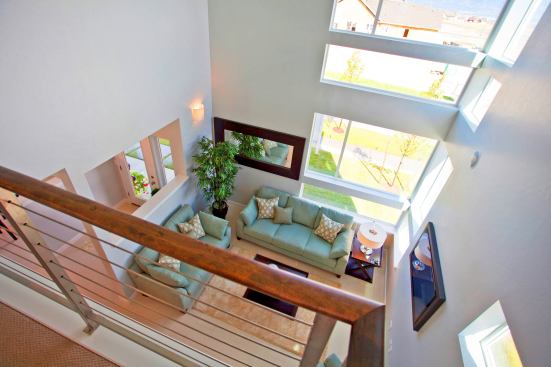
“The thing with density is that it’s not about the interior—it’s about how you get light and privacy,” says John Tully, founding principal at KTGY Architecture+Planning, the firm that designed the Solaris Collection at Daybreak built by Garbett Homes. Whether you’re building eight dwelling units to the acre or 25, “a design won’t be successful unless you stick to those core values,” says Tully.
Garbett, Tully’s client, had already been building innovative and affordable multifamily projects. But the builder wanted to do single-family homes at the same density it was building attached ones, while still maintaining its future-minded principles—solar or geothermal is standard in all Garbett homes. In KTGY, the builder found a firm that accomplished that, plus a business-savvy and creative partner that would be discreet about the R and D involved in spearheading this kind of affordable innovation.
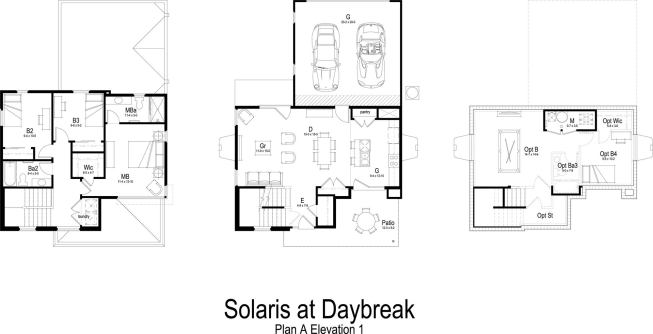
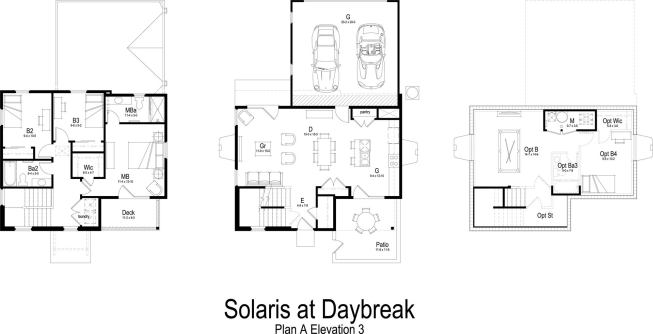
The houses at Solaris are selling briskly. They’re smaller than their traditional counterparts, but what they offer in exchange for square footage is bigger windows and more private outdoor space. Garages are rear-loaded with alleyway access, but they avoid a pitfall typical to production homes with rear-loaded garages—lack of sightlines through the house. The massing is that of an offset rectangle wider than the garage, an arrangement that creates secluded-feeling outdoor space next to the garage, complete with views from the front door to the backyard.
Salt Lake Singles
ArchitectKTGY Architecture+Planning, Irvine, Calif.
BuilderGarbett Homes, Salt Lake City
Density 8 units per acre
Building for density wasn’t the initial aim of Solaris, though the project is a prime example of compact efficiency well-played. What’s more, this foot-friendly community, which is minutes’ walking distance from a light-rail station, features the production homes of the future, powered by the latest in sustainable technology.
“The concept of energy efficiency works best with educated buyers, because they’re curious,” observes Tully. It also turns out that green appeal cuts across all sorts of lines: liberal and conservative, single and married, growing families and empty-nesters, making for a more diverse community than the architect or builder imagined. Sure, pumpkin and apple-green homes attract attention. But it’s more than bright colors. “You can’t social engineer, and you need to give buyers choices, more than ever,” says Tully of the 14 different models available at Solaris. “These houses are light and bright, and they give their owners an ability to personalize the space in a way they might never have before.”
The Site
Solaris belongs to a mixed-use community called Daybreak that’s located at the base of the Oquirrh Mountains. Daybreak sits on a 43,000 acre reclaimed mine site that’s outside Salt Lake City and on a mass transit line. Solaris itself comprises about an eighth of Daybreak. Its master planned lots were already divided into parcels measuring 45 feet by 100 feet and 45 feet by 75 feet when KTGY and Garbett came onboard. Solaris homes are walking distance from a light-rail stop, and they’re close to major employers such as tech, manufacturing, and clinics, as well as restaurants, movie theaters, places of worship, schools, playgrounds, parks, a gym, and community gardens.
Learn more about markets featured in this article: Los Angeles, CA, Salt Lake City, UT, Santa Barbara, CA.