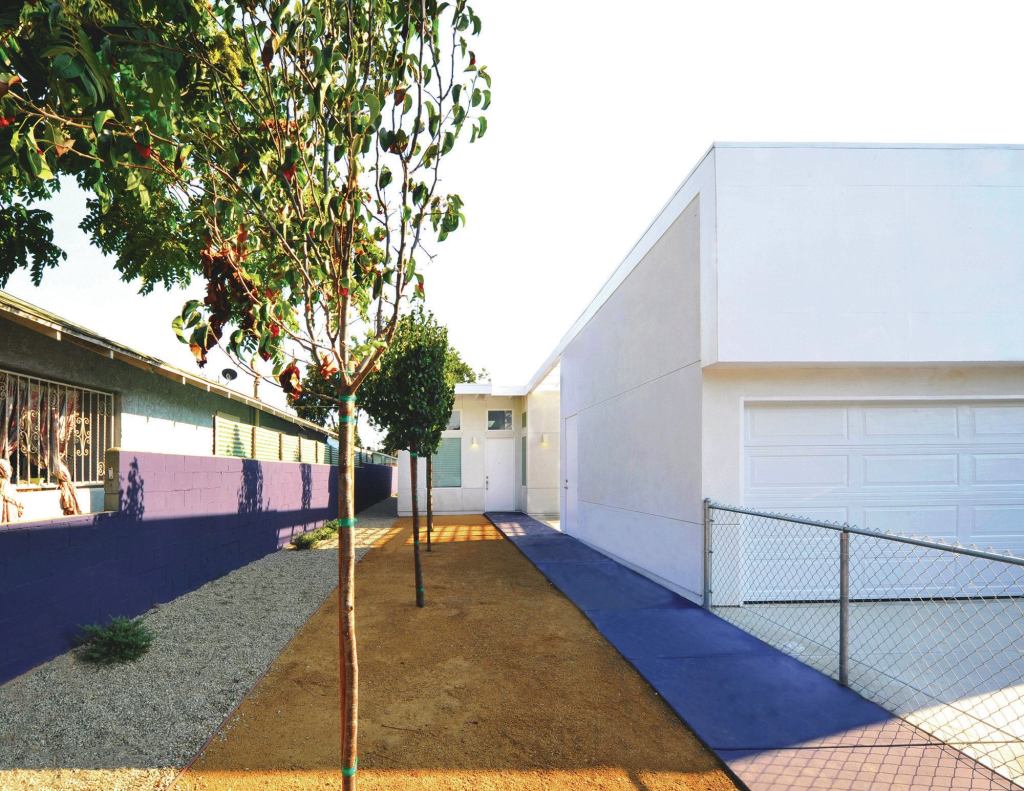
Triada Village Restoration, Santa Ana, Calif.
Award Grand
Units 15 1-, 2- , and 3- bedroom apartments
Size 705 square feet to 1,726 square feet
Rents $503 to $1,032/month
Target Market Low-income families earning 35% to 50% of AMI
Developer Related Companies of California, Irvine, Calif.
Builder Portrait Construction, Corona, Calif.
Architect James Gartner Associates, Santa Ana
Funding Sources Tax credits; city of Santa Ana; bank loan
Photographer John Bare
For more details about this project, check out our exclusive video coverage.
While 99 units of Triada Village are new Spanish- and Craftsman-style construction, 10 original Victorian, Queen Anne, and Craftsman homes on four noncontiguous sites add historic flavor—plus comfort and livability—to an affordable housing project that’s deeply connected to the city’s history. Between funding coordination (more than 10 sources), restoration negotiations, and construction tussles, “most of us had to go into therapy,” quips architect Steve Wraight, director of planning and architecture for Related California. All structures had been deemed unsafe and thus condemned because of insufficient insulation and meager framing. Shoddy or nonexistent foundations demanded replacements, and jacking up the houses and building new foundations was the only solution, Wraight says. “When the siding was removed, it just crumbled in your hand,” recalls Hally Soboleske, an urban planner and preservationist for the city of Santa Ana. Chimneys were crumbling, too, and window frames were rotting; both were impractical to restore.
The project got serious pushback from what Soboleske terms “extreme purists” at the Santa Ana Historical Preservation Society, who demanded tip-to-toe, inside-out replication. “We had to fit the cost of that rehab into an existing budget that was already approved by the city,” says Wraight, who credits Soboleske with brokering compromises to fit the tight budget and preserve historic integrity. While interior fretwork and decorative elements were saved and new siding was milled to exact historic specs, original elements like windows, doors, and finish hardware were removed and given to the society to sell as architectural salvage. Exteriors had to follow U.S. Secretary of the Interior Standards and City of Santa Ana Historic Guidelines, but the team was given more latitude on interiors.
“Historic rehabilitation is not for the faint of heart,” says Wraight. But a great team can make it happen, and this special portion of Triada Village serves as a reminder: “A boarded-up, falling-down building could be your next big development opportunity,” he adds.
Learn more about markets featured in this article: San Francisco, CA, Los Angeles, CA.