FOR A NUMBER OF POPULATION segments—empty-nesters, singles, and young couples—condos and townhomes are an increasingly appealing alternative to the maintenance headaches of a detached house. In fact, as lifestyles evolve and housing needs change, it’s becoming perfectly acceptable for buyers who might be able to afford a sprawling residence to choose a more compact footprint, as long as it’s smartly designed and set in attractive surroundings. And so, with the recent buzz over rising condos values and the consumer migration toward cultural and retail centers, more and more builders are making forays into urban and mixed-use suburban development.
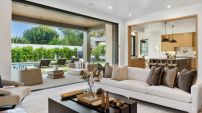
The options and upgrades builders offer on these higher-density products may not be much different than those of standard suburban fare, but certain features rise to the top of the priority list. When home plots and floor plans shrink, amenities that make the most of light, views, and outdoor spaces are what attract most buyers. Whether it’s designing in standard features or offering upgrades, “the issue is how to use small spaces well, helping people to have a sense of their own place yet live in close proximity to neighbors,” says Cheryl Schuette, vice president of sales and marketing for Village Homes in Denver. In its mixed-use developments, where housing prices start around $250,000, the builder has recently started merchandizing its model back yards with custom decks, patios, fireplaces, and stainless steel barbecue grills—upgrades that invite buyers to add a room, albeit outdoors.
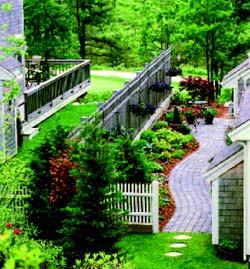
Customized gardens are another classic way to accessorize a small plot, though Massachusetts’ harsh climate makes such packages impractical to offer. “We can’t install the plantings in time for closing for more than half of our buyers,” says principal Dan Green, whose townhomes target empty-nesters and are priced from the upper $300,000s to the upper $600,000s. “Landscaped courtyards in the models give people an idea of what they can do, and we put buyers in touch with landscape professionals,” he says. To compensate, the builder choreographs the larger landscape by orienting nearly every home to a leafy view. It spends up to $50,000 per dwelling on mature landscaping, including the walkway and common areas. “On the few homes whose rear views are more confined, we’re looking into offering an outdoor eating area with a fireplace,” Green says. “It’s something we’ll experiment with.”
In recent years, hearth manufacturers have reported an up tick in outdoor fireplace sales. But Tim Rethlake, vice president of strategic accounts at Heat N Glo in Lakeville, Minn., says the market is still primarily detached homes. Builders are, however, beginning to install common-use gas fireplaces on the grounds of multifamily housing complexes alongside play equipment, Rethlake says. For high-rise terraces, where propane isn’t considered safe, this year the manufacturer is introducing a two-burner electric grill that can be wheeled onto a condo terrace. Another potentially hot product for high-density housing is Heat N Glo’s Twilight gas fireplace, a see-through hearth designed for an exterior wall. The Twilight has just been approved for high-rise applications. “You can have a hearth on the balcony without taking up space outside,” says Rethlake.
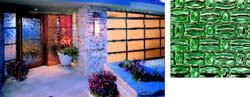
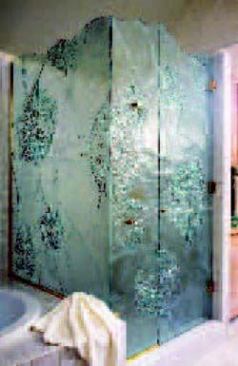
Bill Lazor, senior product manager for Simonton Windows in Parkersburg, W.Va., says the company is working on engineering new window systems to meet the demand for ever-larger expanses of glass. Of course, all that transparency must be balanced against the need for privacy in close quarters. Simonton’s sister company, Hy-Lite, is seeing acrylic glass block—clear, frosted, or opaque—put to creative use on interior walls, sunrooms, and porches. “We’re starting to see a lot more obscure glass in the bath, where people want ventilation, light, and privacy,” Lazor says. “You can put the glass block in a picture window or an operable casement.”
In a competitive multifamily marketplace, features that blur the boundaries between indoors and out will attract today’s increasingly savvy buyers and plump up profits. Green is counting on those kinds of amenities to entice empty-nesters. “Our competition is the home they’ve lived in for the past 20 to 40 years,” he says. “By allowing people to customize their indoor/ outdoor space, we want them to feel like they’re not down-sizing, but right-sizing.”