
Eric Staudenmaier
In a steep canyon in West Los Angeles sits the Banyan Drive Tree…
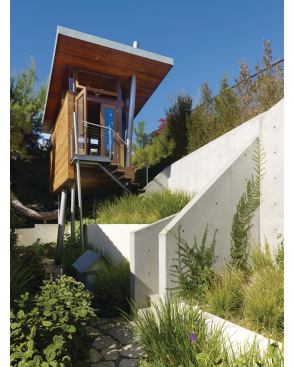
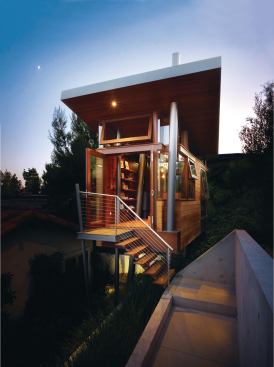
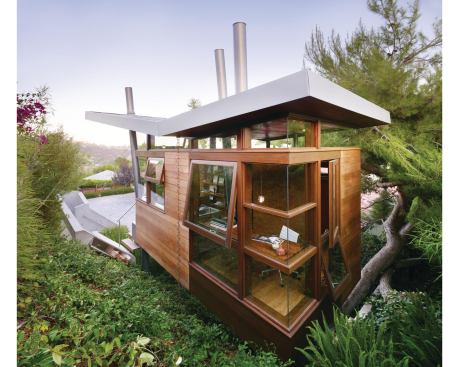
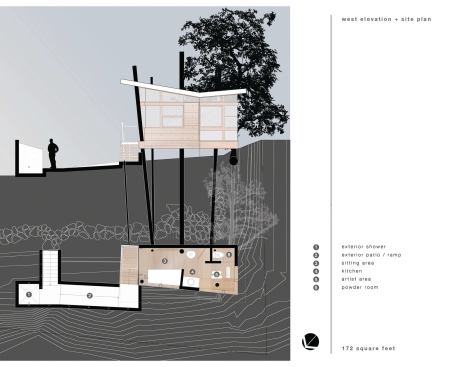
At first glance, this tree house, nestled in a West Los Angeles canyon, looks like just the kind of project that makes builders say things about architects that aren’t fit for publication in a business magazine. “A few contractors flat-out refused to bid because they didn’t know how they’d build it,” recalls architect Christopher Kempel of Rockefeller Partners in El Segundo, Calif. Small wonder: The lot was in a tight spot on a back corner of a steep property. The structure’s support columns—what Kempel calls “metaphoric tree trunks”—were all canted slightly.
Builder Tom Preis, who prides himself on staying on a job “from morning ’til night,” calls himself a “hands-on builder,” and he happens to revel in just those sorts of challenges. Preis had worked with Kempel previously on a full-scale house, and he was game to do a tree house. “I’ve been in business over 25 years, and I’d never seen anything like this before,” he says. “As soon as I saw the drawings, I knew I wanted to build it.” He adds, “It didn’t scare me, I just knew it would take time.” With each column canted at a different angle, tools such as CAD helped Preis figure out how far out-of-plumb each one leaned in order to prepare for their installation.
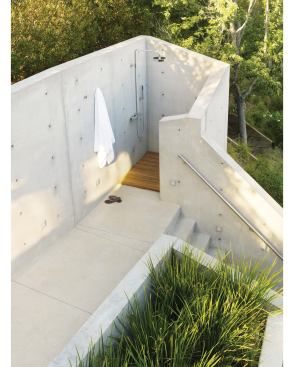
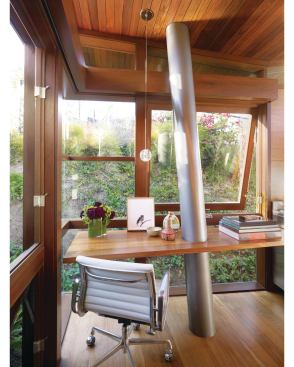
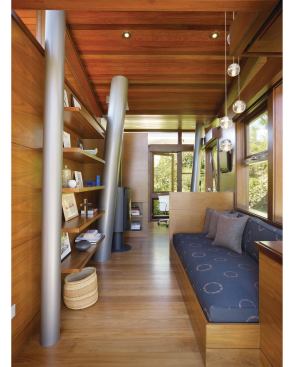
Designed for a Los Angeles artist, the tree house looks like a piece of sculpture. But it’s a completely habitable one. At 172 square feet, it’s the kind of peaceful hideaway many people dream of: a studio that’s a perfect spot to go draw, write, read, or just take a nap. The place has electricity, not to mention a powder room, outdoor shower, and sprinkler system (the tree house is in a fire-prone area). Running water is possible thanks to those canted steel support columns—they’re hollow and do double duty as plumbing pipes.
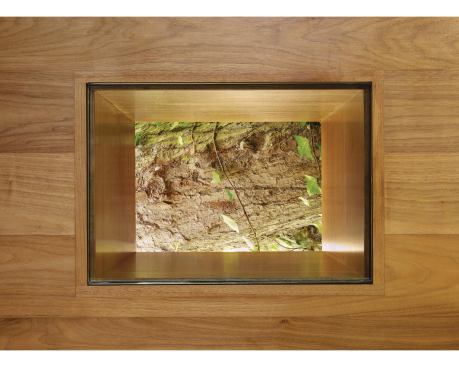
The structure is inspired by the client’s childhood love of tree houses and draws inspiration from tree houses past. But instead of being supported by a tree, this tree house hews close to one. It hovers over an Aleppo pine that fell when it was young and survived. The tree’s first 12 feet of trunk grew horizontally before it resumed growing vertically up the hillside (to make the point, the tree trunk can be seen through a small window in the tree house floor).
Elements such as a butterfly roof, clerestory windows, mahogany-framed windows, and Clear Heart cedar siding were inspired by a house that Kempel had designed for the couple years earlier—a house that never got built. “The tree house was one part of the dream,” says Kempel. “The other part was getting to realize the unbuilt home through building the tree house.”
Learn more about markets featured in this article: Los Angeles, CA.