John M. Hall
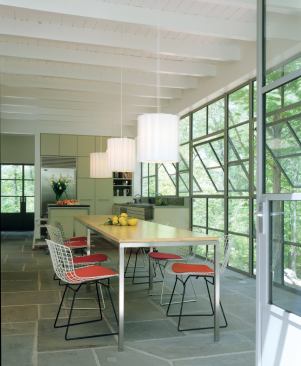
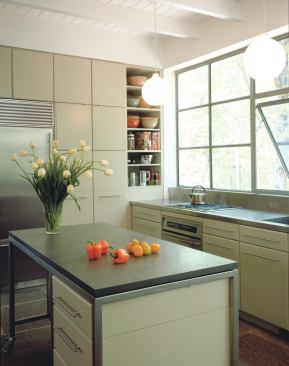
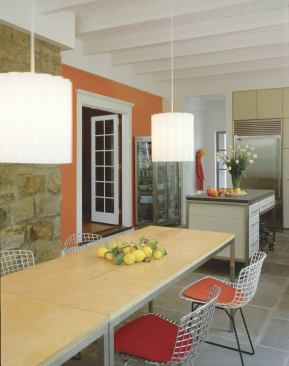
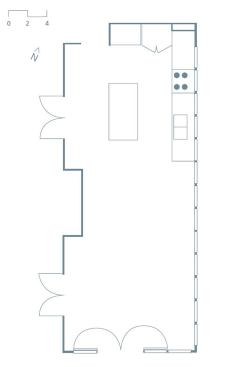
A thoughtful floor plan helped them achieve both ends. Goolrick placed an entry and mudroom at the north end of the addition, leaving the rest of the long, narrow space for the combination kitchen and dining room. She ganged MDF storage cabinets along the kitchen’s north wall, which left most of the east and south walls available for floor-to-ceiling industrial steel windows. “The old 1940s house is very simple and clean,” she says, explaining the choice of metal windows. “So we thought we’d do something straightforward. We looked at the Case Study houses [a series of modern, experimental houses built mostly in California in the mid-20th century] and also at old industrial buildings throughout New England.” Standing at the stainless steel kitchen counter or sitting at the dining room table during the daytime, the owners are surrounded by natural light and pastoral forest views.
A typically outdoor floor selection, bluestone, lies underfoot throughout the kitchen and dining area, and it tops the wheeled island as well. The shades of the lichen, stone, and bark on the site inform the gentle colors of the cabinetry. “The addition is a very clear geometric form,” explains Goolrick. “We wanted it to speak to the surroundings in a way that would soften it.”
Project Credits
Builder: Pelham Country Homes, Ridgefield, Conn.
Architect: Page Goolrick Architect, New York City
Project size: 448 square feet
Construction cost: Withheld
Photographer: John M. Hall
Resources: Dishwasher: Asko; Lighting fixtures: Poulsen; Paint: Benjamin Moore; Plumbing fittings: Chicago Faucet; Refrigerator: Sub Zero.