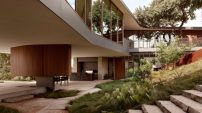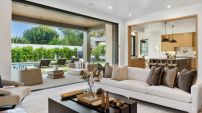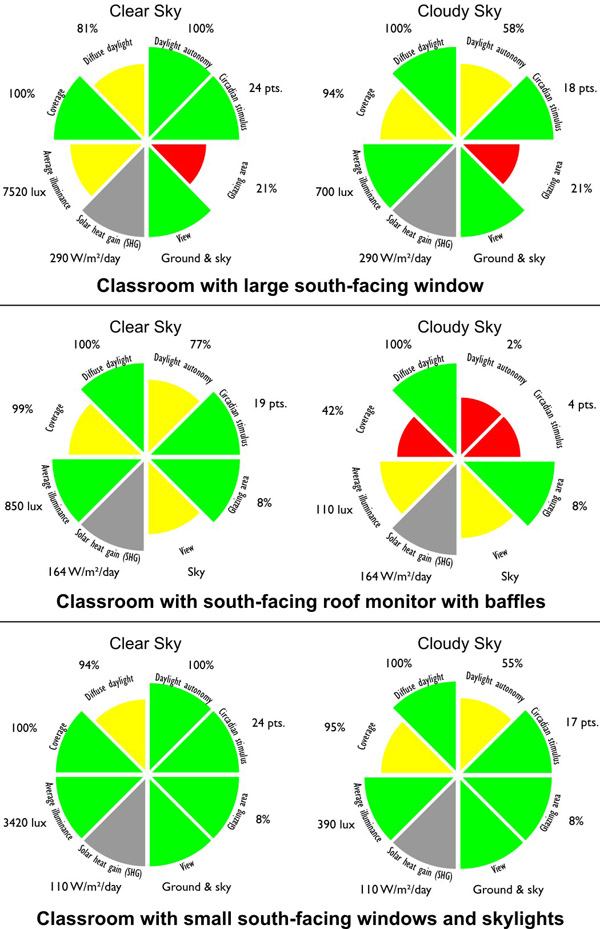
Thanks to a new metric from the Lighting Research Center (LRC) at the Rensselaer Polytechnic Institute, builders, architects, engineers, and other design pros have a better method for predicting the maximum amount of beneficial daylighting in their designs. Daylighting brings the outdoors inside by using sunlight to illuminate interior space. The formulas created by LRC researchers calculates how much natural light can be incorporated into a building without losing insulation value or gaining too much solar heat.Named the daylighting dashboard, this tool can be applied early in the design stage and uses eight benchmarks to simply yet thoroughly find the best balance between introducing ample natural light and creating an energy-efficient building envelope. These criteria—average luminance, coverage, diffuse daylight, daylight autonomy, circadian stimulus, glazing area, view, and solar heat gain—can be prioritized depending on the client’s needs, the site’s solar orientation, local building codes, and energy incentives. The metrics also take biological benefits of natural light into consideration, including feeling alert and active during daylight hours and inducing a more restful state in spaces like bedrooms once the sun goes down.