Steve Maylone
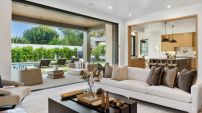
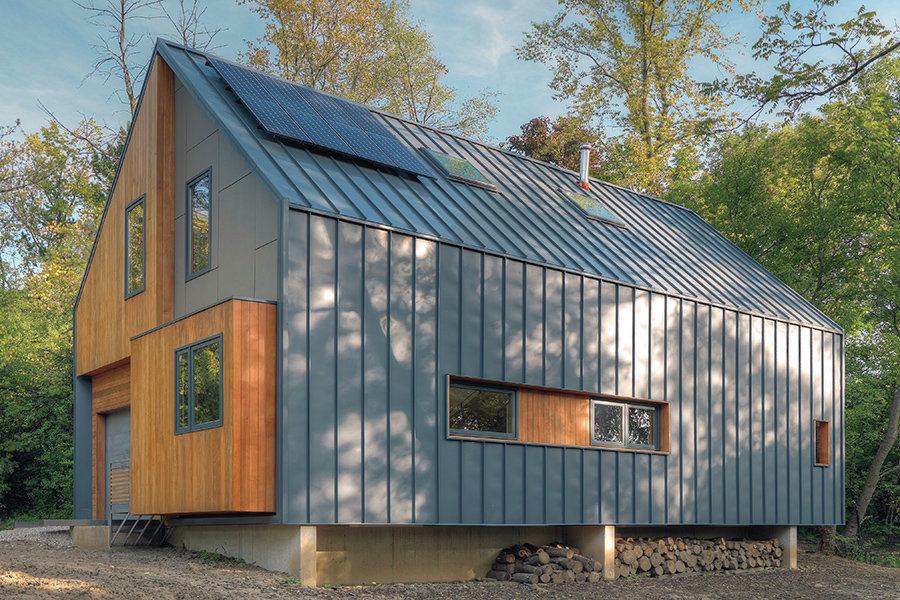
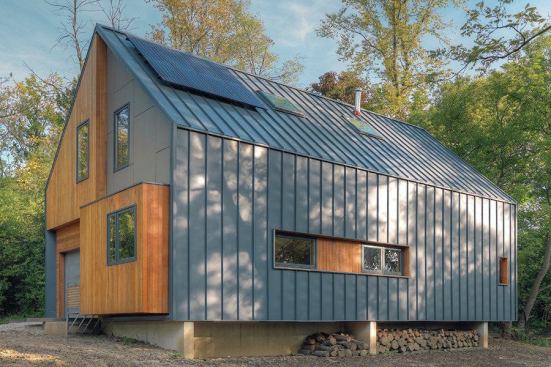
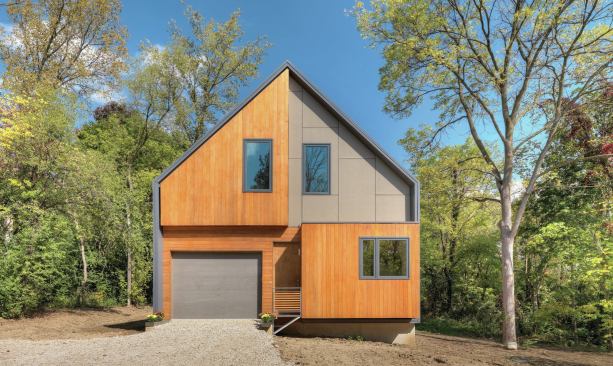
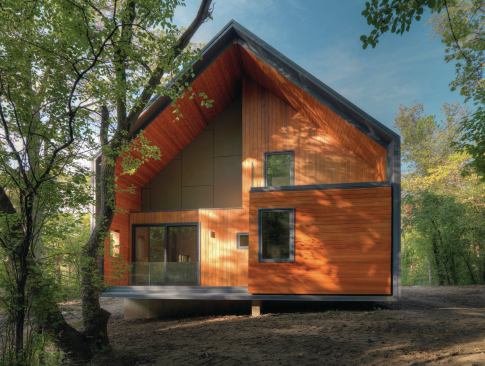
The “simply elegant” Matchbox House is a study in contrasts, said our judges: It encompasses cutting-edge green building approaches without breaking the bank, features a unique contemporary design surprising for its rural Midwestern setting, and boasts a dramatic exterior but understated interior finishes. “It’s nice how restrained it is,” they said. To reinforce the iconic look of a small house in the woods, architect Naseem Alizadeh raised the structure on a concrete plinth and divided the front and back elevations into fourths. These quadrants—made of James Hardie fiber-cement siding and vertical and horizontal cedar planks—appear to slip past each other, as in the opening and closing of a matchbox.
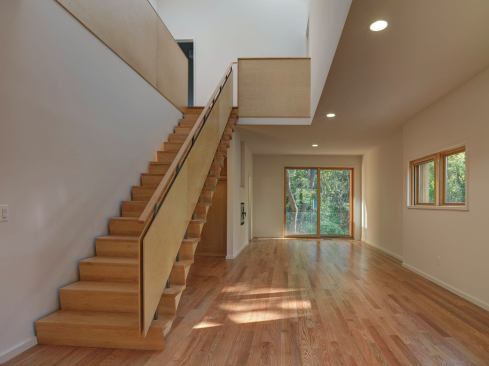
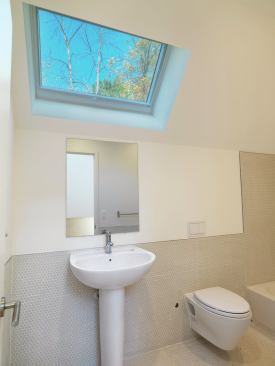
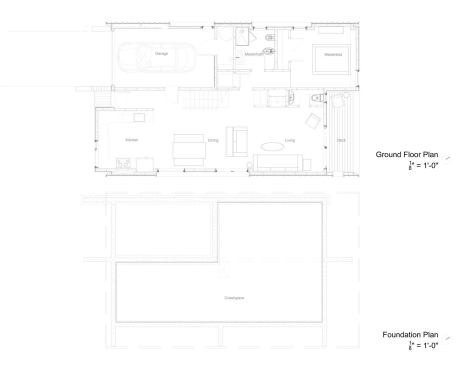
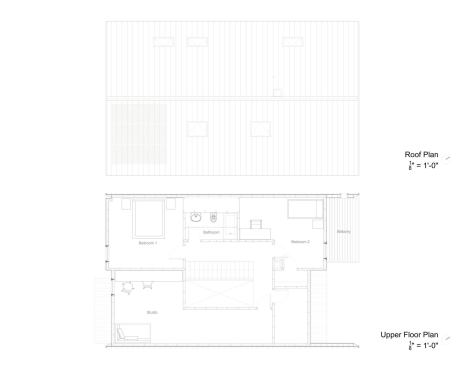
In another apparent contradiction, the structure feels large inside despite its compact footprint, thanks to its open floor plan and soaring second-floor ceiling with operable skylights. To achieve this look, builder Brian Halprin incorporated an attic-less “hot roof” framed with I-joists instead of trusses and insulated with cellulose and foam board, eliminating the need for ventilation and providing an R-value of 49.
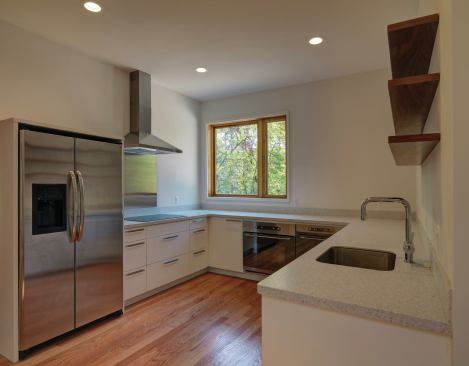
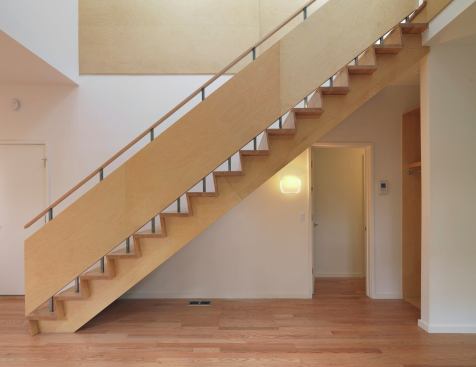
The house boasts several custom amenities including a glass railing system, induction cooktop, and FSC-certified wood doors, floors, and cabinets. To counterbalance these pricey details, the project team worked from concept to completion to identify cost-saving strategies, says Halprin. These included the use of interior trim salvaged from an old barn, mid-grade appliances, Corian solid surface countertops, and small bedrooms.
Besides high-performance framing and insulation, other energy-conserving measures that helped the house achieve LEED Platinum include low-VOC and recycled materials, passive heating and cooling, a high-efficiency furnace, and solar energy. “It’s got a lot of green for a decent price,” summed up one judge.
Project Credits
Entrant/Builder:Green Building Services, Southfield, Mich.; Architect:Bureau of Architecture and Urbanism, Palo Alto, Calif.; Structural Engineer:Johnston Design, Clarkston, Mich.; Living space: 1,740 square feet; Cost: $210 per square foot; Photographer:Maylone Photography of Architecture
Resources: Bathroom and kitchen fittings/fixtures:American Standard and Toto; Cabinets:AyA; Cellulose insulation: Nu-Wool; Countertops:Corian; Decking:Trex; Dishwasher and oven:IKEA; Doors:Masonite; Exterior siding:James Hardie and Pac-Clad; Fireplace:Lennox; Flooring:Barn Door Lumber and Lyric Tile; Garage doors:Clopay; Hardware:Emtek; HVAC equipment:Bryant; Lighting fixtures:Alico; Paint:Sherwin-Williams; Refrigerator:GE; Roofing:Pac-Clad; Skylights:Velux; Solar energy system:Sun Power, Windows:Kolbe
ON SITE:
Builder Brian Halprin considered applying foam insulation directly to the underside of the home’s pitched roof, but decided against it because he was concerned that heat buildup from the standing seam metal roof could melt the insulation. Instead, he used cellulose and foam board.
Learn more about markets featured in this article: Detroit, MI.