

Raul J. Garcia
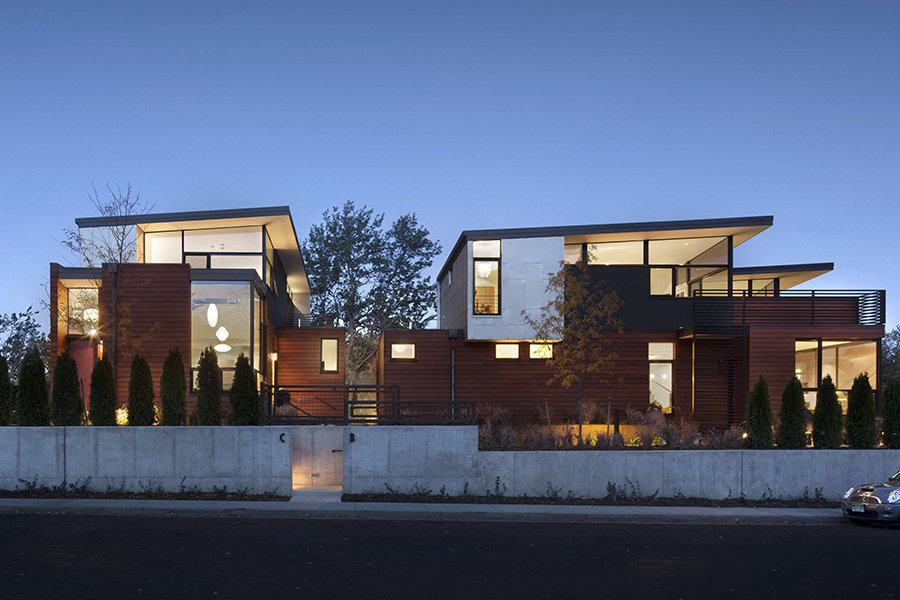
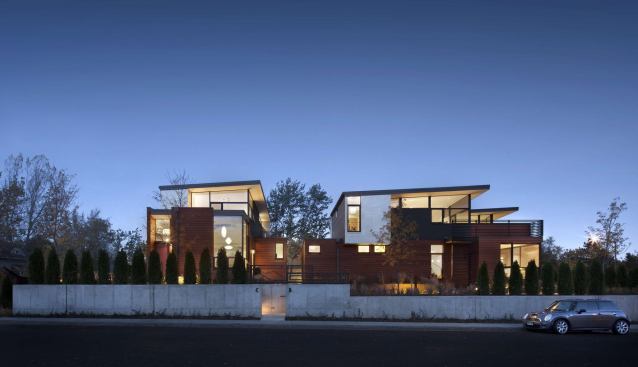
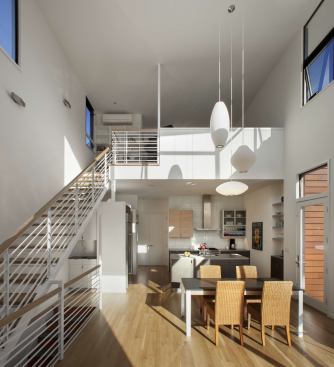
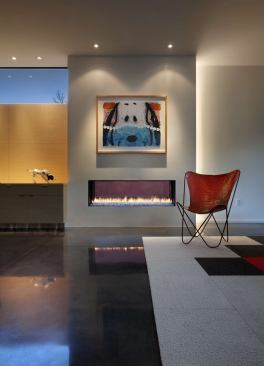
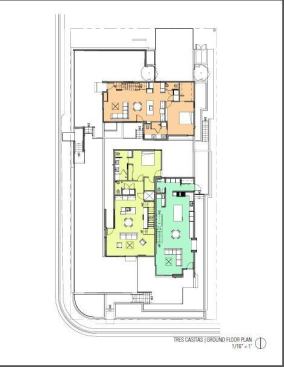
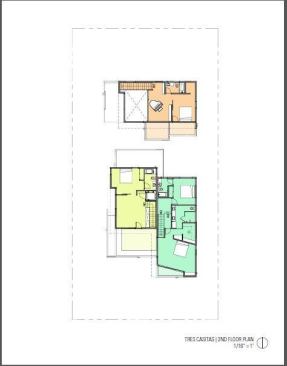
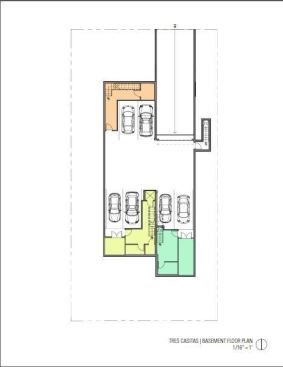
Is Tres Casitas The Commune 2.0? At the very least, it’s a look at what’s to come as America ages and the need to live near friends and neighbors in a place that’s walkable assumes increased importance. This is hardly housing for old folks as most of us imagine it. The jury praised the “super-dramatic interiors,” open corners, and indoor-outdoor flow of the homes. Builder Rich Sands, owner of Hammerwell, was thinking of his own need to downsize and live near downtown when he bought a foreclosed lot. Thanks to the oddities of zoning on the western edge of Boulder, Sands and architect E.J. Meade, principal of Arch11, realized that three units could fit on the 9,800-square-foot lot. Boulder’s floor-to-area (FAR) ratios usually demand 6,000 square feet of lot per unit. The total square footage of the units couldn’t exceed 4,900 square feet, so the duo came up with townhomes measuring 1,600, 1,700, and 1,800 square feet.
Sands, his wife, and another couple went in. They quickly found a third buyer, a young single woman who travels frequently for work and who was looking for a place where she could feel safe, along with just the balance of privacy and community that Meade and Sands had in mind. She also happened to be a fan of the duo’s work.
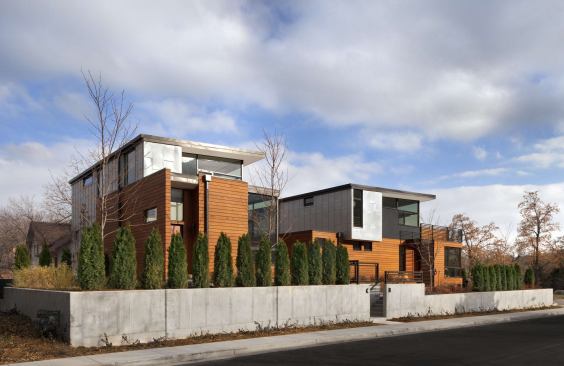
Whether empty-nesters, downsizers, or busy professionals, all three homeowners wanted a low-maintenance house. The materials were limited to glass, stucco, metal siding, and a wood rainscreen. “There’s nothing that we can remove from the design that wouldn’t change the entire character,” points out architect James Treadwell, another principal at Arch11 who also worked on the project.
Having collaborated for almost 20 years, Sands and Meade had enough of a following that buy-in on design from the homeowners was easy. What took some effort was ensuring the homes were exactly equal in quality, taking advantage of the site’s mountain views—a valuable commodity—and maximizing sunlight while dealing with zoning restrictions and the needs of three separate homeowners of different generations.
The southwest corner of each unit folds upward to gain views and daylight, creating a crease in the flat roof (the “flat” roof’s very slight pitch keeps water from pooling). The homes read as a continuous dwelling, though, and they generate lots of interest from passers-by, says Sands, who adds, “I could have sold all these units five times over.”
Project Credits
Entrant/Architect/Interior Designer:Arch11, Boulder, Colo.; Entrant/Builder/Interior Designer:Hammerwell Incorporated, Boulder, Colo; Landscape Architect:R Design, Denver, Colo.; Living Space: 1,600 to 1,800 square feet per unit; Site: 9,800 square feet; Sales Price: $1 million to $1.2 million per unit; Construction Cost: $300 per square foot; Photographer: Raul J. Garcia
Resources: Bathroom cabinets:Michael Brotherton Woodwork & Design; Bathroom fittings:Hansgrohe; Dornbracht; Bathroom fixtures:Signature Hardware, Toto, Kohler; Countertops:Caesarstone, Okite; Dishwasher:Bosch; Doors:Schacht Mill Works; Exterior siding: Godfrey Hirst; Garbage disposer:Insinkerator; Hardware:Inox, FSB; HVAC:Triangle Tube, MitsubishiMitsubushi; Insulation:Icynene; Kitchen cabinets:Michael Brotherton Woodwork & Design; Kitchen fittings:KWC; Kitchen fixtures:Elkay, Julien; Lighting fixtures:Juno; Range:Wolf; Refrigerator:SubZero; Paints/stains/wall finishes:Benjamin Moore, Sikkens; Skylights:Velux
On Site
Each house has siding of square-edged red cedar boards in a rainscreen-style application. The rainscreen appears to float on the exterior, thanks to a space between the cedar siding and the actual box, around which the home’s weatherproof membrane wraps. Half-inch gaps between each of the boards allows them to breathe, flex, and read independently. Air space between siding and membrane results in a tight envelope that breathes well and dries thoroughly.
Learn more about markets featured in this article: Boulder, CO.