Jessica Marcotte
Architect Michael Winstanley isn’t a sailor, but his admiratio…
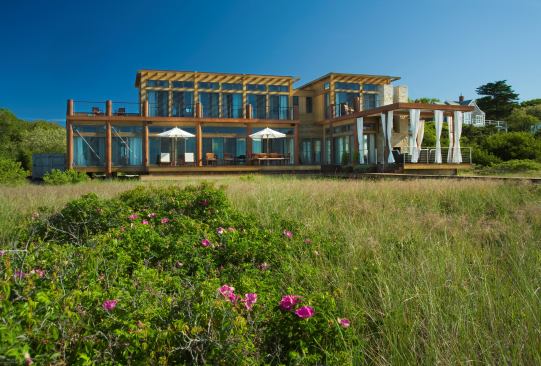
When architect Michael Winstanley built an oceanside home on Provincetown Harbor, he called first and foremost on memory—specifically, his childhood recollections of summers spent in Provincetown, Mass., when the last bits of Cape Cod’s seafaring industry still remained. “At one time, piers, fish houses, and sheds lined the harbor,” says Winstanley. “When we were kids, half were gone and the rest were falling down. My brother and I used to play in the abandoned ones.” Provincetown is no longer the fishing village it once was, but with its old harborscape still fresh in his mind, Winstanley designed a house that honors Provincetown’s seafaring past.
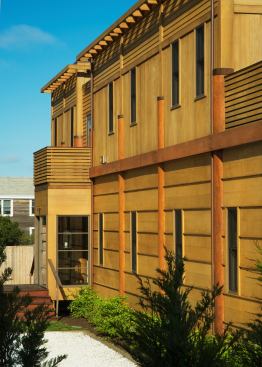
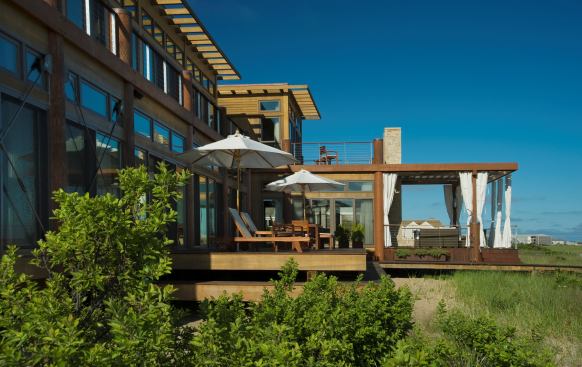
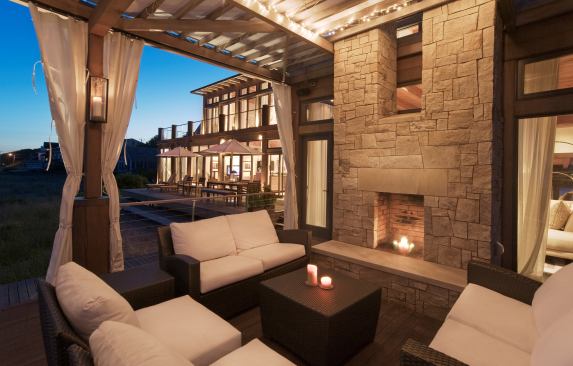
The home’s massing and lines are clean and contemporary, yet the forms recall those long-gone seafront shacks and storage sheds. The detailing invokes the past, too. The half-exposed fir piers that hold up the house were lathe-turned to resemble wharf supports. Exterior walls of board-and-batten red cedar are reminiscent of ship hulls and shack siding, while cedar cross-beams might remind you of a ship’s mast and boom.
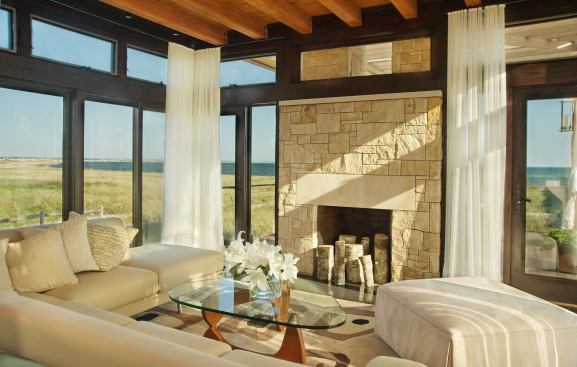
“Another thing that made a big impression on us as kids was that Provincetown was where the painters came to work,” recalls Winstanley, referring to the town’s history as a haven for artists. “The reason they all came out here is that with so little landmass, the light is incredible,” he says. “In the morning, you get spectacular blues; in the afternoon, amazing reds and oranges. It was important that the house allow you to feel the light the way that painters do.” To take full advantage, there are floor-to-ceiling windows, many transomed, on almost every wall of the house. Winstanley’s wife, the photographer Jessica Marcotte (“she sees light better than anybody”), worked with him on the design.
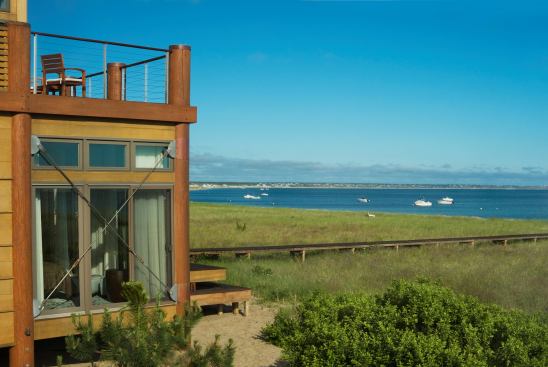
Building a house on a sand dune poses specific demands, especially when the home has so many windows. The structure needs to be suspended on piers so that tide surges, wind, and rain can blow beneath it. And then there’s the aesthetic challenge of making sure the propped-up house relates to the ground it sits on. By its nature, a pole structure is unstable; factor in hurricanes, and plenty of lateral reinforcement is essential. Two concrete walls perpendicular to the water provide most of the home’s shear bracing. Windows at the home’s west end are cross-braced with stainless steel rods, which let light in while offering protection. They’re also a nod to P-town’s industrial past.
You might assume that Winstanley is a sailor, given his reverence for the ocean and the waterfront. But he’s simply an admirer, albeit a discerning one. “Boats are great design objects,” he says. “I designed the house as an architect, but with a lot of thought about boat building.”