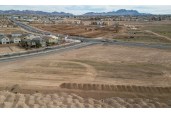
The sharp correction in demand over the last 12 months has driven many builders to switch from growth mode to harvest mode. Relative land positions, calculated in terms of years-of-lot-supply, have ballooned to nine years as the sales pace slowed. As a result, builders are walking away in droves from optioned land to free up cash.
In October, UBS advised clients to expect most builders to scrub their balance sheets aggressively before the end of 2006, throwing in the proverbial “kitchen sink.”
Here’s the logic: They’d keep the land with the lowest cost—and highest margins—helping to drive margin expansion once demand recovers. In fact, the lot counts came down even more steeply and quickly than expected. Through the end of September, the average lot count among public builders in our coverage had fallen 14 percent from its peak, including a 24 percent reduction in the number of optioned lots.
This puts the lot count back to the mid-2004 level and underscores the flexibility builders achieved as they optioned lots versus buying them outright.
Although land values are difficult to determine in such a thin market, the interest in owning residential land from both public and private equity investors remains high. Land prices tend to be sticky, and once the bottom in the fundamentals is within sight, we expect significant activity in land transactions and increased mergers and acquisitions within the industry.
Average prices of new homes continue to fall amid an inventory overhang and nervous buyer sentiment. We expect a further decline of 10 percent in 2007, shifting average prices back to early 2004 levels, about $265,000. Lot counts are shrinking rapidly, especially on recently secured optioned land. Unless prices fall more than the 10 percent forecasted, we believe builders have repositioned their land costs in line with our expected operating environment.
OPTIONS INSURANCE Until the rate of change in home prices and demand stabilizes, the occurrence of asset impairments (write-downs) and option abandonments (write-offs) will persist. For public builders, some 60 percent of their lot pipelines are controlled by options, a factor that differentiates the current cycle from prior downturns.
Option premiums are a form of insurance that allow builders to control land for future use, typically at a fixed price. The builder also has the opportunity to forfeit the option deposit and give up control of the land, should the market turn. Here are three scenarios for land position tactics:
Optioned land/successful renegotiation. The builder initially tries to renegotiate either the timing or the velocity for taking down lots, the price per lot, or both. If the renegotiation is successful and the land meets the builders’ required hurdle rate, no charge is taken. The balance sheet and income statement are unaffected.
Optioned land/unsuccessful renegotiation. If agreement is not reached with the land seller, the builder will take a charge for the full amount of the option deposit and any capitalized pre-acquisition costs. This analysis is based upon realizable value, not on whether the builder actually forfeits the option. The charge flows through the income statement and reduces book value. In the future, as recognition of deteriorating conditions widens, landowners will be more willing to negotiate on terms, which should lessen the likelihood of further option write-offs.