In many housing markets, home prices approaching pre-recession levels and supply crunches on lots, labor, and materials have made lower-priced homes harder to build and buy. Zillow reports that 86% of Americans renters cannot afford to become home owners, and Freddie Mac predicts that American homeownership could fall below 50% by 2050.
In light of this environment, Irvine, Calif.-based builder AHV Communities has tapped into the current renter’s desire to live in a single-family home. Its single-family rental communities have met with success in its Texas pilot markets, and AHV Communities is expanding this strategy into the Southeast. BUILDER Magazine sat down with CEO and founder Mark Wolf to discuss this community model, its financial benefits, and its continuing impact on the housing market.
Who is the target demographic for your single-family rental communities?
Our renters vary in terms of age and family make-up, however all desire the luxury of detached single-family home living with the flexibility of a lease. Many of our renters happen to be families with children. However, our homes also appeal to a number of Millennials who want more space and privacy then they can currently find in a high-end apartment, as well as to Baby Boomers who are looking to reduce their home maintenance responsibilities while still remaining in a quality master plan community.
Which new local markets are you moving into?
We are currently in the process of expanding in the Southeast region, specifically within the states of North Carolina, South Carolina, Georgia, Florida, and Tennessee. Some of the key metros where we are looking to build communities include Atlanta, Nashville, Charlotte, and Raleigh, to name a few. We recently announced that Jay Byce, our new managing partner, is leading the effort. Jay brings a wealth of institutional experience in the single-family rental sector to AHV Communities, having previously led the national strategic planning and execution for the start-up and growth phases of three publicly-traded single-family rental REITs, including Colony American Homes, American Residential Properties, and Altisource Solutions.
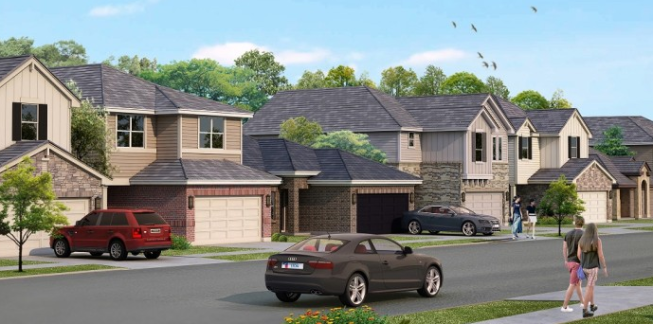
AHV Communities
AHV's Legacy community in Central Texas includes 83 detached residences exclusively for rent.
What conditions make these markets desirable for single-family rental communities? Do they share any factors in common?
When looking at opportunities to build new rental communities, AHV looks to make sure specific market fundamentals are in play. For example, we only build in regions where rental housing is in demand, jobs and job growth are strong, and the population is growing. Our target markets all share these characteristics.
What are the benefits for the renter of single-family rental over home ownership?
One of the key benefits of renting an AHV home is the ability to enjoy the detached home experience, including the robust community amenities and luxury in-home finishes, while removing the responsibility of the maintenance and high cost usually associated with this type of living. Additionally, the flexibility of renting appeals to many who may at some point down the line need to move to another city for an important career move, or marry, build a family and then, if desired, purchase a home. A lot of people simply don’t want to purchase a home in the near term, or aren’t in a place in their life to do so and we are catering to this group of people.
How much does it cost to rent one of your homes and how does that compare to a mortgage payment?
The cost of renting a home within an AHV community is best compared to the cost of renting an apartment. For example, monthly rent in one of our homes is usually aligned with the cost of renting a two- or three-bedroom apartment in any given market. A mortgage payment for a similarly sized home is usually going to be a higher cost per month than an AHV rental, as will up-keep during ownership.
Are the floor plans and design of your rental homes different from for-sale homes? How?
Generally speaking, no. For the most part, our rental home floor plans mimic what you’d find in the for-sale marketplace by design.
In what ways will you and do you manage single-family rental homes like an apartment community? In what way will you need to modify tried and true property management strategies – or will another organization manage the properties when they are built?
We view our business model as one that is similar to an apartment business model. The management of our communities falls in line with this philosophy. We handle all core community maintenance, including landscaping, amenity upkeep, and renter requests.
Given current trends, do you foresee a continued decline in homeownership and home affordability?
Affordability is a growing concern in many markets across the United States and it has undoubtedly affected the percentage of people today who are homeowners. This is perhaps best demonstrated when looking at more historical averages for home ownership, which tended to be significantly higher than what we see today. It’s important to note other factors that also seem to be contributing to lower home ownership rates. Some of these include younger generations postponing marriage and children until later in life, Gen Xers hesitating on home purchases because of the number of foreclosures that happened in the recession, and even a general sense nationally that home ownership doesn’t necessarily need to be the primary investment of choice.