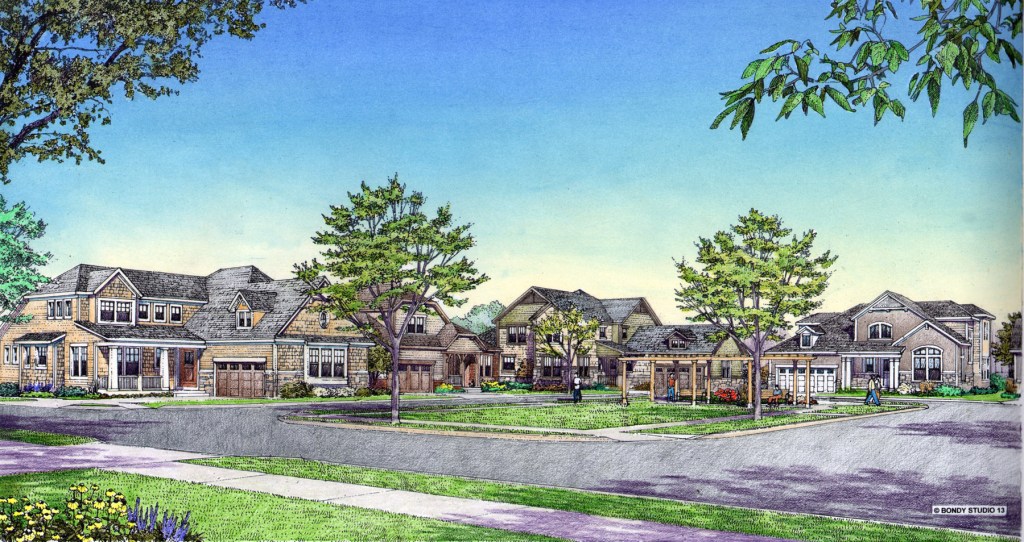
Westgate at the Glen mews
Many towns throughout
the country are speculating which will be impacted by base closures this year,
and how the decommissioned military land can be converted into vibrant
communities. What advice would you give to builders in affected communities?
First off: Understand
the community’s values and priorities, find the best professionals who can who
share your passion, and then work smart and diligently to help the community
express those values and priorities in ways that will enhance the locations in
which you’re given the opportunity to work.
Beyond that broad advice, I would seek to get involved in the planning as early as you can, and determine where your company can add the most value in terms of which market segments best align with your skills and experience. After that, I’d want to understand how your part of the puzzle fits with the broader plan so that you can confidently differentiate your offerings and compliment, rather than compete with, other builders. In that way, both the community and the builders benefit.
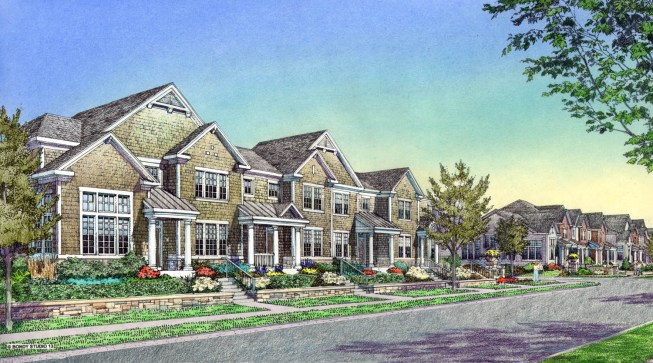
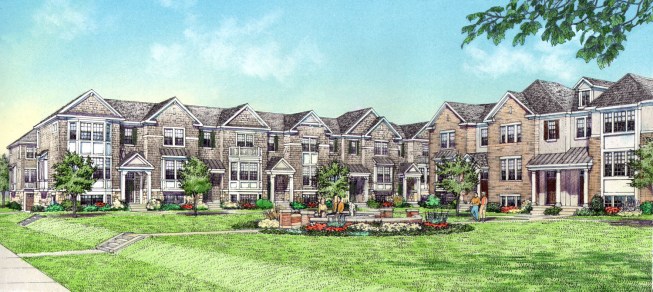
Westgate at the Glen townhouses
What was your approach
to redeveloping the Glen?
Innovation that isn’t
responsive to market demand will fail. Therefore, our approach at the Glen,
both at Southgate and Westgate, was the same as with each infill project: How
we can meet current demand while being responsive to community goals with
regards to land use. Great locations provide a lot of latitude in terms of land
planning and product, because buyers tend to be more flexible as to what they
will accept if they can afford to access a community with the right amenities —
schools being a key factor. I would say that is true with most infill
locations.
How did you prepare for this?
When the Glen was
first launched, Glenview had spent more than three years conducting community
charrettes to gather input from residents and planners as to how to best plan a
“community” within a community. The consensus plan ended up being an
expression, for the most part, of what Glenview was already – a well-balanced
mix of housing forms, together with community recreational amenities, retail
and office. No single use was intended to dominate.
That does not mean, however that they were not innovative in the expression of this overarching goal. To the contrary, they sought to adopt some of the neo-traditional design ideas that would emphasize open spaces and streetscapes. These planning elements included a central town center built around the naval base’s conning tower; alley loaded single-family and townhomes to eliminate the presence of garage doors, enhance the streetscape and encourage neighborhood interaction; green belts and pocket parks; and specific architectural guidelines that encouraged housing diversity and visual interest.