WHEN YOU PUT BIG HOME BUILDERS and California state politicos in the same room, automatically, a preternatural geographic tension seems to clench those who hold power over land entitlement and those seeking some of that power to build. When builders bidding for entitlements in the state also need city officials to grant them permits to ply their trade, you can almost cut the tension with a knife. Different rules apply to play in the streets, and city officials sometimes make them up as they go along. So, as he created Seal Beach-based The Olson Co. in 1988, CEO Steve Olson’s hunch about the city game was pretty simple: You don’t look to beat your opponent, you move them onto your side or out of your way. Either way, you win; and most times, they come out winners too.
Here it is 16 years later, and Olson’s street intuition has blossomed into a fully formed corporate identity among America’s top 100 builders in volume and top 60 in annual revenues. It takes a special breed of builder to strike a harmonious chord with 70 cacophonous California cities, and that’s exactly what Olson’s doing. Fluency in the language of city politics, entitlement issues, and technical and logistical challenges, and an inevitable altruistic dimension added to his company’s land use plans, have all become constants in the Olson tactic on when to give, when to sway, and when to grab.
Motivating national volume builders into urban infill, a number of compelling factors escalate: First among them, perhaps, is the relentless pressure to one-up themselves in growth over the previous year as they go to all extremes to court higher share values among investors. Meanwhile, there’s the land constraints issue. Those constraints tend to deflect attention to under-used parcels that might otherwise stay off the radar if greenfield development was limitless. Demographics also come into play in a big way, as growing armies of young professionals and empty-nesters alike seek out low-maintenance lifestyles in vibrant cultural meccas vs. quiet, tame, isolated suburban living. At the nexus of these trends, more builders—intent on following the dollars—have built more infill into their business models than ever. While some of the nation’s biggest home builders are still just getting their feet wet, others target the downtown development as a strategic imperative.
“I think many builders will be examining every niche they can as they get bigger, and out of necessity [will] branch out from their home product base,” says former UBS Warburg analyst John Stanley, president of Charlotte, Vt.-based consultancy StickSpin. “However, I do not believe this is going to be terribly important to the bottom line as the opportunities for infill are just not that big in absolute terms relative to the numbers of homes these guys are delivering in the ‘burbs now.”
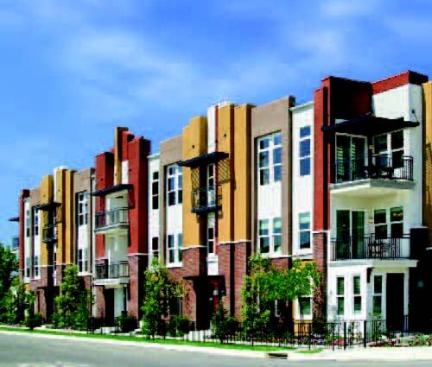
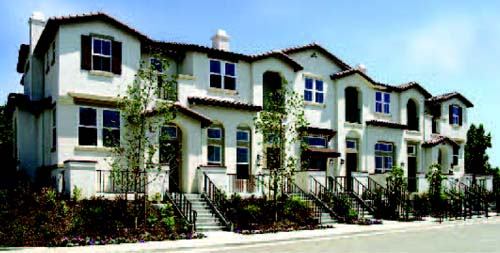
Despite longer cycle times in municipalities than one typically encounters in greenfield development deals, Olson says he believes benefits mitigate the hassles when he aligns his company in a city. “Every community has a vision,” says Olson. “When you get behind that, you have the will and resources working with you. You’re expending your company’s time and money on targeted energy.” Case in point: In a complex, multi-year partnership with the city of Richmond, Calif., The Richmond Redevelopment agency, and BART, The Olson Co. developed an unprecedented 231-townhome project named Metro Walk surrounding the Richmond BART station.
Even though Olson had worked in the East Bay for only four years, the company’s ability to synchronize its interests with the city’s goals won Richmond officials over, according to Tony Bosowski, regional president of Olson’s Northern California division. The East Bay Business Times named Olson home builder of the year, “an important validation of our business model,” says Bosowski.
From Olson’s perspective, the key to success with cities is clear: “Cities want to have a strong voice,” he says. “They want someone to listen to their needs and help solve their problems. Above all, they need a company with the proven skill set and financial abilities to complete a project. We walk the walk,” he says. And to demonstrate that symbolically, every project the company executes is named with the word “walk.”
Sales are currently under way in three communities: Renaissance Walk includes a collection of town-homes near downtown Hayward, the Providence Walk project in Fairfield includes single-family homes, and Willow Walk near Concord includes a mix of product types. In addition, a mixed-use, retail/ residential project is currently under construction in historic Benicia.