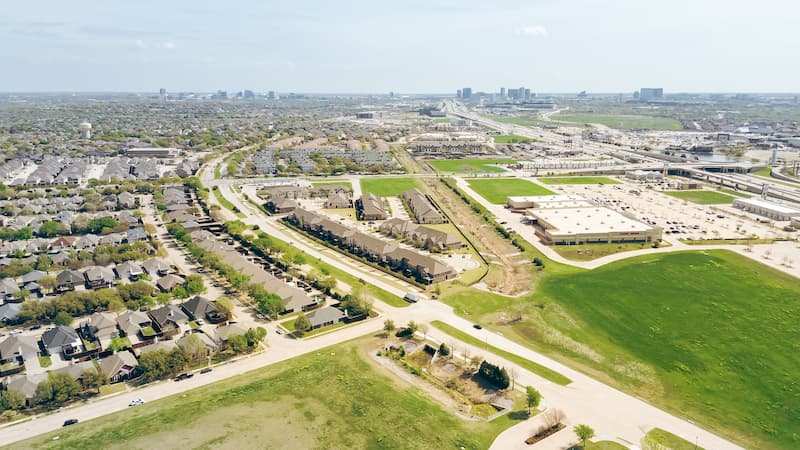
Land deals are rarely small, but some transactions change the map. When Starwood Land announced its $800 million acquisition of 11 master planned communities from Hines this spring, it was more than just a headline. The deal represented a massive bet on the future of America’s most dynamic housing markets and a defining moment for the company’s CEO, Mike Moser.
The acquisition comes at a strategic moment. While builders have pulled back on land purchases due to interest rates and construction costs, Moser sees opportunity where others see uncertainty. The portfolio instantly added over 16,000 lots to Starwood’s inventory, all in seasoned communities where development was already underway. Seven of the 11 projects sit in the Dallas-Fort Worth area, with three in Houston and one major project in Austin.

Mike Moser
Moser will take the stage at Zonda’s Future Place Conference this October to discuss how developers are defining the future of master-planned communities. With nearly 18 years leading Starwood Land and a track record of generating almost $4 billion in revenue from over 50,000 lot sales, he’s positioned to offer insights on the industry’s most pressing topics. We caught up with him to discuss the Hines deal, market conditions, and what’s next for master planned community development.
Starwood Land just completed an $800 million acquisition of 11 master-planned communities from Hines. What specifically attracted you to this portfolio?
The portfolio was pretty seasoned. Every project had substantial development ongoing, so we were stepping into a moving train. It wasn’t like buying raw land where your revenue event is two years later; we were literally closing lots on day two of the transaction. We had the opportunity to buy into 11 well-located master plans in Texas, a state where we feel strongly about the demographics and long-term growth potential. Plus, in Texas, you have MUD (Municipal Utility District) bonds, and the ability to offset some of your development costs makes it a pretty developer-friendly environment. It’s hard to find an acquisition of that size anywhere, never mind with assets you really want. The entire process, from our opening conversation to closing, was less than three and a half months. I don’t think there are many people who can pull that off.
With interest rates and construction costs impacting builders, how are you adjusting your approach to lot pricing and development timing?
We sell to most of the public and a lot of the large private builders, and no surprise, many of them have tempered their enthusiasm for land purchases. Where a developer used to be able to sell a pod or a section of land without incurring the development cost, we are now selling more developed lots than we had initially anticipated. But the demand is still there, especially in the better-located projects. If we’re willing to take that risk, the incremental return on that development dollar is very attractive. So we’re continuing to monitor where the demand is best and putting lots on the ground in those locations.
Communities like Sunterra are known for destination amenities. How do you decide which major features deliver real value and ROI?
Our primary thesis is that master-planned communities will typically outperform standalone neighborhoods, and we believe you’re seeing that now in this softer sales environment. Master plans are garnering more market share. In the case of Sunterra, if it were 4% of the Houston market, we think it’s going to be 5% or a percentage point higher. Our goal is to be the shiniest project in our submarkets. You will typically see us err toward a bigger or more expensive amenity package than most. A $45 million amenity budget sounds crazy, but Sunterra is a 7,500-lot community. That project is on pace to do about 1,200 sales this year, which is only slightly down from last year, and our home sales prices are pretty comparable.
Why do you think master-planned communities outperform traditional neighborhoods, especially in the current market?
I think it’s a flight to safety among consumers. People see momentum, and they’re concerned about one of the biggest investments of their lives. If you’re going into a large MPC with a major capital sponsor behind it, like a Starwood, there’s a sense of comfort that the HOA isn’t going to be burdened with an unexpected assessment. When you go into one of the big welcome centers we have, where we sell lifestyle, not product, and there are 20 other people looking around, it just feels safer as an investment. Safety is seeing a developer continuing to build an amenity, maintain the landscape, and put lots on the ground. That buyer goes, “Okay, this investment is safe.”
Your session at the Future Place Conference is titled “Community Titans: The Developers Defining the Future.” What’s one aspect of the traditional master-planned model that needs to evolve?
I would expect to see more product segmentation for generational living, where someone can age in place better. A young family may move to a community for the school district, but where do they go after their kids graduate? I think you’ll see more planning for that. That, coupled with the work-from-home trend. Even though companies are going back to the office, they are allowing more flexible schedules. If someone can avoid a long commute one day a week, it opens up tremendous opportunities for developers. I think you’ll start to see more internal services and different amenities in these communities to support that.
What’s the biggest challenge facing MPC developers today?
Capital, capital, and capital. Land is the last thing to get the message about a price decline. Are land prices dropping? No, they’re really not. But home prices have dropped in the last six or eight months. A master plan can take 10, 12, or 15 years to build out, and finding the capital that will align with that timeline is not easy. There’s as much capital in the market now, or more, than I’ve seen in my career, but it’s very selective about where it wants to go. Master plans don’t just pop up in Wichita Falls, Texas, where I grew up. They pop up where the builders are, where you have a lot of exit strategies. It creates a challenge to get these big deals out of the ground when you have to write such a large check.
After nearly 18 years leading Starwood Land through multiple real estate cycles, what’s the most important lesson you’ve learned?
Finding the right capital partner. It’s important to have a good business plan and partner, but also to have Plan B, C, and D ready. If the market softens, does your capital partner immediately want to liquidate, or are they willing to look at alternatives to weather the storm? In 2008 and 2009, you were buying assets for pennies on the dollar, but you still needed capital with the vision to look into the future and see that markets like Orlando or Dallas would eventually recover. That would probably be one of the better lessons: aligning yourself with good capital sources and figuring out ways to create win-wins. If things go well, you get rewarded. If things go bad, you figure out a way to work it out together.
Is there anything else you feel is important for our audience to know?
I think it’s an important time for builders and developers to come together and establish new norms around pricing and affordability. The goal is to price land, lots, and houses in a way that allows us to deliver attainable products in amenity-rich environments. That’s a big collaboration. As many builders pivot to land-light strategies, we’re optimistic that there will be more opportunities for that kind of partnership.