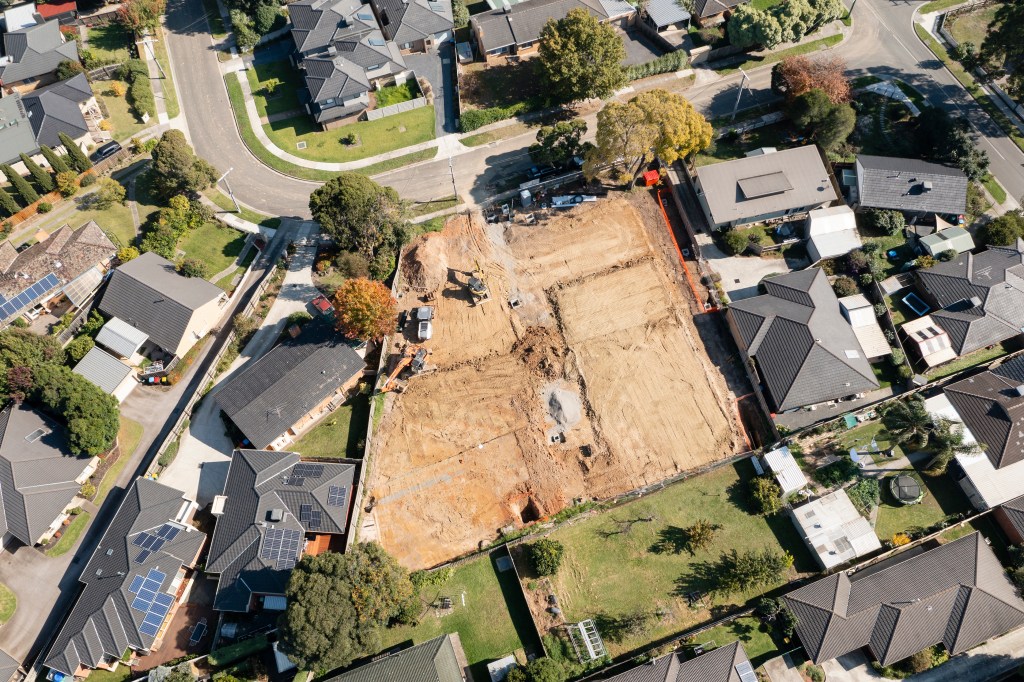
Joplin, Missouri-based Schuber Mitchell Homes has established a strategic land financing partnership with Essential Housing, a TPG Angelo Gordon Company.
Ranked No. 77 on the 2025 Builder 100 list, Schuber Mitchell Homes closed 804 homes in 2024 across its operating markets of Joplin, Tulsa, Oklahoma, Springfield, Missouri, and northwest Arkansas.
Whelan Advisory served as the exclusive financial advisor to the home builder in the deal, helping understand Schuber Mitchell’s long-term growth objectives and capital needs relative to its existing pipeline to partner with a company whose strategy and structure aligned with the builder.
As part of the partnership, Essential Housing will finance finished lots across multiple developments and markets for Schuber Mitchell Homes.
Beyond the Transaction
The deal is an illustration of the prevalence of land baking in the current housing market.
Land banking involves acquiring and holding land for future construction, providing builders with capital as well as an off balance sheet vehicle. Land bankers act as capital partners for builders, offering a debt-like instrument with the purposes of acquiring paper lots and funding land development and holding finished lots. Under a typical structure, the builder sources land for future development, securing zoning and entitlement. Prior to or upon closing of the land parcel, the builder and land banking partner agree on a development budget, takedown schedule, and price per finished lot; the land banker then holds title to the land until all finished lots are purchased.
Public home builders continue to pivot toward land-light models. Lennar’s spin-off of real Millrose Properties is the most high profile example of land banking and how builders are shifting operations. At the onset of its spinoff, Lennar said Millrose will not operate as a traditional land bank or land company, instead focusing on shorter duration land transactions.
The transaction by Schuber Mitchell Homes demonstrates land banking is not just a strategy for the large publics, but one that is being adopted by regional private builders as well. Earlier in the year, Whelan Advisory founder and CEO Margaret Whelan shared that land banking is leveling the playing field for private builders.
“If any builder of size can get access to the capital through a land banker, that’s capital and a growth opportunity they would not have otherwise had,” she told Builder. “That levels the playing field for all of those folks versus their bigger competitors.”
The Essential Housing-Schuber Mitchell Homes deal is an example of how the land banking landscape is growing increasingly competitive. The deal also offers more proof of Whelan’s thesis that land banking is a secular shift rather than a cyclical one.
“The reason I think it is secular is because the home building market is so much more concentrated now,” Whelan told Builder. “To be competitive, the private builders and the smaller public builders that are trying to grow quickly need to have more growth opportunities in front of them. The only way to do that is with access to more capital like land banking. I think it’s a permanent shift, it’s not just in vogue.”