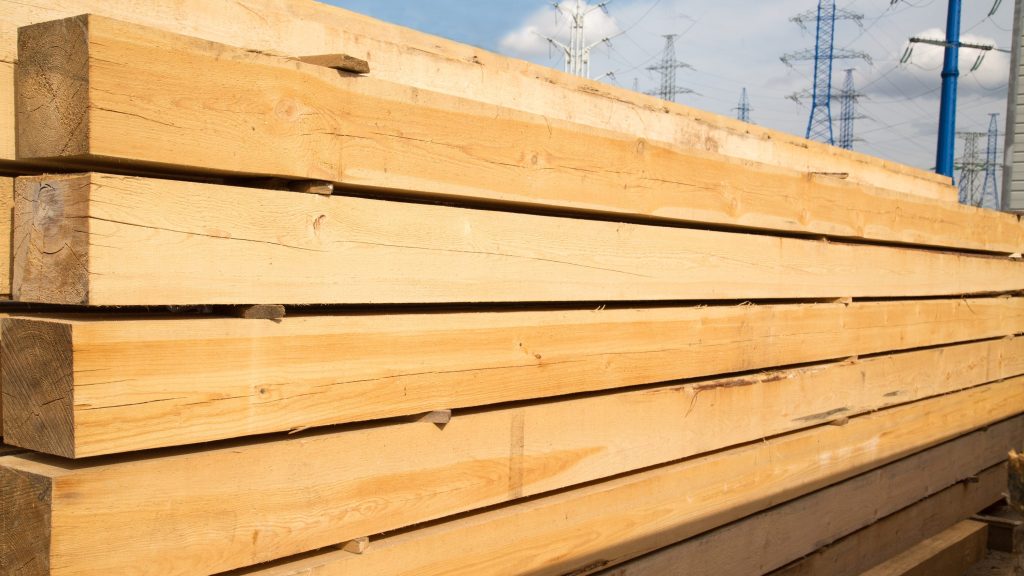
The White House has issued a proclamation imposing new tariffs on wood products imports, including softwood lumber, furniture, and kitchen cabinets.
Effective Oct. 14, a 10% tariff will be added to softwood lumber and log imports and a 25% tariff will be added for furniture and kitchen cabinets. The new rates follow a Section 232 investigation launched earlier this year by the Department of Commerce to assess the national security implications of wood product imports.
The White House proclamation also announced new global tariffs on upholstered furniture, kitchen cabinets, and vanities, effective Oct. 14. The tariffs on furniture will rise to 30% on Jan. 1 while the cabinet and vanity tariffs will double to 50% on Jan. 1.
According to the National Lumber and Building Material Dealers Association (NLBMDA), Canadian softwood lumber, which currently faces a 35% tariff from existing antidumping and countervailing duties, will now face a total tariff of 45% with the new 10% rate added. According to the NAHB, Canada provides an estimated 85% of all U.S. softwood lumber imports and almost a quarter of the total supply in the country.
Several industry organizations, including the NAHB, pushed back against the notion that lumber imports threatened national security while the Section 232 investigation was being conducted.
In a letter submitted to Commerce Secretary Howard Lutnick, the NAHB said the imports were necessary because domestic production of timber was insufficient to meet demand and even if the country could produce sufficient timber, “it would take many years to build the necessary infrastructure to turn that timber into lumber.” The association argued additional tariffs, quotas, or trade restrictions would instead undermine national security by “exacerbating the current housing shortage.”
Recent data suggests U.S. sawmills are operating at just 64% of capacity, according to the NAHB. As a result, the association argues, it will take years until domestic lumber production ramps up to meet demand and imports are vital to build, remodel, and repair homes in the interim period.
In the proclamation announcing the tariffs, President Trump said Secretary Lutnick found “present quantities and circumstances of wood product imports are weakening our economy.”
“The Secretary found and advised me of his opinion that wood products are being imported into the United States in such quantities and under such circumstances as to threaten to impair the national security of the United States,” the proclamation from the President states.
Todd Tomalak, principal, advisory of building products for Zonda, says lumber inventories were elevated ahead of the recent decision amid softening end-demand for housing and home improvement.
“Therefore, the real impact is to the Canadian mills who were struggling ahead of this tariff and looking at selling into a soft U.S. housing market,” Tomalak says.
The proclamation notes that although the U.S. has sufficient raw materials and industrial capacity to meet demand, domestic wood production remains underdeveloped.
“Imports of wood products continue to rise, signaling foreign dependence and creating vulnerabilities in the domestic industry,” the proclamation states. “Foreign subsidies and unfair trade practices are eroding the competitiveness of the United States wood products industry and disincentivizing investment and modernization.”
Since the beginning of the calendar year, the tariff landscape has created uncertainty in the building materials and housing sectors. Many material suppliers have raised prices and builders and contractors have had difficulty pricing out jobs. Surveys conducted by the NAHB in the summer indicated builders faced an average impact of $11,000 from suppliers who either raised prices due to tariffs or the expectation of future tariff policies.
Tomalak estimates the new tariff will add roughly $14 per month to the mortgage payment for a homeowner buying a median priced new home, a small increase—and small relative to other macro issues—but cumulatively an extra cost for fatigued homebuyers. Big picture, the impacts of tariffs on the lumber market could have knock-on effects for the overall economy.
“The last time ‘stagflation’ was a topic (1973-1974), the industry experienced a ‘lumber recession,’ characterized by consolidation among building product suppliers and roughly 300 basis point margin compression among housing suppliers,” Tomalak says. “We are watching closely late in 2025 to note broader strategic shifts in housing supply. Our general expectation is for increased concentration of industry market power within distribution when the industry begins to recover.”