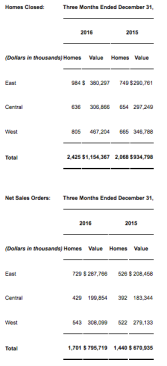
Taylor Morrison Home Corporation (NYSE:TMHC), Scottsdale, on Tuesday reported a profit of $76 million, or $0.63 per share, for the fourth quarter ended Dec. 30, 2016, up nearly 19% from the prior year quarter. Analysts were expecting a gain of $0.59 per share.
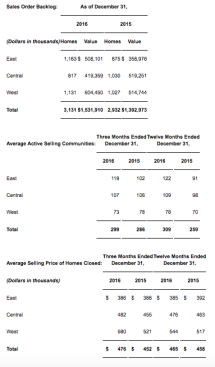
Revenue for the quarter was $1.2 billion, up 23% from the prior-year quarter, as home closings rose 17% to 2,425. GAAP home closings gross margin, including capitalized interest, was 17.8%. New orders were up 18% to 1,701. Homes in backlog totaled 3,131 at year end, up from 2,932 at the close of 2015, with a total value of $1.53 billion, up from $1.39 billion at the end of the prior year.
SG&A as a percentage of home-building revenue came in at 9.1%, down from 9.3% in the comparable 2015 quarter. Taylor Morrison ended the quarter with $300 million in cash and a net home building debt-to-capitalization ratio of 33.7%.
Home building inventories were $3.0 billion at the end of 2016, including 3,920 homes in inventory, compared to 3,851 homes in inventory at the end of the prior year. Homes in inventory at the end of the quarter consisted of 2,322 sold units, 412 model homes and 1,186 inventory units, of which 238 were finished. The Company owned or controlled approximately 38,300 lots at December 31, 2016, representing 5.2 years of supply.
“We finished the year with higher than expected closings, resulting in a 22% increase year-over-year in earnings per share from continuing operations. We closed 7,369 homes, which represented a nearly 17% increase year-over-year, well above the top range of our guidance as we were able to bring forward and close homes that were originally expected to be completed in January 2017,” said Sheryl Palmer, Taylor Morrison CEO and president. “Net sales orders totaled 7,504 for the year, which represented a 12% increase over the prior year. Closings and net sales orders growth are on top of double-digit growth from the previous year, bringing our two-year growth rate for both metrics to over 30%. Community count was up more than 19% year-over-year to an average of 309 communities. This brings our two -year growth rate to 50%.”