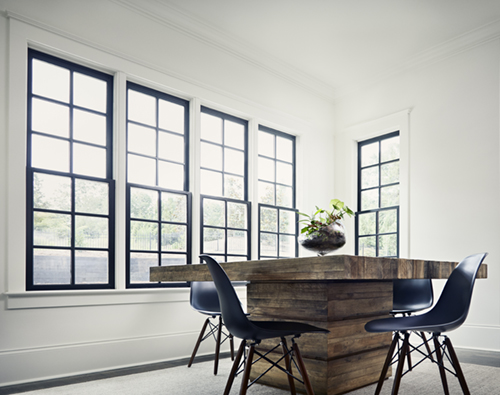
When designing and building a sustainable home, nearly every product and design element presents a handful of decisions that can contribute to, or detract from, a building’s overall sustainability. Windows are no exception.
Here are five areas where windows play a role in a green home:
Daylighting: Windows and patio or sliding doors can enhance occupant comfort by infusing daylight deep into the home. The benefits are twofold: natural lighting can have beneficial effects on occupants as well as reduce reliance on artificial lighting to reduce energy bills.
Ventilation for indoor air quality: Operable windows are vital for encouraging and increasing natural ventilation in the home and contributing to healthy indoor air quality. The number of windows should factor into mechanical ventilation capacities, as well.
Ventilation to reduce energy use: Prior to the widespread adoption of air conditioning, windows and home design worked together to take advantage of cross breezes to keeping air flowing and interiors cool. Those same practices should be explored today to reduce homeowners’ reliance on air conditioning, lower energy bills, and keep homes cool even in the event of power outages.
Resource-efficient materials: Some window frames are made with recycled vinyl or with FSC- or SFI-certified wood. JELD-WEN’s W-2500 clad-wood windows, for example, are available with wood certified under either program.
Energy efficiency: Most windows come with several glazing options to improve efficiency. This includes low-E glass selections and double- or triple-pane windows with an insulating gas fill.
The easiest way to identify more efficient options is to look for the Energy Star designation. Energy Star-certified windows are independently tested to verify that they meet performance levels in five areas: U-factor (amount of heat transfer), solar heat-gain coefficient (how well the unit blocks heat from the sun), air leakage (through the window joints), visible transmittance (how much light gets through), and condensation resistance.
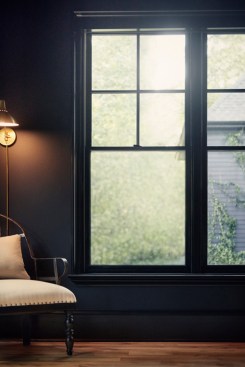
Energy Star also has its “Most Efficient 2017” designation to indicate those rated products that are most efficient in their category. For instance, JELD-WEN’s V-4500 Premium Vinyl double-hung, with a U-factor of 0.19 to 0.20 and an SHGC of 0.14 to 0.25, carries the label.
Designing with windows is a delicate balance. The more windows, the lower the wall’s overall R-value, but the greater the opportunity for ventilation and daylighting. With each home, custom builders must weigh the data against buyer preferences and design goals to determine not only how many windows, but how robust those windows need to be.