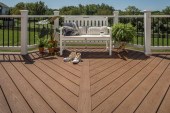
People crave sunlight for improving their moods and absorbing vitamin D, yet they also need protection against cancer-causing UV rays. Artfully screened outdoor spaces, such as those highlighted here from our 2011 Custom Home Design Awards, offer inviting options for homeowners and their guests to soak in the sun or lounge in the shade. The jurors certainly took notice of how these thoughtful exteriors added aesthetic and practical value to a house. “I can picture myself sitting on that balcony every night with a glass of wine,” remarked one.
Lot orientation, building codes, and existing structures often restrict options for placing outdoor spaces. Carving them out of the building or wrapping them with pervious screens can mitigate less than ideal solar patterns, however. In the projects shown, architects and builders faced some challenging situations, but in the end they created cool retreats for view gazing, communing with neighbors, or expanding usable living spaces.
Winner of a Merit award in the Custom Home, Less Than 3,000 Square Feet category, the Kiwi House in Baton Rouge, La., faces almost due south. In a community where homeowners have a long history of sitting on their front porches to visit with neighbors, that harsh afternoon sun was an issue. Fritz Embaugh, co-founder of +one design and construction, explains the firm’s approach to creating a habitable and social space for their clients: “We developed a deep front porch, then screened it with 1×1 cypress slats in the direction of the harshest afternoon sun so they wouldn’t bake.”
Responding to building codes rather than social conventions, architect Stephen Yablon converted the required raising of the house into year-round outdoor living on his South Carolina guest pavilion, which won a Grand award for Outdoor Spaces. “Those areas beneath a house are usually covered by a cheap trellis and used for storage,” he says. Instead, Yablon hid ducts within built-in seating, ran plumbing through support columns, and framed the elevated guest house in steel to allow for larger spans between columns to create an outdoor living area perpetually shaded by the structure above. “I just stayed there for a week, which was really fun,” he says. “It amazed me how well it worked to screen the sun and catch breezes. All those calculations we did were correct.”
Check out these projects and other award-winning sunscreens in the featured slideshow.